Grandparents as childcare: making it work for everyone

Grandparent care is India's largest childcare system, and it is mostly free, loving and reliable. It works best when it is treated as a real arrangement rather than an assumption.
Treat it as an arrangement, not an assumption
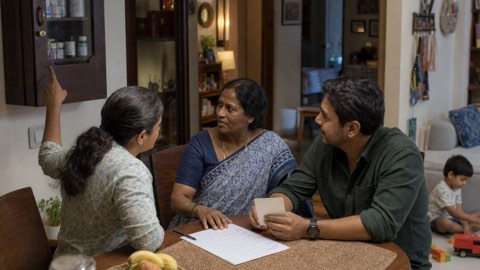
Have the conversation explicitly: which days, which hours, what happens in school holidays, what happens if they want a break or fall ill. Unspoken expectations are where resentment grows, on both sides.
Ask honestly about their health and stamina. Lifting a toddler, chasing a two-year-old and managing a school run are physically demanding, and older parents often will not say no. Watch for exhaustion, back pain and the grandparent who has given up their own social life entirely.
Talk about money without embarrassment. Even where no salary is appropriate, covering costs — transport, the child's food, a helper for the heavy housework, a holiday for them — recognises the work. Free labour that is never acknowledged sours over years.
Build in time off: a fixed weekend, an evening, a holiday. A grandparent with their own life is a better carer than one who has been absorbed into full-time service.
The safety updates that have changed since they raised children
Sleep: babies under one sleep on their back, on a firm flat surface, with nothing soft near the face. This is the biggest change from a generation ago and it is worth explaining as new information rather than criticism.
Feeding: nothing but breastmilk or formula before six months — no water, no honey, no ghutti, no janam ghutti, no cow's milk. Honey is unsafe before one year. No force-feeding, and no feeding a child lying flat.
Travel: no baby or small child on a two-wheeler, a car seat where a car is used, and never a child on a lap in the front seat.
Medicines and remedies: nothing given without the parents' knowledge, including home remedies, leftover antibiotics, cough syrups, and 'small doses' of adult medicine. Kajal not in the eyes, oil not in the ears or nose.
Emergencies: written list of numbers on the fridge, the child's blood group and allergies, the paediatrician's number, 108 for an ambulance, and a clear instruction to call you first and act rather than wait.

The differences worth accepting
Grandparents indulge. That is close to their job description, and a child having later bedtimes, extra sweets and more carrying at nani's house is not being damaged.
Their generation's parenting was different in genuine ways — more discipline-by-fear, more force-feeding, less talk about feelings. Update the safety-critical items and let the style differences be. A child gains from encountering more than one adult style.
Do not correct them in front of the child, and do not let the child use one adult against another. Where a rule really matters, say it once privately, and put it in writing if it keeps slipping.
When it is not working
Warning signs worth acting on: the grandparent is exhausted or unwell, the child is being smacked or shamed, safety rules are ignored repeatedly, the arrangement has become a source of constant conflict in the marriage, or the grandparent is being taken for granted and has stopped saying so.
The alternatives are worth pricing honestly rather than treating as a last resort: a crèche or day-care, a part-time ayah with the grandparent supervising, a shared arrangement with another family, or adjusted work hours. Many families combine — day-care for structure, grandparents for the gaps.
And say thank you, out loud, regularly. Grandparent care in India is a huge, invisible economic contribution, usually given without complaint, and it is rarely acknowledged as work.
Frequently asked questions
My parents do not follow the sleep or feeding rules and get offended when I insist.
Take the personal element out: ask the paediatrician to explain it at a visit they attend, or hand over a printed note. Most grandparents accept a doctor's instruction far more easily than a daughter-in-law's or a son's.
My child prefers his grandmother to me. Should I be worried?
No — it is a sign of a secure attachment to a loving carer, and children have room for several. Protect your own daily one-to-one time and the preference evens out.
They live in another city. Is it fair to send the baby to them for months?
Long separations from parents are hard on babies over about six to eight months, when attachment to the primary carers is strong. Where it is unavoidable, keep daily video contact, visit as often as possible, and plan a gradual re-transition rather than an abrupt one.
How do I raise the money question without insulting them?
Frame it as sharing the household's costs rather than paying for their time: 'we'd like to cover the groceries and get someone in for the cleaning so you're not doing everything.' Practical support is easier to accept than cash.
Reviewed by
- Nakul Phatak — CEO, theAsianparent India & IndonesiaHead of theAsianparent India; father of one
- Roshni Chugani — Head of Marketing, theAsianparent India & Singapore12 years in the mother-and-baby space; mother of two
Published by: theAsianparent editorial team