Baby cost calculator: the first year, priced with your own city's numbers
Three choices, then every rupee figure is an editable box — because we don't know what a delivery costs in your town, and won't pretend to. The pre-filled numbers are starting points, not research.
Add it up
Pick three things — where the delivery happens, cloth or disposables, how the baby is fed. Then overwrite any figure with your city's real prices; the totals follow.
One-off costs
- Delivery — government hospitalDelivery at a government hospital is usually free; the figure here covers only incidentals like travel and food.₹total
- Cot, bedding, bath things₹total
- Clothes — the whole first year₹total
Every month
- Cloth nappies — washing costs₹/ month
- Oil, soap, lotion₹/ month
- Doctor visits₹/ month
- Childcare / help₹/ month
- Baby food — after 6 monthsThis cost only starts after six months, so it is averaged over the year. Counted in the total as ₹600 a month.₹/ month
Every number above is editable — change one and the totals recalculate. The pre-filled figures are starting points, not researched prices.Gurgaon’s rates and Guwahati’s are not the same; you know your city’s. All we do is the adding up.
- Delivery and the full vaccination schedule are free at government hospitals — countrywide. A private delivery is the single largest first-year expense.
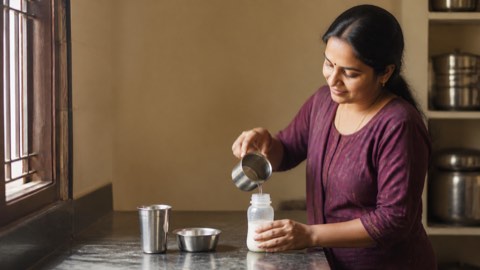
- Breast milk is free. Formula is a recurring monthly cost that runs for twelve months — six months of exclusive breastfeeding is better for the baby and for the budget.
- Cots, prams, clothes — much of it comes from relatives, and that is exactly right. Babies outgrow all of it startlingly fast.
- One place not to economise: safety. Never use a car seat that is old, cracked or of unknown history, and keep the sleeping surface flat, firm and bare.
Editing the numbers is the method, not a fallback
A delivery in Gurgaon and one in Guwahati don't cost the same, and we know neither. So every amount here is an open box — the pre-filled figure is a starting guess that your city's real price should replace.
What the tool contributes is the structure: which costs happen once and which return every month. That distinction is what new parents' budgets most often miss. A cot is bought once; nappies and formula come back every month for a year.
As you type, three totals update: one-off costs, the monthly bill, and the first-year total. 'How much per month?' — the question household budgets actually run on — gets its own answer.

The three choices that move the total most
First, where you deliver. Delivery and the entire vaccination schedule are free at government hospitals, nationwide, no application required — and the Janani Suraksha Yojana (JSY) adds a cash benefit for institutional deliveries; ask the ASHA worker or PHC for your district's terms. A private delivery is the single biggest line in the first year.
Second, milk. Breast milk is free. Formula is a recurring cost that runs about twelve months. Six months of exclusive breastfeeding is the best outcome for the baby and, incidentally, the budget.
Third, cloth versus disposables. Daily disposables are a habit-shaped cost that grows. Many households land in the middle — cloth by day, a disposable at night and for outings. The tool has that option.
Where not to economise
Cots, prams, swings, clothes — take the hand-me-downs gladly. The window in which a baby uses any of it is startlingly short, and the relatives' cupboard is the correct supply chain.
But not on safety. Never a car seat that is old, cracked or of unknown history — a crashed seat looks fine outside and is finished inside. The sleeping surface: flat, firm mattress, no pillows or quilts.
And never postpone a vaccine over money. Every scheduled vaccine is free at the government centre; private hospitals charge for the identical dose. Same vaccine, either way.
Insurance and the hospital package — questions to ask first
Most health policies carry a maternity waiting period — typically two to four years. A policy bought after conception won't cover this delivery. If you hold one already, check the maternity cap and when a newborn joins the cover — on paper, not on the agent's word.
When a private hospital quotes a 'delivery package', ask what it actually includes: how many nights, which tests, the anaesthetist's fee, and how much the price rises for a caesarean. Quoting the normal-delivery rate and billing the caesarean separately is standard practice.
The baby's costs are a separate meter. NICU days sit outside most packages and add up fast. The chance is small — but a small reserve set aside for it is the adult version of hoping for the best.
Plan for the income dip, not just the bills
Most budgets count the new costs and forget the missing income. Maternity leave, unpaid leave, or stepping away from work — the household's inflow drops in exactly the months the bills arrive, and that gap usually outweighs the nappies.
In salaried, organised-sector jobs the Maternity Benefit Act provides twenty-six weeks of paid leave. Freelance, contract and informal work get none of that — there, a three-to-four-month cushion has to be built in advance. The PMMVY scheme pays a benefit for the first child; the anganwadi has the current details.
Practical version: save what you can in the last months of pregnancy, and decide in advance which first-year costs you'll simply skip. The monthly total above tells you the number to plan around.
Questions
Where do the pre-filled numbers come from?
Nowhere, and it says so. They're starting guesses. You know your city's real prices — type them in and the totals recalculate.
Is a government-hospital delivery really free?
Generally yes: delivery, tests and vaccinations are free in the public system, and JSY pays a benefit on top. The small figure in the tool covers incidentals — travel, food.
Is cloth really cheaper?
Yes, but the cost moves — into washing, water and time. That's why the tool has a 'mix' option; it's what most households actually do.
What happens to a box I leave empty?
It counts as zero. If a cost doesn't exist in your house — grandparents covering childcare, say — leave it at zero.
Reviewed by
- Nakul Phatak — CEO, theAsianparent India & IndonesiaHead of theAsianparent India; father of one
- Roshni Chugani — Head of Marketing, theAsianparent India & Singapore12 years in the mother-and-baby space; mother of two
Published by: theAsianparent editorial team
Parents' Choice Awards 2026
Brands nominated and voted for by Indian parents.