Single parenting in India: the practical, legal and emotional map

Single parents in India manage the same job with half the hands and twice the paperwork. Here is what helps: the legal essentials, the systems that trip people up, and the honest emotional picture.
The paperwork that causes the most trouble
School forms and official documents often assume two parents. In practice, schools cannot refuse admission for a single-parent household, and forms can be completed with one parent's details. If a school insists, ask for the requirement in writing — that usually ends it.
Birth certificate: a mother can register a birth as a single parent, and courts have upheld the right to omit the father's name in appropriate circumstances. Get the birth certificate corrected early rather than at the point when a passport is needed.
Passport: single parents can apply for a child's passport using the relevant annexure declaring sole custody or guardianship, without the other parent's consent in defined circumstances. Carry custody or guardianship orders where they exist.
Keep a document file: birth certificate, custody or guardianship order, divorce decree, maintenance order, Aadhaar, school records, and medical records. Scan everything; single parents deal with more verification, not less.
Guardianship, custody and maintenance
Indian courts decide custody on the welfare of the child, and mothers are ordinarily given custody of very young children. Both parents typically retain rights of access unless there are safety reasons, and orders can be varied as circumstances change.
Maintenance for a child can be claimed from the other parent under Section 125 of the Criminal Procedure Code (now the corresponding provision of the new criminal codes), and under personal laws and the Domestic Violence Act. Interim maintenance can be ordered while the case runs.
Free legal aid is available through District Legal Services Authorities under the Legal Services Authorities Act, and women, children and people below income thresholds are entitled to it. That is the route for those who cannot afford a private lawyer — ask at the district court complex.
Where there is domestic violence, the Protection of Women from Domestic Violence Act provides for protection orders, residence orders and maintenance. The women's helpline is 181, the emergency number 112, and one-stop centres (Sakhi centres) exist in most districts for legal, medical and shelter support.

Building the support system
Nobody parents alone well. Build a named list rather than a vague hope: who collects the child if you are stuck at work, who to call at 2 a.m., who has a spare key, which neighbour knows your situation.
Use what exists: grandparents and siblings where relationships allow, other single parents (online groups are genuinely useful), crèches and after-school arrangements, and school staff who know the situation and can be flexible.
Sort the practical contingencies most parents postpone: a will naming a guardian, nomination on accounts and insurance, and life and health insurance. For a single parent these are not optional paperwork — they are the child's safety net.
Protect some time and identity that is yours. Single parents burn out quietly, and the child's stability depends on yours.
Talking to children, and handling the outside world
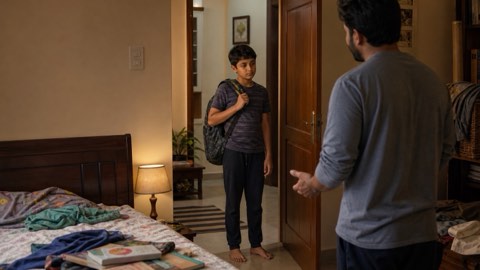
Tell children the truth in age-appropriate terms, without detail they cannot carry and without making the other parent a villain. Children who are told a simple honest version cope far better than those who sense a secret.
Reassure them repeatedly on the two things they actually worry about: that it is not their fault, and that they will be looked after. Expect the questions to return in new forms at each age.
Keep the child out of adult conflict: no messages passed through them, no interrogation about the other parent's household, no criticism of the other parent in their hearing. This is the single strongest predictor of how well children do after a separation.
For the comments and stares — from relatives, schools, neighbours — a short flat sentence works best: 'it's just us, and we're doing fine.' You owe no one the story.
Frequently asked questions
Can I put only my name on school and medical forms?
Yes. Schools and hospitals cannot require both parents' details. Where a form insists, write 'not applicable' and provide your own details; ask for any refusal in writing.
My ex has stopped paying maintenance. What can I do?
Maintenance orders are enforceable: apply to the same court for execution, which can order recovery from salary or property. Free legal aid through the District Legal Services Authority can file this for you.
How do I answer my child's questions about the missing parent?
Honestly, simply and without contempt: 'papa and I could not live together; that is between us, and it is not about you.' Give more detail as they grow, and let them have their own relationship with the other parent where it is safe.
I feel constantly exhausted and alone.
That is the commonest experience of single parenting, and it is a health matter rather than a character test. Build the support list above, take the offers people make, and get help for low mood — Tele-MANAS on 14416 is free, confidential and round the clock.
Reviewed by
- Nakul Phatak — CEO, theAsianparent India & IndonesiaHead of theAsianparent India; father of one
- Roshni Chugani — Head of Marketing, theAsianparent India & Singapore12 years in the mother-and-baby space; mother of two
Published by: theAsianparent editorial team