Cramps but no period: what causes it and what to do

Period pain without a period is common and has a long list of explanations, most of them harmless and two of them emergencies. Here is how to tell them apart.
The common explanations
Pregnancy: mild cramping in early pregnancy is common — implantation cramps around the time a period is due, and later stretching of the uterus. Any cramps with a missed period mean a pregnancy test first, before anything else on this list.
Ovulation pain (mittelschmerz): a one-sided ache mid-cycle lasting hours to a couple of days, sometimes with light spotting. Harmless.
A delayed or anovulatory cycle: the body prepares for a period that then arrives late or not at all — usually with stress, illness, travel, weight change, thyroid disease or PCOS behind it.
Digestive causes are frequently mistaken for period pain: constipation, irritable bowel syndrome, and gas can all produce lower abdominal cramping that follows no cycle at all.
The causes that need investigation
Ovarian cysts: often silent, sometimes causing a dull ache or pressure. Sudden severe one-sided pain with vomiting can mean a cyst has ruptured or the ovary has twisted — that is an emergency.
Pelvic inflammatory disease: infection of the reproductive organs, causing pain, abnormal discharge, fever and pain during sex. It needs prompt antibiotic treatment because untreated it damages the tubes and causes infertility.
Endometriosis and adenomyosis: pain that is cyclical but can occur outside bleeding, often severe, often with painful sex and painful bowel movements. Frequently dismissed for years as 'normal period pain'.
Fibroids, urinary infections, kidney stones, and — importantly in India — genital tuberculosis, which can present as chronic pelvic pain with scanty periods and infertility.
What to do
First: a pregnancy test if a period is late, whatever you believe about your chances. It is the cheapest and most important step, and it changes what everything else means.
For ordinary cramps: a hot water bottle, a warm bath, gentle movement, and paracetamol or ibuprofen at the correct dose. Ibuprofen taken with food works particularly well for menstrual-type pain — unless you are or might be pregnant, in which case ask a doctor first.
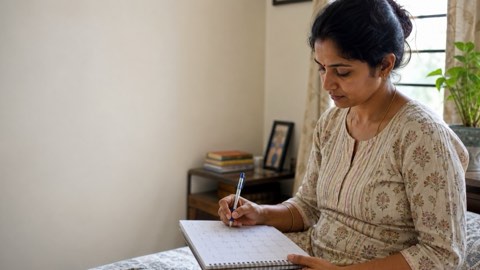
Track it: when it comes, how long it lasts, its relation to the cycle, and what else happens (discharge, fever, bowel or urinary symptoms, pain during sex). That record makes the diagnosis much faster.
Do not accept 'it is normal' for pain that stops you working, studying or sleeping. Severe period-type pain has causes and treatments, and Indian women routinely endure endometriosis for years before it is diagnosed.
When to see a doctor
Emergency, same hour: sudden severe one-sided pelvic pain, especially with vomiting, faintness or fever — this can be ovarian torsion, a ruptured cyst, or an ectopic pregnancy, which is life-threatening. A positive pregnancy test with one-sided pain and bleeding goes straight to hospital.
Same-day: fever with pelvic pain, foul-smelling discharge, heavy bleeding, pain with vomiting, burning urination with back pain and fever, or pain after a recent procedure or delivery.
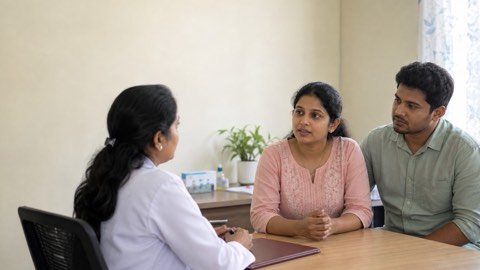
Book an appointment for: pain that recurs each month without a period, pain during sex, pain severe enough to interfere with daily life, no periods for three months, or pain with difficulty conceiving.
This article is general information, not medical advice, and is no substitute for personal medical advice. For any decision about your or your child's health, please consult your doctor.
Frequently asked questions
I have cramps and a negative test but no period.
Repeat the test after a week (early tests can be falsely negative), and if there is still no period after three months, or the pain continues, see a doctor for thyroid, prolactin, PCOS and pelvic assessment.
Could it be implantation cramping?
Possibly, if it is around the time a period is due and is mild and short, sometimes with light spotting. A test a week later gives the answer; the cramping itself proves nothing.
I get one-sided pain every month mid-cycle. Should I worry?
That pattern is classic ovulation pain and is usually harmless. Get it checked if it is severe, lasts more than two days, or comes with fever, vomiting or heavy bleeding.
I have had this pain since my teens and been told it is normal.
Get a second opinion, particularly if it is severe, worsening, or comes with painful sex or bowel symptoms. Endometriosis takes years to diagnose in India precisely because severe period pain is treated as a normal female burden.
Sources
Every clinical figure on this page is taken from the guidelines below. Where our numbers and your doctor's differ, ask which guideline they follow.
- WHO. Endometriosis (Fact Sheet) (2023)Backs the claims that endometriosis causes cyclical and non-cyclical pelvic pain, painful sex, and painful bowel movements, and that it is frequently dismissed for years before diagnosis.
- NICE. Endometriosis: diagnosis and management (NG73) (2017)Supports the recommendation not to accept 'it is normal' for severe period-type pain, the listing of painful sex and bowel symptoms as diagnostic red flags, and the note that endometriosis is frequently dismissed as normal period pain for years.
- NHS. Mittelschmerz (ovulation pain) (2023)Backs the description of ovulation pain (mittelschmerz) as a one-sided mid-cycle ache lasting hours to a couple of days, sometimes with light spotting, and generally harmless.
- RCOG. Ovarian Cysts in Postmenopausal Women (GTG 34) / Acute Pelvic Pain guidance (2016)Supports the emergency alert for sudden severe one-sided pelvic pain with vomiting as a presentation of ovarian torsion or ruptured cyst, and the description of ectopic pregnancy with one-sided pain and bleeding as a life-threatening emergency requiring immediate hospital attendance.
- WHO. Polycystic ovary syndrome (Fact Sheet) (2023)Supports the claim that PCOS is among the causes of delayed or anovulatory cycles resulting in cramps without a period, and that thyroid disease, stress, and weight change are associated contributing factors.
Reviewed by
- Nakul Phatak — CEO, theAsianparent India & IndonesiaHead of theAsianparent India; father of one
- Roshni Chugani — Head of Marketing, theAsianparent India & Singapore12 years in the mother-and-baby space; mother of two
Published by: theAsianparent editorial team