Baby not walking yet: what is normal, and when to ask

The normal range for first steps is far wider than the family group chat suggests. Most late walkers are simply late walkers.
The actual range
Most babies take their first independent steps somewhere between 9 and 15 months, and walking steadily follows over the next few months. A baby who is not walking at 13 months is squarely within normal.
By 18 months, most children are walking. Not walking at all by 18 months is the point at which assessment is recommended — not a disaster, but a reason to be seen rather than to keep waiting.
The pattern matters more than the date. A baby who is pulling to stand, cruising along furniture, bearing weight confidently and generally moving about is following the sequence and will get there. A baby who is not doing any of those by 12 months is a different picture.
Some babies skip crawling entirely, bottom-shuffle for months, and then walk. Bottom-shufflers walk later on average and turn out fine.
Family history is real: if both parents walked at 16 months, that is useful information.
What genuinely affects it
Temperament. Cautious babies walk later. Babies who fall once and dislike it will cruise for weeks longer than a reckless sibling did.
Weight and build. Heavier babies often walk a little later, which is normal.
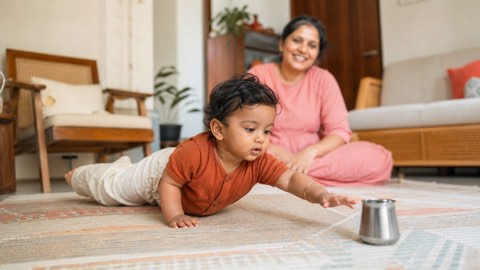
Opportunity. A baby carried most of the day, or kept in a walker, pram or jhula for long stretches, gets less floor time — and floor time is where walking is built. This is the commonest fixable factor in Indian homes.
Prematurity. Correct for it: a baby born two months early should be assessed against their corrected age until about two years.
Clothing and surfaces. Thick winter layers, slippery floors and shoes indoors all slow it down.
Illness or a long hospital stay can set movement back temporarily, and it usually catches up.
What helps, and what does not
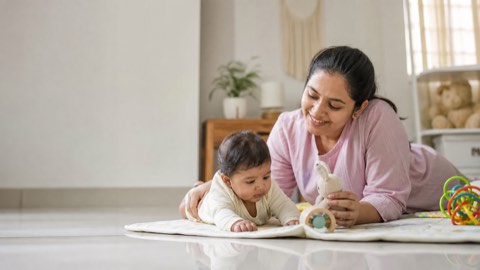
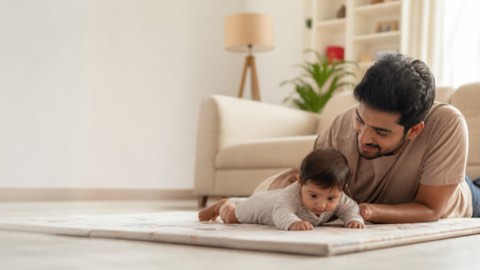
Floor time, plenty of it, on a firm surface. This is the whole answer for most babies. Clear a safe space and let them move.
Furniture at the right height to cruise along, and something stable to pull up on.
A push-along toy or a weighted box they can shove around — genuinely useful, unlike a sit-in walker.
Barefoot indoors. Bare feet grip better and give better feedback than any shoe, and shoes are for outdoors only at this stage.
Not helpful: sit-in baby walkers, which delay walking rather than helping it, cause a large number of injuries, and are banned or discouraged in several countries. Also not helpful: holding both hands and marching a baby up and down, jumpers and bouncers used for long stretches, and standing a reluctant baby up repeatedly.
And not helpful: comparing. Half the babies in any group walk later than the other half, by definition.
When to see a doctor
See a paediatrician if: your baby is not bearing weight on their legs by 12 months, not pulling to stand by 12 months, not walking at all by 18 months, or has stopped doing something they could previously do.
Also see a doctor for: stiffness or floppiness, using one side of the body much more than the other, persistent toe-walking, legs that cross or scissor, or a baby who tires very quickly on their feet.
Raise it sooner if there are also concerns about hearing, speech, eye contact or social response — the combination matters more than any single delay.
Ask directly for a developmental assessment or referral rather than being told to wait and watch a second time. Early intervention works best early, and the waiting lists in India are long.
This article is general information, not medical advice, and is no substitute for personal medical advice. For any decision about your child's health, please consult your doctor.
Frequently asked questions
My baby is 14 months and not walking. Should I worry?
Almost certainly not, if they are cruising, pulling up and bearing weight. Eighteen months is the point to be assessed.
Does skipping crawling matter?
No. Plenty of babies never crawl, and it does not predict anything later.
Should I buy a walker to help?
No. Sit-in walkers delay independent walking and cause serious injuries, particularly on stairs. A push-along toy is the useful version.
Does massage or oil help babies walk?
Massage is soothing and good for bonding, and it does not affect the timing of walking. Floor time does.
Sources
Every clinical figure on this page is taken from the guidelines below. Where our numbers and your doctor's differ, ask which guideline they follow.
- AAP. Developmental Milestones: 12 Months (2023)Supports the red-flag criteria at 12 months: not bearing weight on legs and not pulling to stand by 12 months are listed as signs warranting paediatric review.
- AAP. Baby Walkers: A Dangerous Choice (2023)Supports the claim that sit-in baby walkers delay independent walking, cause a large number of injuries (particularly on stairs), and are actively discouraged by paediatric authorities.
- NICE. Developmental Follow-up of Children and Young People Born Preterm (NG72) (2017)Supports the instruction to use corrected age when assessing motor development in preterm babies, specifically until around two years of age.
Reviewed by
- Nakul Phatak — CEO, theAsianparent India & IndonesiaHead of theAsianparent India; father of one
- Roshni Chugani — Head of Marketing, theAsianparent India & Singapore12 years in the mother-and-baby space; mother of two
Published by: theAsianparent editorial team