
Board exams: managing stress, studying smart, and keeping the child intact

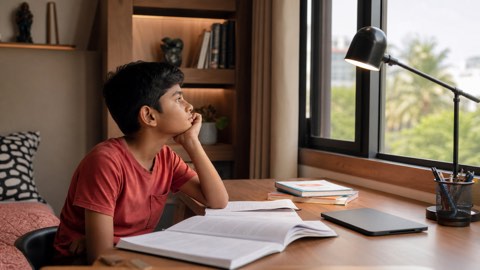
Board exam year is the most pressurised period in an Indian childhood. The parent's job is not to add to it — it is to hold the routine, the food, the sleep and the perspective.
Studying in ways that actually work
Self-testing beats rereading, by a wide margin. Close the book and write what you remember, do past papers under time, use flashcards for formulae and definitions. Rereading and highlighting feel productive and produce the least.
Space the practice: short sessions across many days beat one long cram, and revisiting a topic after a gap is what moves it into long-term memory. Build a revision cycle rather than a single pass.
Do full past papers to time, including the writing — board exams test speed and presentation as much as knowledge. Mark them honestly against the scheme, and use the mistakes to direct the next week's study.
Study in blocks of 40-50 minutes with real breaks — a walk, water, no phone. Ten hours of distracted phone-adjacent study is worth less than five focused ones.
Sleep, food and the body
Sleep is the study technique most often sacrificed and the one that matters most: memory is consolidated during sleep, so the all-nighter before the exam usually costs more than it gains. Aim for seven to nine hours through the exam period, including the night before.
Food: regular meals with protein and iron, not a diet of chai and biscuits. Anaemia is common in Indian teenagers, especially girls, and it directly reduces concentration — get haemoglobin checked if the child is pale and exhausted.
Keep 30-45 minutes of physical activity daily, even during exams. It improves memory and sleep and lowers anxiety; cutting it to make room for study is a false economy.
Cap caffeine and refuse the study-drug route entirely — energy drinks, high-dose caffeine tablets and prescription stimulants without a prescription are dangerous and increasingly common.
What parents should and should not do
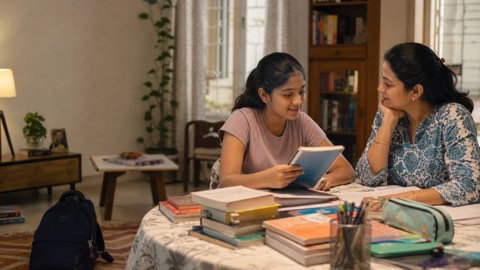
Do: keep the household calm and the routine steady, provide food and quiet, drive to the exam centre, handle logistics (admit card, stationery, transport, timings), and say clearly and often that your love does not depend on the result.
Do not: compare with siblings, cousins or neighbours; announce their marks to relatives; hover; ask 'how much have you studied today' repeatedly; or predict catastrophe. Anxiety transmitted from parents is a large part of what teenagers carry into the hall.
After each paper, do not conduct a post-mortem. Ask if they want to talk; if not, feed them and move to the next subject. Discussing a finished paper only damages the next one.
And say the thing that most needs saying, before the results: a bad result is survivable, there are many routes, and nothing about your worth as a person is being examined this month.
When to see a doctor
Immediately, and treat as an emergency: any talk of not wanting to live, self-harm, giving away possessions, saying goodbye, or hopelessness about the future. Stay with them, remove access to means of harm, and get help the same day — Tele-MANAS on 14416, emergency 112, or a hospital. Exam season is India's highest-risk period for adolescent suicide, and taking every statement seriously is the correct response, always.
Also seek help for: panic attacks, an inability to study for weeks because of anxiety, not sleeping for several nights, sudden withdrawal, weight loss, or a marked personality change. School counsellors, paediatricians and child psychologists all help, and the intervention is usually short and effective.
This article is general information, not medical advice, and is no substitute for personal medical advice. For any decision about your or your child's health, please consult your doctor.
Frequently asked questions
My child says the syllabus is impossible with a month left. What now?
Triage rather than panic: list the highest-weight chapters, do those thoroughly with past papers, and accept gaps in the low-weight ones. A calm plan on paper reduces anxiety more than reassurance does.
Should we stop all screen time and social media during boards?
Total bans usually fail and add conflict. Agree limits instead: phone out of the study room and out of the bedroom at night, fixed short windows for messaging. Sleep protection matters more than total abstinence.
My child has stopped studying entirely and just lies in bed.
That looks like avoidance driven by anxiety or low mood rather than laziness, and pushing harder usually makes it worse. Reduce the demand to something tiny and achievable, and get a professional assessment — this pattern responds well to help.
Are coaching classes necessary alongside school?
For competitive entrance exams, structured coaching helps many students, though self-study with good material also works. For board exams, school plus disciplined revision is usually enough. Judge by whether the child is learning, not by what the neighbours have enrolled in.
Sources
Every clinical figure on this page is taken from the guidelines below. Where our numbers and your doctor's differ, ask which guideline they follow.
- WHO. Mental health of adolescents (Fact sheet) (2021)Backs the page's guidance on recognising emergency warning signs in adolescents (talk of not wanting to live, self-harm, hopelessness) and the call to treat such statements as an immediate crisis requiring same-day help.
- AAP. Healthy Sleep Habits: How Many Hours Does Your Child Need? (2023)Supports the recommendation that teenagers aim for seven to nine hours of sleep per night, including through the exam period, and the claim that memory consolidation occurs during sleep.
- ICMR. Dietary Guidelines for Indians (2024)Backs the page's advice on regular meals with adequate protein and iron for teenagers, and the statement that anaemia is common in Indian adolescents, particularly girls, and impairs concentration.
Reviewed by
- Nakul Phatak — CEO, theAsianparent India & IndonesiaHead of theAsianparent India; father of one
- Roshni Chugani — Head of Marketing, theAsianparent India & Singapore12 years in the mother-and-baby space; mother of two
Published by: theAsianparent editorial team