The first forty days: recovery, confinement customs and what really matters

Nearly every Indian community prescribes forty days of rest after birth — and modern medicine largely agrees with the instinct. Here is the honest map of those weeks: what the body is doing, which customs to keep, and which signs never wait.
What the body is actually doing
Birth is an athletic event followed by a renovation project. Over these weeks the uterus shrinks from watermelon back toward pear (felt as afterpains, sharpest while breastfeeding — that's the right hormone doing two jobs); bleeding (lochia) runs bright red for days, then pink-brown, then yellowish-white, tapering over four-six weeks; and everything stretched, cut or torn knits back together.
Normal in these weeks: exhaustion beyond description, night sweats (the body offloading pregnancy fluid), hair falling in handfuls around month three-four (it regrows), constipation and haemorrhoids, and emotions that swing without notice. The baby blues — teary, overwhelmed days in week one — touch most mothers and lift within two weeks; sadness that persists or deepens is a different thing, and our postpartum mental health guide covers it properly.
A caesarean adds a layer: it is abdominal surgery, and recovery honours that — no heavy lifting (nothing heavier than the baby) for six weeks, guard the incision when laughing or coughing (a pillow pressed to it helps), walk early and often but climb stairs sparingly at first, and watch the scar for redness, discharge or opening. The '40 days of rest' custom fits caesarean recovery almost perfectly.
The confinement customs: keep, adapt, drop
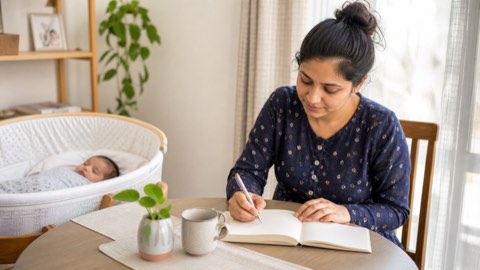
KEEP the core of jaappa gladly: rest as a protected right, the mother fed rich home food and spared housework, the daily malish for mother (warm oil massage genuinely eases aching muscles and is one of the tradition's pleasures), and a defended boundary against the visitor flood. These weeks exist in nearly every culture because they work.
ADAPT the isolation rules: the old total-seclusion had infection-control logic in its day; its modern version is simply hygiene and crowd-limits — hand-washing before holding the baby, no visits from anyone ill, no kissing the newborn's face or hands, small visitor doses. And adapt the no-bathing rule out of existence: a daily warm bath is safe, healing and morale-boosting; what the tradition rightly opposed was getting chilled, so bathe warm and dry quickly.
DROP without guilt: heavy tight belly-binding (a soft supportive wrap is fine if it feels good; aggressive binding doesn't flatten anything and can strain the healing pelvic floor), heating the room to stifling with fires or heaters near the baby (overheating is a real newborn risk), the no-water/less-water rules for the mother (a breastfeeding body needs more water, not less), and any custom that keeps the mother from her postnatal check-ups. Customs serve the mother; the mother does not serve the customs.
The confinement diet — gond ladoo, panjiri, ajwain water, methi, harira, garlic — is mostly excellent recovery food: calories, iron, fibre and comfort. Enjoy it alongside normal balanced meals; the only cautions are moderation on ghee-dense sweets if gestational diabetes was in the picture (ask at the postnatal check) and continuing the IFA and calcium tablets through breastfeeding.
The check-ups, the paperwork, the plumbing
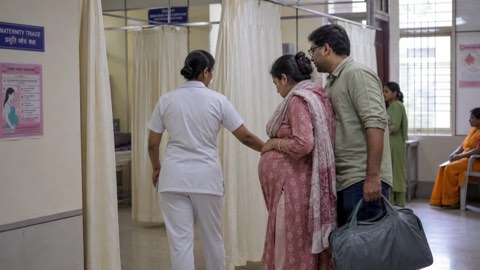
The mother's postnatal checks matter as much as the baby's: the schedule your hospital gives (commonly around day 3-7 if flagged, then at six weeks) — and the six-week check is not optional; it reviews healing, bleeding, blood pressure, mood, and contraception. Yes, contraception: fertility can return before the first period, breastfeeding is not reliable protection, and the healthy gap before the next pregnancy is a real conversation for exactly this visit.
The ASHA worker's home visits in these weeks (the HBNC schedule — days 3, 7, 14, 21, 28 and 42) cover both mother and baby — weight, feeding, danger signs. Let her in; the visits catch problems early and cost nothing. JSY beneficiaries: this is also when the scheme's paperwork completes.
The pelvic floor deserves daily attention from early on: gentle Kegels (squeeze as if stopping urine, hold, release) rebuild what pregnancy and birth stretched, and they treat-and-prevent the sneeze-leak. Leaking that persists past the early months has real treatment — raise it at the six-week check rather than accepting it as the price of motherhood, because it isn't.
When to see a doctor at once — mother's list
Same-day, any of these: bleeding that soaks a pad an hour or suddenly turns bright red and heavy again, or clots bigger than a lemon; fever with chills; foul-smelling discharge; a caesarean scar or stitch line that reddens, opens or oozes; severe headache with vision changes or a fit (pre-eclampsia can strike AFTER delivery too — this one is an emergency); one-sided leg swelling or calf pain, or any breathlessness or chest pain (108 — clot risk is real in these weeks); burning urination or inability to pass urine; a hard, red, painful breast area with fever; or thoughts of harming yourself or the baby — that last one is a medical emergency with kind, effective treatment, and Tele-MANAS at 14416 answers day and night.
Frequently asked questions
When can I start exercising again?
Walking: from the first days, building gently. Proper exercise: after the six-week check clears you (longer feel-ready runway after a caesarean), starting with the pelvic floor and core rather than crunches — the abdominal separation of pregnancy (diastasis) needs the gentle rebuild first. The body that grew a human for nine months gets months to come back; the bounce-back timelines on Instagram are fiction with lighting.
Forty days at my mother's house or my own
does the tradition require the maika? — The tradition's engine is 'someone else runs the house while you recover' — the address is irrelevant. Whichever home delivers rest, food and emotional safety is the correct one; a maika stay that adds conflict serves the custom's letter and defeats its purpose.
When is it safe to resume sex?
Medically, once bleeding has stopped and healing feels complete — commonly around the six-week mark, but readiness (physical and otherwise) varies widely and both matter. Two practical notes: contraception first (see above), and dryness is normal while breastfeeding — go slow, use lubricant, and mention pain at the check-up rather than enduring it.
Everyone visits the baby; I feel like furniture. Is it petty to mind?
It is not petty; it is the postpartum experience's commonest wound. The forty-day custom at its best centres the MOTHER — hold that. Appoint the spouse as gatekeeper, keep visits short, and let the household's helpers hold the baby while you sleep, not the other way round. A mother being cared for is not a luxury add-on to newborn care; she is half of it.
Sources
Every clinical figure on this page is taken from the guidelines below. Where our numbers and your doctor's differ, ask which guideline they follow.
- WHO. WHO recommendations on postnatal care of the mother and newborn (2013)Backs the postnatal check schedule (day 3, day 7–14, and six weeks), the danger signs requiring same-day emergency care (heavy bleeding, fever, foul discharge, severe headache with visual changes), and the principle that breastfeeding is not reliable contraception and that fertility can return before the first period.
- NICE. Postnatal care (NICE guideline NG194) (2021)Backs the description of normal postpartum recovery (lochia duration of four to six weeks, night sweats, hair loss, afterpains sharpest during breastfeeding, baby blues lifting within two weeks), the six-week postnatal check reviewing healing, bleeding, blood pressure, mood, and contraception, and pelvic-floor exercises (Kegels) as first-line treatment and prevention for urinary leakage.
- WHO. Medical eligibility criteria for contraceptive use, 5th edition (2015)Backs the statement that breastfeeding alone is not reliable contraception and that contraception should be discussed at the six-week postnatal visit.
Reviewed by
- Nakul Phatak — CEO, theAsianparent India & IndonesiaHead of theAsianparent India; father of one
- Roshni Chugani — Head of Marketing, theAsianparent India & Singapore12 years in the mother-and-baby space; mother of two
Published by: theAsianparent editorial team