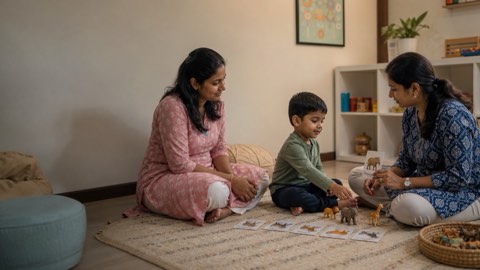
Supporting a neurodivergent child at school in India

Indian law gives these children more rights than most schools admit to. Knowing the specific words to use changes what you get.
What the law provides
The Rights of Persons with Disabilities Act 2016 covers specific learning disabilities including dyslexia, autism spectrum disorder, ADHD and intellectual disability, and requires schools to provide reasonable accommodation and to not deny admission on the grounds of disability.
The Right to Education Act guarantees admission and inclusive education in the neighbourhood school.
For board exams, both CBSE and CISCE publish provisions for candidates with disabilities: extra time, a scribe or reader where appropriate, exemption or substitution for certain language or mathematics requirements, use of a calculator or computer in some cases, and separate seating. These require an application supported by a certificate, usually well before the exam year — the deadlines are early and missing them is the commonest reason a child does not get the provision.
A disability certificate or a formal assessment from a recognised institution is what converts a request into an entitlement. Getting one takes time in the public system; start earlier than feels necessary.
What to ask the school for
Put every request in writing and keep the replies. This single habit changes how schools respond, and it is what you will need if you have to escalate.
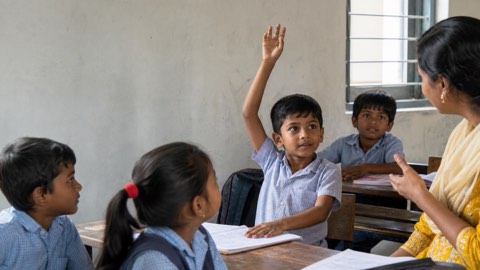
In the classroom, the commonly useful accommodations are: seating near the front, instructions given one at a time and repeated, extra time for written work, permission to type rather than handwrite, reduced copying from the board, a printed copy of notes, movement breaks, and a quiet place to go when overwhelmed.
For assessment: extra time, a reader or scribe, marking that does not penalise spelling in non-language subjects, and alternative formats where the format rather than the knowledge is the barrier.
For sensory needs: warning before fire drills and assemblies, permission to skip the loudest events, and a place to eat away from the crowd if the dining hall is unbearable.
Ask for a named person who coordinates it — a special educator, counsellor or class teacher — so you are not renegotiating with every new subject teacher.
Ask what the school does about bullying specifically, because neurodivergent children are targeted at much higher rates and a generic policy is not an answer.

When the school resists
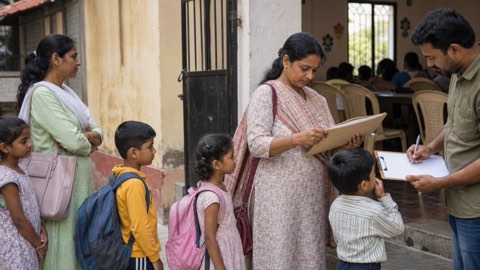
Resistance is common and usually takes the form of vagueness rather than refusal: agreement in a meeting, nothing in the classroom. Written requests and written replies fix most of that.
Escalate in order: class teacher, coordinator or special educator, principal, then the school's management or trust. Keep it factual and keep copies.
Beyond the school: the State Commissioner for Persons with Disabilities takes complaints under the RPwD Act, and the board itself handles exam-provision disputes. The Chief Commissioner's office handles matters at national level.
If a school suggests the child would 'be happier elsewhere', ask for that in writing. Very few will put it on paper, and the request usually ends the conversation.
Find the other parents. In most Indian cities there is a group for the specific condition, and they will know which schools actually deliver rather than which advertise inclusion.
When to see a doctor
Seek assessment rather than waiting if a child is not meeting speech, social or motor milestones, loses skills they had, is not making progress in reading or writing after adequate teaching, or is struggling far more than their peers with attention, organisation or emotional regulation.
Ask your paediatrician for referral to a developmental paediatrician, child psychiatrist, clinical psychologist or a district early intervention centre. In India the wait can be long, so start the process while pursuing school support in parallel.
Urgently, the same day: any talk of self-harm, or a child who says they do not want to be alive. Tele-MANAS on 14416 is free, confidential and round the clock.
This article is general information, not medical or legal advice. Provisions and deadlines change, so confirm the current position with the board and your own doctor.
This article is general information, not medical advice, and is no substitute for personal medical advice. For any decision about your or your child's health, please consult your doctor.
Frequently asked questions
Will a diagnosis label my child?
It is what unlocks accommodations and exam provisions, and without it schools are not obliged to do anything. The label is a key, not a verdict.
Can a school refuse admission?
Not on the grounds of disability. In practice some do so indirectly, which is why written communication matters from the first enquiry.
Are private schools covered?
Yes, the RPwD Act applies to all educational institutions receiving government aid or recognition.
How early should we apply for exam provisions?
Far earlier than the school will tell you. Ask in class 8 or 9 what will be needed for the class 10 boards, and get the certificate in hand well before the application window.
Reviewed by
- Nakul Phatak — CEO, theAsianparent India & IndonesiaHead of theAsianparent India; father of one
- Roshni Chugani — Head of Marketing, theAsianparent India & Singapore12 years in the mother-and-baby space; mother of two
Published by: theAsianparent editorial team