Preventing cockroaches in a home with babies and children

Prevention is the part that works, and it is also the part that is safe. No substance should be treated as safe for a home with a crawling baby simply because it is described as natural.
Why it matters
Cockroach allergens are a well-established trigger for asthma and allergic rhinitis in children, and exposure in early childhood is associated with developing asthma. In dense urban Indian housing this is a significant contributor.
The allergens are in droppings, shed skins and body fragments, and they persist in dust after the cockroaches are gone — which is why cleaning matters as much as killing.
Cockroaches also carry bacteria across surfaces, which matters where food is prepared and where a baby crawls.
So the goal is not just fewer cockroaches. It is fewer allergens in the dust, which means removing food and water sources, sealing entry points, and cleaning thoroughly after any treatment.
Remove what they need
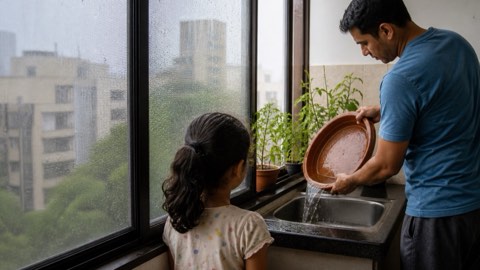
Water first. Cockroaches need water more urgently than food. Fix dripping taps, dry the sink and counter at night, empty the washing-up bowl, do not leave water in buckets and mugs overnight, and check under the fridge and behind the washing machine where condensation collects.
Food: airtight containers for everything including pet food and flour, no crumbs, wipe surfaces at night, and do not leave dishes overnight. Cover the dustbin and empty it daily.
Clean where you do not look: behind and under the fridge, under the gas stove, inside the microwave base, the gap behind the sink, and the cupboard under the sink. That is where the population actually lives.
Cardboard and newspaper stacks are shelter and food both. Clear them, particularly under the sink and on top of cupboards.
In a flat, they travel between units through shared plumbing and shafts. Cover drains at night, and treat this as a building-level problem when the building has one — individual treatment achieves little if the neighbours do nothing.
Sealing, control products, and what not to use
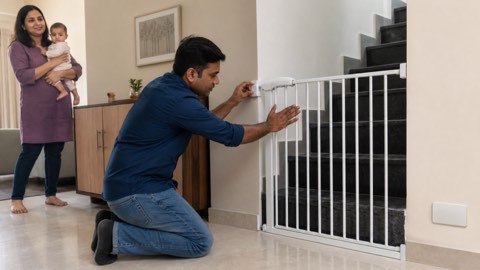
Seal entry points: gaps around pipes under the sink, cracks in tiles and skirting, gaps around the window frame and the front door, and unused drain outlets. Silicone sealant and steel wool in larger gaps do more than any spray.
Bait gels are generally the most effective approach in a home and are applied in cracks and hidden places rather than sprayed over surfaces. Applied properly they are placed where a child cannot reach — inside cupboard hinges, behind appliances — and that placement is the safety measure.
Boric acid is widely recommended in Indian households and is not harmless. It is toxic if swallowed, and infants are the group most at risk of poisoning from it. If it is used at all, it must be inside inaccessible voids, never as a visible powder on floors, shelves or behind an open cupboard where a crawling child can reach.
Sprays and foggers: avoid with children in the home. If used, the children and any pregnant woman should be out of the house for the period the label specifies, all food and utensils covered or removed, and surfaces washed thoroughly before use.
Do not assume natural means safe. Essential oils are not safe for infants — several are toxic if swallowed and some are unsafe even applied or diffused around babies. Diatomaceous earth is an irritant to airways. Naphthalene balls should not be in a home with small children at all: they are a poisoning risk if swallowed and are associated with a blood disorder in susceptible infants.
Call professional pest control when: the infestation is established, you see them in daylight, they are in more than one room, or you have tried prevention for a few weeks without change. Tell the company there is a baby in the house, ask what they are applying, ask for the safety data and re-entry time in writing, and remove children and pets for the stated period.
When to see a doctor
Call a poison centre or go to hospital immediately if a child may have swallowed any pesticide, boric acid, naphthalene or essential oil. Take the container with you. Do not make the child vomit unless a doctor tells you to. Call 108 if travel is difficult.
Same-day care for: difficulty breathing, wheeze, persistent cough, vomiting, drowsiness or unusual behaviour after any pest treatment in the home.
See a doctor if a child has a persistent night cough, wheeze, or recurrent chest symptoms — cockroach allergen is a recognised trigger and worth mentioning as part of the history.
This article is general information, not medical advice, and has not been reviewed by a clinician or a licensed pest-control professional. Follow the label on any product and confirm safety with the manufacturer for a home with infants.
This article is general information, not medical advice, and is no substitute for personal medical advice. For any decision about your or your child's health, please consult your doctor.
Frequently asked questions
Is boric acid safe because it is traditional?
No. It is toxic if swallowed and infants are most at risk. If used at all, only inside sealed voids a child cannot reach.
Are essential oils a safe alternative?
No. Several are toxic to infants if swallowed, and natural does not mean safe for a home with a crawling baby.
Do naphthalene balls work and are they safe?
They are a poisoning risk in a home with small children and should not be used. Airtight storage does the same job for clothes.
Should I get professional pest control with a baby at home?
Often yes for an established infestation, and tell them there is a baby, ask what is being used, and follow the stated re-entry time with children and pets out of the house.
Sources
Every clinical figure on this page is taken from the guidelines below. Where our numbers and your doctor's differ, ask which guideline they follow.
- WHO. WHO Guidelines for Indoor Air Quality: Dampness and Mould (2009)Backs the claim that allergens in dust from biological sources (including cockroach droppings, shed skins and body fragments) persist in indoor environments and are associated with respiratory disease in children, and that cleaning and source removal are central to reducing exposure.
- NIH. Inner City Asthma Study — Cockroach Allergen Exposure and Asthma in Early Childhood (2005)Backs the claim that cockroach allergen exposure in early childhood is associated with developing asthma, particularly in dense urban housing.
- NHS. Asthma in children — Causes (2023)Backs the clinical advice to see a doctor if a child has persistent night cough, wheeze, or recurrent chest symptoms, and that cockroach allergen is a recognised trigger worth raising in the clinical history.
Reviewed by
- Nakul Phatak — CEO, theAsianparent India & IndonesiaHead of theAsianparent India; father of one
- Roshni Chugani — Head of Marketing, theAsianparent India & Singapore12 years in the mother-and-baby space; mother of two
Published by: theAsianparent editorial team