Baby-proofing an Indian home: the room-by-room checklist

Most childhood injuries happen at home, and the Indian hazards are specific: water buckets, balcony grilles, hot vessels on the floor, and cleaning fluids in soft-drink bottles. Here is the room-by-room list.
The hazards specific to Indian homes
Water storage: buckets, drums and tubs are the leading drowning risk for Indian toddlers, and a child can drown in a few centimetres of water in minutes and in silence. Keep buckets emptied when not in use, drums covered and latched, and bathroom doors closed.
Balconies and windows: grilles with wide gaps, furniture pushed against a railing, and low sills. A child's head can pass through a gap of about ten centimetres. Fit grilles with narrow spacing, and keep chairs, stools and cots away from railings.
Kitchen at floor level: hot vessels placed on the ground to cool, pressure cookers, kerosene or gas stoves at low height, and the cooker's steam. Cook with the child out of the kitchen, turn handles inward, and never cool hot food on the floor.
Poisons in the wrong bottles: cleaning fluids, kerosene and pesticides decanted into soft-drink bottles cause a large share of Indian childhood poisonings. Never decant, always keep the original labelled container, and store it high and locked.
Room by room
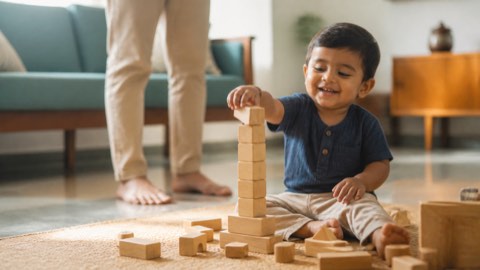
Living room: cover sockets, secure heavy furniture and televisions to the wall, remove or pad sharp-cornered tables, tie up curtain and blind cords (a strangulation risk), keep small objects and coins off low surfaces, and put a gate at the top and bottom of stairs.
Kitchen: a latch on the cupboard with cleaning products, knives and matches out of reach, no tablecloth a child can pull, hot drinks well away from the edge, and a gate or a closed door during cooking.
Bathroom: buckets emptied, the door shut and preferably latched high, toilet lid closed, hot-water taps and geysers set to a safe temperature, and no electrical appliances near water. Never leave a child alone in a bath, not for a second.
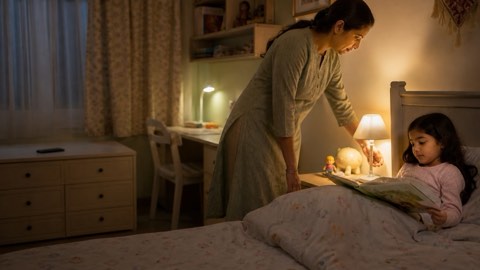
Bedroom: cot with narrow bar spacing, no pillows or loose quilts for a baby under one, no cot against a window with a cord, and medicines in a locked place rather than a bedside drawer.
Outdoors and stairs: gates on stairs, the terrace door locked, and any well, tank or open drain covered. In homes with an open kitchen fire or coal angeethi, a physical barrier is not optional.
Poisons, medicines and small objects
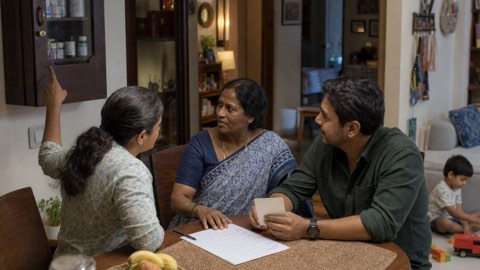
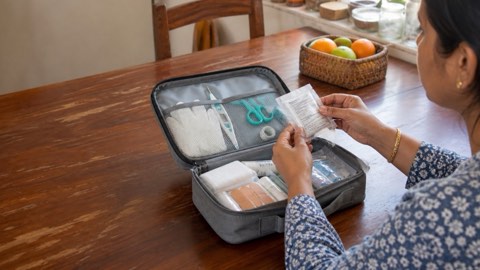
Store all medicines high and locked, including the ones that look like sweets — iron tablets are among the commonest serious childhood poisonings in India, and a handful can kill a toddler. Keep grandparents' daily medicine strips off bedside tables.
Choking: anything that fits through a toilet-paper tube is a choking hazard for a child under three. The specific Indian ones — whole peanuts, chana, grapes, hard sweets, coins, safety pins, button batteries (which cause severe internal burns within hours) and small toy parts.
Keep the poison and emergency numbers written where anyone in the house can find them: 108 for an ambulance, the paediatrician, the nearest hospital. If a child swallows something harmful, do not induce vomiting — go to hospital with the container or the substance.
Keeping it realistic
Baby-proofing does not replace supervision; it buys the seconds when supervision lapses, which it will. Get down on the floor at the child's height once and look — it reveals hazards no adult standing up can see.
Update it as the child develops: crawling brings floor hazards, pulling to stand brings table edges and tablecloths, climbing brings furniture and balconies, and opening doors and latches brings everything else. Roughly every three months, re-walk the house.
Brief everyone who looks after the child — grandparents, ayah, older siblings — on the specific rules, particularly buckets, balconies, hot vessels and medicines. And where you visit often, do a quick version at the grandparents' house, which is usually the least child-proofed place a child spends time.
When to see a doctor
Emergency, 108 or straight to hospital: any fall from a height with a head injury, drowsiness, vomiting or unequal pupils; drowning or near-drowning even if the child seems fine afterwards; suspected poisoning of any kind (take the container); a swallowed button battery or magnet; choking that needed intervention; any burn larger than the child's palm, or any burn to the face, hands or genitals; and electrical shock.
For burns before you leave: cool with running water for twenty minutes, do not apply toothpaste, oil, ice or haldi, and cover with a clean cloth. For poisoning: do not make the child vomit and do not give milk unless told to.
This article is general information, not medical advice, and is no substitute for personal medical advice. For any decision about your or your child's health, please consult your doctor.
Frequently asked questions
We store water in drums because of supply timings. What can we do?
Use containers with tight, latching lids, keep them in a room a toddler cannot enter alone, and never leave an open bucket standing. This is the single highest-value change in most Indian homes with a toddler.
Are safety gates and corner guards worth buying?
Stair gates yes, unequivocally. Corner guards and socket covers are cheap and useful. Fancy branded kits are not necessary — a latch, a hook high on a door, and rearranged furniture do most of the work.
My mother-in-law says children learn by falling and we are overprotecting.
Minor falls do teach; drowning, poisoning and balcony falls do not. Distinguish between the two categories out loud: free play on the floor, absolute barriers around water, height, fire and chemicals.
How high can a toddler climb?
Higher than you think, and earlier than you expect — most parents are surprised the first time. Assume that anything reachable by climbing on something else is reachable, and secure furniture that can topple.
Sources
Every clinical figure on this page is taken from the guidelines below. Where our numbers and your doctor's differ, ask which guideline they follow.
- WHO. World Report on Child Injury Prevention (2008)Backs the claims that drowning can occur in very small amounts of water, that young children can drown silently and rapidly, and the general hierarchy of drowning risks from household water containers.
- CDC. Drowning Prevention (2024)Supports the claim that a child can drown in a few centimetres of water and the recommendation never to leave a child alone near water, even briefly.
- AAP. Choking Prevention (HealthyChildren.org) (2023)Supports the toilet-paper-tube test as a guide to choking hazards for children under three, and the specific warning about button batteries causing severe internal burns rapidly.
- WHO. Preventing burns and scalds in children (Violence and Injury Prevention factsheet) (2021)Backs the first-aid burn advice to cool with running water for twenty minutes and the instruction not to apply toothpaste, oil, ice or turmeric to burns.
- NHS. Poisoning — First Aid (2023)Supports the advice not to induce vomiting after suspected poisoning, not to give milk unless instructed, and to take the container to hospital with the child.
Reviewed by
- Nakul Phatak — CEO, theAsianparent India & IndonesiaHead of theAsianparent India; father of one
- Roshni Chugani — Head of Marketing, theAsianparent India & Singapore12 years in the mother-and-baby space; mother of two
Published by: theAsianparent editorial team