When you shout at your children: understanding parental anger and stopping the cycle

Every parent has shouted at a child and hated themselves afterwards. Here is what is actually driving it, what to do in the ten seconds before it happens, and how to repair the damage when it already has.
What is actually driving it
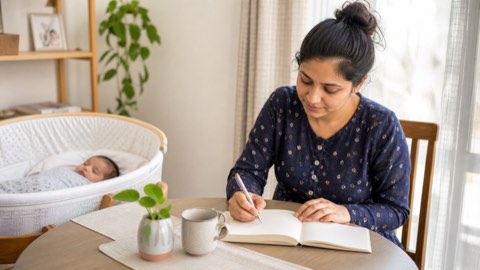
Anger is usually the visible layer on top of something else: exhaustion, overwhelm, financial pressure, an unhelpful spouse, no help at home, no time that belongs to you, or a childhood in which shouting was how problems were handled. The child's behaviour is the trigger, rarely the cause.
Recognise the physical build-up — jaw tightening, heat in the chest, heart rate rising, a narrowing of attention. Most parents can identify the ten seconds before the explosion once they start looking, and those ten seconds are where the intervention lives.
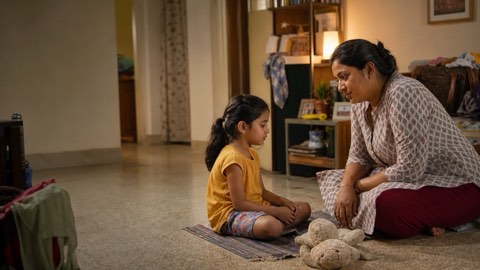
It is also worth naming a specific Indian pattern: many adults were raised with shouting and hitting, and under stress the body reaches for the script it learned. Recognising the inheritance is not an excuse; it is the beginning of changing it.
What shouting does
Frequent shouting, name-calling and humiliation affect children in measurable ways — more anxiety and depression, more aggression, lower self-esteem, and worse behaviour over time, not better. Verbal aggression is not a soft alternative to hitting; it does its own damage.
Children also learn emotional regulation by watching adults do it. A parent who explodes teaches that big feelings are handled by exploding — which is exactly the behaviour that will be punished in the child later.
The daily-life cost is quieter: children stop telling you things. A child weighing up whether to admit a broken glass or a bad test result is calculating your reaction, and that calculation matters far more when they are fifteen than when they are five.

In the moment
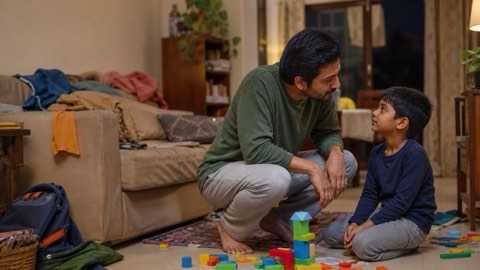
Stop talking. The first move is silence — say nothing rather than something you will regret. Then breathe out slowly, longer than the in-breath, three times. It sounds trivial and it physically lowers the arousal that fuels the shout.
Move: leave the room if the children are safe, splash water on your face, sit down, drink water. Announce it if you can — 'I am very angry, I am going to stand outside for two minutes' — which also models exactly what you want them to do.
Lower the volume deliberately. Speaking more quietly and slowly than usual forces your body down and gets attention faster than shouting does; children stop to hear a whisper.
Deal with the behaviour later, when calm. Discipline delivered in a rage is never the discipline you would have chosen, and the child hears the anger rather than the lesson anyway.
Prevention and repair
Prevention is mostly logistics: sleep, food, and lowering the number of flashpoints. The evening rush — school pickup, homework, dinner, bath, bed, with a tired adult and tired children — is when most shouting happens. Move dinner earlier, prepare in the afternoon, drop one task, ask for help specifically rather than hoping it is offered.
Ask for the help directly. Many Indian mothers are running the whole domestic operation while being told they should manage. 'I need you to do bath and bed on weekdays' is a request; resentment is what happens when it is never made.
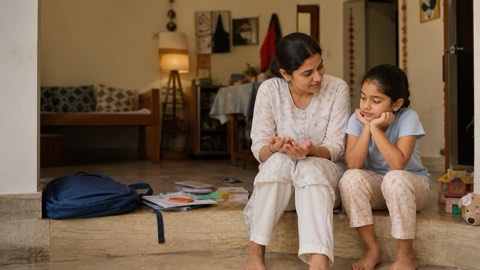
Repair every time it happens: 'I shouted. That was not okay. I was tired and angry, and it was not your fault.' Do not add 'but you made me' — that hands a child responsibility for an adult's feelings. Children are remarkably forgiving of a parent who repairs, and repair itself teaches accountability.
When to see a doctor
Get help if: the anger frightens you or your children; you have hit harder than you intended, or fear you might; the rage comes with low mood, hopelessness, panic or thoughts of harming yourself; you are drinking to cope; or you cannot remember the last time you felt calm. Talk to your doctor, a psychologist, or Tele-MANAS on 14416 — free, confidential and available round the clock in Indian languages. If there is violence in the home, in any direction, seek help urgently; the women's helpline is 181 and the police emergency is 112.
This article is general information, not medical advice, and is no substitute for personal medical advice. For any decision about your or your child's health, please consult your doctor.
Frequently asked questions
I shout every single day. Have I ruined my children?
No. What matters is the overall pattern and whether repair happens. Children are resilient when the relationship is broadly warm and the adult takes responsibility. Change the pattern from today and the arc changes.
My child only listens when I shout.
Because shouting has become the signal that you mean it. Rebuild the signal: give one clear instruction, go to the child rather than calling across the house, make eye contact, and follow through with a calm consequence. It takes a couple of weeks and it holds better.
My husband shouts and I do not. What now?
Discuss it away from the children, describe the effect rather than attacking the person, and agree on the household approach together. If it escalates to intimidation or violence, that is a safety issue, not a parenting disagreement — get help.
Is it ever okay to raise my voice?
Yes — for danger (a child running toward a road), and sometimes simply because you are human. The line is between an occasional loud moment and a pattern of shouting, insults and humiliation. Aim for the first, repair when you cross into the second.
Sources
Every clinical figure on this page is taken from the guidelines below. Where our numbers and your doctor's differ, ask which guideline they follow.
- WHO. INSPIRE: Seven Strategies for Ending Violence Against Children (2016)Backs the claim that verbal aggression and humiliation cause measurable harm to children including anxiety, depression, aggression and lower self-esteem, and that these represent a form of violence distinct from physical hitting.
- NICE. Antisocial behaviour and conduct disorders in children and young people (NG58) (2017)Supports the claims that children learn emotional regulation by observing adults and that consistent, calm parenting responses — rather than angry reactions — are associated with better child behavioural outcomes.
- NIH. Parental verbal aggression and its effects on children's psychological development (MedlinePlus / NCBI reference) (2023)Supports the claim that frequent parental shouting is associated with increased child anxiety, depression and aggression, and that warm, repairing parental relationships buffer against long-term harm.
Reviewed by
- Nakul Phatak — CEO, theAsianparent India & IndonesiaHead of theAsianparent India; father of one
- Roshni Chugani — Head of Marketing, theAsianparent India & Singapore12 years in the mother-and-baby space; mother of two
Published by: theAsianparent editorial team