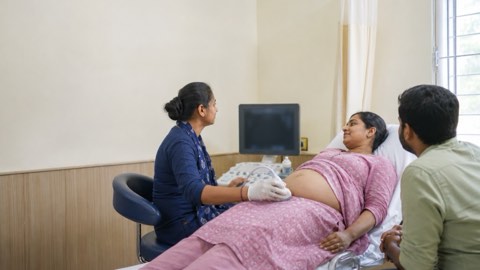
Pregnancy after 35: the real risks, the extra tests, and the reassurance

The phrase 'advanced maternal age' is used from 35, which is alarming language for a fairly modest change in risk. Here is the honest version.
What actually changes
The risk of chromosomal conditions such as Down syndrome rises with maternal age — gradually through the thirties and more steeply after 40. In absolute terms it remains a minority outcome at every age, and screening detects most cases.
Risks that rise modestly: gestational diabetes, high blood pressure and pre-eclampsia, placenta previa, growth restriction, preterm birth, caesarean delivery, and miscarriage. Twins are also more common.
What does not change: the overwhelming likelihood of a healthy baby. Most pregnancies after 35 are uncomplicated, and the extra monitoring exists to catch the things that respond to being caught.
Paternal age matters too, and is rarely mentioned — older fathers carry a modestly raised risk of certain conditions. It is a shared picture rather than a maternal one.
The screening on offer
First-trimester combined screening at 11-14 weeks: the nuchal translucency scan plus a blood test (double marker), giving a risk estimate for common chromosomal conditions.
NIPT (non-invasive prenatal testing): a maternal blood test from around 10 weeks that analyses the baby's DNA, with high detection rates for Down syndrome and some other conditions. It is a screening test, not diagnostic, and it is available privately in Indian cities at a cost. A positive result is confirmed by an invasive test.
Diagnostic tests: chorionic villus sampling (11-14 weeks) or amniocentesis (from about 15 weeks) give a definitive answer, with a small procedure-related risk of miscarriage. These are offered when screening suggests raised risk or for specific indications.
The anomaly scan at 18-22 weeks applies to everyone and remains the most important structural check. Remember that under the PCPNDT Act, none of these tests can be used to reveal the baby's sex, and asking is a criminal offence.
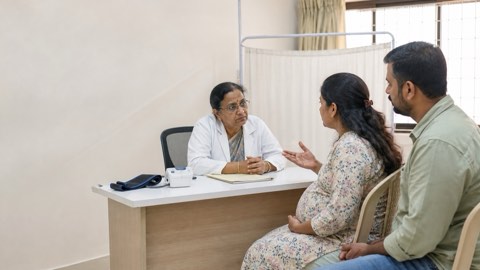

Reducing risk
Pre-pregnancy where possible: folic acid at least a month before conception, a check of blood pressure, thyroid, diabetes, haemoglobin and vitamin D, and treatment of any existing condition to a stable point before conceiving.
In pregnancy: early booking, all antenatal visits attended, blood pressure and sugar monitored closely, and aspirin from early pregnancy where your doctor identifies pre-eclampsia risk — a simple intervention with real benefit.
Lifestyle: no tobacco in any form including chewed tobacco, no alcohol, a diet that covers iron, calcium and protein, 30 minutes of activity most days, and adequate sleep. These matter at every age and slightly more at this one.
Choose a hospital with the capacity for what might be needed — a NICU and 24-hour obstetric and anaesthetic cover — rather than assuming a straightforward delivery.
When to see a doctor
Go immediately for the standard warning signs at any age: bleeding, severe abdominal pain, waters breaking, reduced fetal movements, severe headache with visual changes, sudden swelling of face and hands, high fever, or contractions before 37 weeks.
Before conceiving, if you are over 35: book a pre-pregnancy visit. It is the single most useful appointment available and almost nobody takes it — folic acid, existing conditions, medicines reviewed, and baseline tests done before rather than during.
This article is general information, not medical advice, and is no substitute for personal medical advice. For any decision about your or your child's health, please consult your doctor.
Frequently asked questions
Is 35 a cliff edge?
No. It is a threshold in guidelines rather than in biology; the change from 34 to 35 is negligible and the change from 35 to 42 is substantial. Treat it as a reason for good screening, not for anxiety.
Should I have NIPT?
It is an excellent screening test if the cost is manageable and you want the information, particularly with raised age-related risk. Discuss with your obstetrician what you would do with each possible result — that question matters more than the test itself.
Will I definitely need a caesarean?
No. Caesarean rates are somewhat higher at older ages, partly for medical reasons and partly for practice patterns. Vaginal delivery is entirely usual after 35.
Is it harder to conceive after 35?
Fertility declines with age and more so after 37, so seek advice earlier rather than later — after six months of trying at this age rather than a year. That advice applies to both partners; male fertility declines too.
Sources
Every clinical figure on this page is taken from the guidelines below. Where our numbers and your doctor's differ, ask which guideline they follow.
- WHO. WHO recommendations on antenatal care for a positive pregnancy experience (2016)Backs the page's recommendations on early antenatal booking, regular antenatal visits, blood pressure and glucose monitoring in pregnancy, folic acid supplementation before and during pregnancy, and dietary intake covering iron, calcium and protein.
- NICE. Antenatal care (NG201) (2021)Supports the schedule of first-trimester combined screening at 11–14 weeks (nuchal translucency plus blood test), the anomaly scan at 18–22 weeks as the key structural check, and the offer of diagnostic tests (CVS or amniocentesis) when screening indicates raised risk.
- NICE. Hypertension in pregnancy: diagnosis and management (NG133) (2019)Backs the page's statement that low-dose aspirin from early pregnancy is recommended where a doctor identifies pre-eclampsia risk, and supports pre-eclampsia as a modestly elevated risk in older mothers.
- ACOG. Practice Bulletin No. 226: Screening for Fetal Chromosomal Abnormalities (2020)Supports the page's description of NIPT as a high-detection-rate screening test (not diagnostic) for Down syndrome available from around 10 weeks, and the requirement that a positive NIPT result be confirmed by an invasive diagnostic test such as amniocentesis or CVS.
- IAP. IAP Guidelines on Antenatal Care and High-Risk Pregnancy (2021)Supports the page's advice on pre-pregnancy optimisation (folic acid, blood pressure, thyroid, diabetes, haemoglobin and vitamin D checks before conception), early booking, and selecting a delivery facility with NICU and 24-hour obstetric and anaesthetic cover for higher-risk pregnancies.
Reviewed by
- Nakul Phatak — CEO, theAsianparent India & IndonesiaHead of theAsianparent India; father of one
- Roshni Chugani — Head of Marketing, theAsianparent India & Singapore12 years in the mother-and-baby space; mother of two
Published by: theAsianparent editorial team