High-risk pregnancy: what makes one, and what changes

'High-risk' is a category for planning, not a prediction of disaster. Most high-risk pregnancies end with a healthy baby — with more appointments along the way.
What puts a pregnancy in the category
Existing conditions: diabetes, high blood pressure, thyroid disease, heart or kidney disease, epilepsy, autoimmune conditions, HIV, tuberculosis, severe anaemia, or thalassaemia and other blood disorders.
Pregnancy factors: twins or more, placenta previa, a short cervix, high blood pressure or pre-eclampsia developing in this pregnancy, gestational diabetes, a baby growing poorly or too large, low or high amniotic fluid, and Rh-negative blood group with sensitisation.
History: previous preterm birth, previous stillbirth or repeated miscarriage, previous caesarean, previous pre-eclampsia, or a previous baby with a congenital problem.
Age and circumstances: under 18 or over 35, a very short gap since the last pregnancy, severe undernutrition or obesity, and — significantly in India — tobacco use, including chewed tobacco.
What changes
More appointments and more scans: growth scans, Doppler studies of blood flow, non-stress tests, cervical length measurement, and closer blood pressure and blood sugar monitoring depending on the reason.
Sometimes specific treatments: progesterone or a cervical stitch for preterm risk, aspirin from early pregnancy for pre-eclampsia risk, insulin for diabetes, thyroid medication, anti-D injection for Rh-negative mothers, and steroid injections if early delivery is likely.
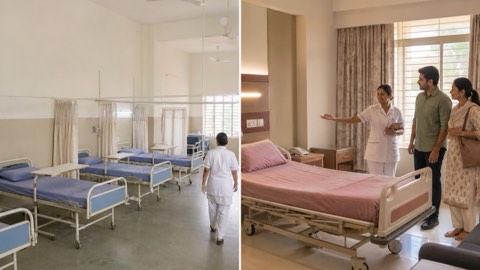
Delivery planning: often at a hospital with a NICU and a blood bank, sometimes earlier than 40 weeks, and sometimes by planned caesarean. The plan should be discussed with you well before it is needed.
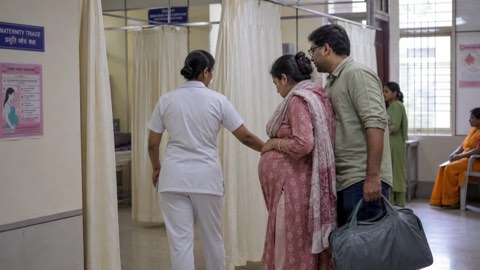
A referral to a maternal-fetal medicine specialist where available. In the public system, district hospitals and medical colleges handle high-risk pregnancies, and the PMSMA programme provides free specialist antenatal check-ups on the 9th of every month.

What you can do
Attend every appointment, including the ones that feel repetitive — the monitoring is the intervention. Keep all reports in one file and carry it to every visit.
Take the medicines and supplements exactly as prescribed, and tell your doctor rather than stopping anything that causes side effects. This applies particularly to thyroid, blood pressure and epilepsy medicines, which have to be adjusted rather than stopped in pregnancy.
Learn the warning signs for your specific condition, and know exactly which hospital to go to and how you will get there at 3 a.m. Save 108, and keep the papers pouch ready from 28 weeks.
Ask direct questions: what specifically is the risk, what are we watching for, what would change the plan, and what should make me come in immediately. A clear answer to those four reduces anxiety more than reassurance does.
When to see a doctor
Go immediately, in any pregnancy: bleeding; severe or persistent abdominal pain; waters breaking or steady leaking; severe headache with visual changes or sudden swelling of face and hands; reduced or absent fetal movements; regular contractions before 37 weeks; high fever; severe vomiting with inability to keep fluids down; a fit; chest pain, severe breathlessness, or one-sided calf pain and swelling.
For a high-risk pregnancy, the threshold for calling should be lower still. Nobody at the hospital minds an unnecessary visit; everybody minds a late one.
This article is general information, not medical advice, and is no substitute for personal medical advice. For any decision about your or your child's health, please consult your doctor.
Frequently asked questions
Does high-risk mean my baby will have problems?
No. It means closer monitoring is warranted, and monitoring is what prevents problems. Most high-risk pregnancies end with a healthy mother and baby.
Is 35 really 'high risk'?
It shifts some risks upward — chromosomal conditions, blood pressure, gestational diabetes — enough to justify extra screening rather than alarm. Plenty of healthy pregnancies happen at 35, 38 and beyond, with good antenatal care.
Can I get good high-risk care in the public system?
Yes. District hospitals and government medical colleges manage the most complex obstetric cases in India, with blood banks, NICUs and specialist teams. The PMSMA free specialist check on the 9th of each month is worth using regardless of where you receive routine care.
I am carrying twins. What is different?
More frequent visits and scans, higher risks of anaemia, pre-eclampsia and preterm birth, more attention to growth and to which twin is where, and delivery usually planned around 36-37 weeks, depending on the type of twin pregnancy — twins sharing a placenta are delivered on the earlier side. Choose a hospital with a NICU and discuss the delivery plan early.
Sources
Every clinical figure on this page is taken from the guidelines below. Where our numbers and your doctor's differ, ask which guideline they follow.
- WHO. WHO recommendations on antenatal care for a positive pregnancy experience (2016)Backs the recommendations for increased antenatal visit frequency and monitoring in high-risk pregnancies, including blood pressure surveillance, blood sugar monitoring, and the use of aspirin from early pregnancy for women at risk of pre-eclampsia.
- NICE. Hypertension in pregnancy: diagnosis and management (NG133) (2019)Backs the recommendation of low-dose aspirin from early pregnancy for women at risk of pre-eclampsia, and the identification of previous pre-eclampsia and multiple pregnancy as risk factors warranting closer monitoring.
- ACOG. ACOG Practice Bulletin No. 231: Medically Indicated Late-Preterm and Early-Term Deliveries (2021)Backs the delivery planning guidance that twin pregnancies sharing a placenta are delivered on the earlier side, with uncomplicated dichorionic-diamniotic twins generally planned around 36–38 weeks, and that high-risk deliveries should occur at hospitals with NICU and blood bank facilities.
- IAP. IAP Standard Treatment Guidelines: High-Risk Pregnancy (2022)Backs the list of high-risk pregnancy warning signs warranting immediate attendance — including bleeding, severe abdominal pain, rupture of membranes, severe headache with visual changes or sudden swelling, reduced fetal movements, preterm contractions, high fever, and chest pain — and the recommendation for progesterone or cervical cerclage for preterm risk and steroid injections when early delivery is anticipated.
Reviewed by
- Nakul Phatak — CEO, theAsianparent India & IndonesiaHead of theAsianparent India; father of one
- Roshni Chugani — Head of Marketing, theAsianparent India & Singapore12 years in the mother-and-baby space; mother of two
Published by: theAsianparent editorial team