
Bullying at school: spotting it, reporting it, and what schools must do

Children rarely say the word. They say their stomach hurts, they lose things, they stop wanting to go. Here is how to recognise it, and how to make a school act.
What counts as bullying
Three features separate bullying from an ordinary falling-out: it is repeated, it is deliberate, and there is a power difference — numbers, age, size, popularity or status. A one-off fight between equals is a conflict; the same child targeted week after week is bullying.
It takes four common forms: physical (hitting, pushing, taking or damaging things), verbal (names, threats, comments on appearance, caste or religion), social (organised exclusion, rumours, turning a group against one child), and online.
In India, two specific forms deserve naming: caste- and religion-based harassment, which is discrimination as well as bullying and carries legal weight; and ragging, which is prohibited by law in colleges and increasingly in schools, with mandated anti-ragging mechanisms.
The signs
Physical and practical: unexplained bruises or scratches, torn clothes, lost or 'broken' belongings, missing money, coming home hungry (lunch taken), or asking for extra money.
Behavioural: not wanting to go to school, stomach aches and headaches on school mornings that vanish at weekends, changed routes home, sleep problems, nightmares, bedwetting in a younger child, falling grades, withdrawal from friends and activities, irritability or sudden anger at home, and in teenagers, self-harm or talk of hopelessness.
The child usually will not volunteer it — from shame, from fear of retaliation, or because they were told telling makes it worse. Ask specific questions rather than 'is everything okay': who did you sit with, who did you play with, who did you eat with, has anyone been unkind.
What to do
First, at home: listen fully without reacting with anger, and say the two sentences that matter — this is not your fault, and we will sort it out together. Do not tell them to hit back; it escalates, it usually punishes the child who retaliates, and it does not work where the power difference is real.
Write it down: dates, what happened, who was involved, who saw it, what your child said. A written record is what turns a conversation into an action.
Then the school, in writing and in order: class teacher first, then the principal if nothing changes. Ask three specific things — what will be done, by when, and how you will be told the outcome. Ask for the school's anti-bullying policy; most Indian schools are required to have a mechanism and many have committees under CBSE and state guidelines.
Follow up in writing after every meeting, summarising what was agreed. If the school does not act, escalate to the school management, then the local education officer or the board (CBSE has a complaints route), and for caste, religion or disability-based harassment, to the appropriate commission. If there is physical assault or a threat, it is a police matter — 112, and Childline on 1098.
Cyberbullying, and if your child is the bully
Online, the rules are: screenshot everything before blocking, do not reply, block and report on the platform, tell the school if classmates are involved, and report serious cases — threats, sexual content, images shared without consent — at cybercrime.gov.in or on 1930. Sexual images of anyone under 18 are a serious criminal offence under the POCSO and IT Acts regardless of who made them.
Take the phone out of the bedroom at night. A child cannot escape cyberbullying that follows them to bed, and sleep loss makes everything else worse.
If your child is the one bullying — and some parent is always on that side of the call — resist denial. Find out what is driving it: status, copying, their own experience of being bullied or hit at home. Make the consequence clear and proportionate, involve the school, focus on repair, and get help if aggression is a pattern rather than an incident.
When to see a doctor
Seek help urgently for any talk of self-harm or not wanting to live, self-harm marks, or hopelessness — stay with your child, remove means of harm, and get help the same day. Tele-MANAS on 14416 is free and round the clock; 112 is the emergency number; Childline is 1098.
Book an appointment for: persistent stomach aches or headaches, school refusal beyond a few days, sleep or appetite changes, withdrawal, panic before school, or a marked personality change. A school counsellor, paediatrician or child psychologist can help, and the effects of bullying respond well to support when it starts early.
This article is general information, not medical advice, and is no substitute for personal medical advice. For any decision about your or your child's health, please consult your doctor.
Frequently asked questions
The school says my child is 'too sensitive'.
That is a response to avoid, not an assessment. Return to the written record and the three questions: what will be done, by when, and how will I be told. Ask for the anti-bullying policy in writing; the tone usually changes at that point.
Should I contact the other child's parents?
Usually not directly, and never in a group chat. It commonly escalates into a family dispute and leaves your child more exposed. Let the school handle the other family.
Should I move my child to another school?
It is a legitimate last resort, and it is worth trying the formal route first — a change of school with the pattern unaddressed sometimes repeats. If your child is in real distress and the school will not act, moving is a reasonable choice and not a defeat.
How do I rebuild their confidence?
Restore one thing at a time: a friendship outside school, an activity where they are competent, and a daily period of your undivided attention. Confidence comes back through repeated ordinary success rather than reassurance.
Sources
Every clinical figure on this page is taken from the guidelines below. Where our numbers and your doctor's differ, ask which guideline they follow.
- WHO. Violence against children: bullying (2020)Backs the three-part definition of bullying (repeated, deliberate, power imbalance) and the distinction between bullying and ordinary conflict used in the article's opening section.
- AAP. Bullying: It's Not OK (2023)Supports the list of physical and behavioural warning signs a parent should watch for, including school avoidance, somatic complaints, sleep disturbance, withdrawal, and falling grades, and advises against telling children to hit back.
- UNICEF. Cyberbullying: What is it and how to stop it (2021)Backs the online safety instructions — screenshot before blocking, do not reply, block and report on the platform — and the guidance that removing devices from the bedroom at night helps children escape cyberbullying.
- NICE. Social, emotional and mental wellbeing in primary and secondary education (NG223) (2023)Supports the recommendation to seek professional help (paediatrician, school counsellor, or child psychologist) for persistent school refusal, somatic symptoms, sleep or appetite changes, and personality change, and the statement that bullying's effects respond well to early support.
- NIH. Bullying and cyberbullying: history, statistics, law, prevention and analysis (via NCBI/PMC) (2018)Supports the link between bullying victimisation and self-harm, hopelessness, and mental health deterioration in adolescents described in the article's behavioural warning signs and urgent-help sections.
Reviewed by
- Nakul Phatak — CEO, theAsianparent India & IndonesiaHead of theAsianparent India; father of one
- Roshni Chugani — Head of Marketing, theAsianparent India & Singapore12 years in the mother-and-baby space; mother of two
Published by: theAsianparent editorial team
Related articles
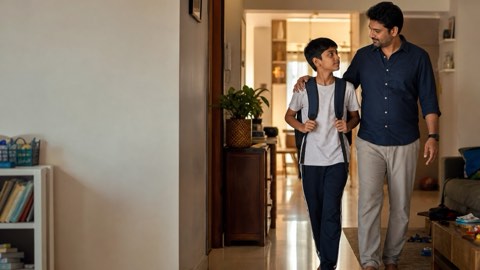 When a friendship breaks your child's heart for the first time
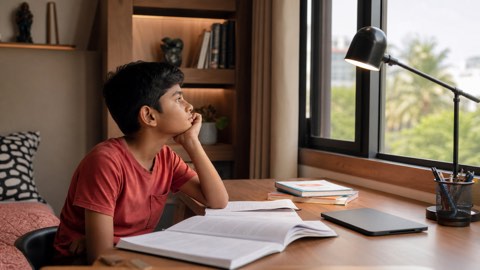 Phones, gaming and social media
- Teenage mental health
- When should a child start using deodorant?
- When will my daughter reach puberty? The order, the timing and the range
- When will my son reach puberty? The order, the timing and the awkward parts