
When should a child start using deodorant?

Body odour arrives with puberty, often at nine or ten, and long before most parents expect it. Here is what to use, and how to raise it without making a child self-conscious.
When it starts
Body odour is one of the earliest signs of puberty, produced when the apocrine glands in the armpits become active and skin bacteria act on their secretions. It commonly appears between eight and twelve, sometimes earlier.
It is not a hygiene failure. A child who bathes daily still develops odour once those glands switch on, and in India's heat it becomes noticeable quickly.
Odour appearing before about age eight, especially with other signs like pubic hair or breast development, deserves a doctor's assessment for early puberty.
What to use
Start with washing rather than product: a daily bath with soap on the armpits, drying properly, clean cotton clothes every day (yesterday's shirt is usually the actual source of the smell), and clean underwear.
Deodorant masks odour and slows the bacteria. Antiperspirant reduces sweating using aluminium salts. For most children, a simple deodorant is enough and is the sensible first step; antiperspirant is reasonable for a teenager with heavy sweating.
Choose alcohol-free and fragrance-light for young or sensitive skin, roll-on or stick over spray — sprays get inhaled, used enormously, and cause more skin reactions. Apply to clean dry skin, and never immediately after shaving or on broken skin.
The aluminium-and-cancer claims circulating online are not supported by evidence. If you prefer to avoid antiperspirants anyway, a plain deodorant is a perfectly good choice.

Raising it without shame
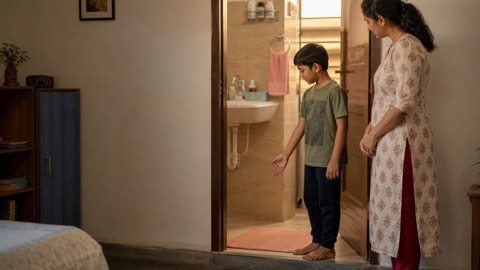
Say it privately, once, kindly, and factually: 'your body is starting to change, and that includes sweat that smells more — this is what everyone starts using.' Then hand over the product and stop discussing it.
Never tease, never mention it in front of siblings or relatives, and stop other adults who do. Being laughed at about body odour at eleven is remembered for decades.
Frame it as one item in a growing-up kit rather than a correction: daily bath, clean clothes, deodorant, and eventually shaving or hair removal if they want it. Buying it together and letting them choose the one they like makes it theirs rather than a criticism.
Sons and daughters get the same conversation. Body odour is not a girls' issue, and boys are the ones more often left to work it out from teasing.
When to see a doctor
See a doctor for: body odour or other puberty signs before age eight; sweating so heavy it soaks clothes, drips from the hands or interferes with school work (hyperhidrosis is treatable); a persistent rash, itching or darkening in the armpits; or a strong unusual body smell with other symptoms, which is rarely a metabolic condition but worth excluding.
Also worth a visit: dark velvety skin in the armpits and neck, which can indicate insulin resistance and deserves checking, particularly if weight has risen.
Frequently asked questions
Is deodorant safe for a nine-year-old?
Yes, a simple deodorant applied to clean underarm skin is fine. Start with hygiene and clothing, and add it when odour is genuinely present.
My child refuses to use it.
Do not force it or nag daily. Keep it where they get ready, mention it once, and let a friend's comment do the rest — which it usually does. If the resistance is sensory (some children hate the feel or smell), try an unscented roll-on or a cream.
Can we use fitkari or a natural alternative?
Alum, coconut oil and similar traditional options work for some people and not for others; they are harmless to try. If odour is not controlled, a normal deodorant is not a defeat.
What about shaving underarm hair?
That is a personal and family choice with no medical necessity, for any gender. Removing hair reduces odour slightly by giving bacteria less to hold on to. If a teenager wants to, teach it safely; if they do not, that is equally fine.
Reviewed by
- Nakul Phatak — CEO, theAsianparent India & IndonesiaHead of theAsianparent India; father of one
- Roshni Chugani — Head of Marketing, theAsianparent India & Singapore12 years in the mother-and-baby space; mother of two
Published by: theAsianparent editorial team