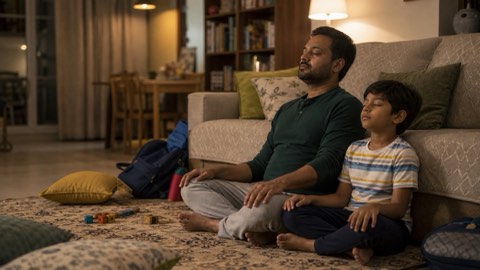
When a friendship breaks your child's heart for the first time

The first time a best friend chooses someone else is a real grief, and the instinct to solve it — ring the other parent, tell them to find better friends — makes it worse.
Take the grief seriously
To an eight-year-old, being dropped by a best friend is the loss of the person they spend most of their waking day with. 'You'll find other friends' is true and it is not what they need in the first hour.
Start by listening without fixing: 'that sounds really horrible — tell me what happened.' Let the whole thing come out, including the parts that make your child look bad. Reflect the feeling back — 'you felt left out and it hurt' — and stop there.
Do not minimise ('it's a small thing'), do not attack the other child ('she was always rude'), and do not immediately problem-solve. Children who feel heard recover faster and, crucially, tell you next time.
Why fixing it yourself backfires
Calling the other child's parents usually escalates a playground shift into a family dispute, and it teaches the child that their problems need adult rescue.
Telling them to abandon the friendship removes their agency and often makes them defend the friend. Telling them to be nicer implies the hurt was earned.
What helps instead: coaching. Ask what they want to happen, what they have tried, and what they could try — one small, doable step. Rehearse the words if needed: 'can I play too?', 'I didn't like that', 'I want to sit with you tomorrow'.
Then widen the world rather than mending the one friendship: invite a different classmate home, join an activity outside school, spend time with cousins or neighbours. One alternative friendship changes everything about how a school day feels.

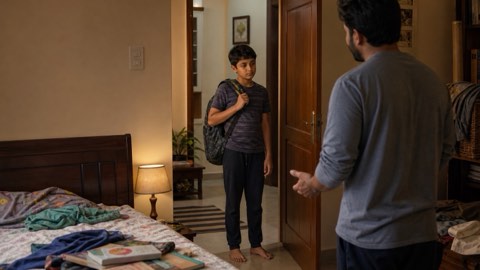
The skills underneath
Most childhood friendship trouble comes down to a small set of skills: joining a game that has already started, taking turns and losing gracefully, reading when a joke has stopped being funny, apologising properly, and handling a no.
These can be practised at home in play, with siblings and cousins, and by watching how adults handle disagreement in the house. Children copy what they see far more than what they are told.
Friendship groups shift constantly between about six and twelve — best friends rotate, threes exclude one, and today's disaster is often forgotten by Thursday. Say that out loud, because a child in the middle of it believes it is permanent.
Be careful with the culturally common advice to 'let it go' and 'adjust'. Adjusting is a useful skill; teaching a child that their discomfort should always yield to keeping the peace is how people end up unable to set a boundary at thirty.
When it is more than a friendship problem
It is bullying rather than a falling-out when it is repeated, deliberate, and involves a power difference — exclusion organised against one child, name-calling, threats, physical aggression, or online messages and groups. That needs the school, in writing, and a documented response. Our bullying guide covers the steps.
Watch for signs that the distress has gone deeper: not wanting to go to school, stomach aches on school mornings, sleep problems, withdrawal from things they loved, falling grades, or saying they have no friends at all over weeks rather than days.
A child who is consistently excluded, has no friends at all across settings, or struggles to read social situations may benefit from an assessment — sometimes there is an underlying difficulty that support helps with enormously.
And if there is any talk of self-harm or of not wanting to live, treat it as an emergency: stay with them, get help the same day, and call Tele-MANAS on 14416 or 112.
Frequently asked questions
Should I let my child invite the friend who hurt them?
If your child wants to, yes. Children repair friendships constantly, and adults hold grudges on their behalf far longer than they do.
My child says nobody likes them.
Ask for specifics: who did you sit with, who did you play with at break. 'Nobody' is usually a feeling rather than a count. If it turns out to be accurate over weeks, talk to the class teacher, who sees the dynamics you cannot.
My daughter's friend group excludes her one week and includes her the next.
Common at nine to thirteen and genuinely painful. Help her build at least one friendship outside that group, so the group has less power over her week.
Should I talk to the teacher?
For ordinary friendship churn, no. For repeated exclusion, cruelty, or a child who is distressed for weeks, yes — teachers see the classroom's social map and can seat, group and supervise differently without anyone being named.
Reviewed by
- Nakul Phatak — CEO, theAsianparent India & IndonesiaHead of theAsianparent India; father of one
- Roshni Chugani — Head of Marketing, theAsianparent India & Singapore12 years in the mother-and-baby space; mother of two
Published by: theAsianparent editorial team