Talking about puberty and periods: what to say, and when

Indian girls still commonly reach their first period without knowing what it is. The conversation is not one talk at thirteen — it is a series of ordinary ones, starting years earlier.
When puberty happens
Girls: breast development usually begins between 8 and 13, followed by pubic hair, a growth spurt, and the first period typically about two years after breast development starts — commonly between 10 and 15. Indian girls often start on the earlier side.
Boys: usually between 9 and 14, starting with testicular growth, then pubic hair, a growth spurt, voice deepening, acne and facial hair, and night-time ejaculations. Boys' puberty runs about two years behind girls', which is why the height gap in a Class 7 classroom is so dramatic.
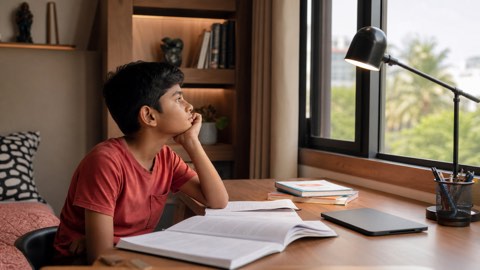
Both may experience mood swings, self-consciousness, body odour and skin trouble. All of it is normal, all of it is temporary, and all of it feels enormous at the time.
What to say, and when
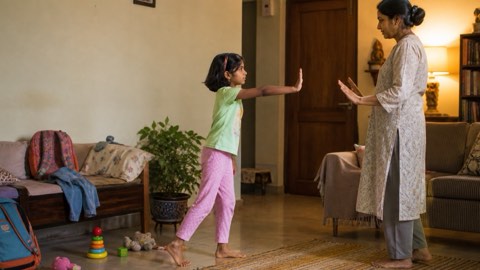
Start early and in small doses. Correct names for body parts from age two or three; a basic explanation of periods by seven or eight — well before it can happen; the details of what to expect by nine or ten.
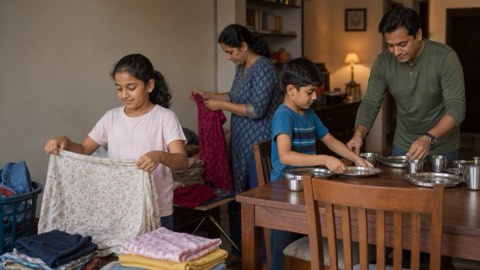
Tell boys about periods too. A boy who understands menstruation is a boy who does not join in the teasing, and a man who is not helpless about it later. Tell girls about what happens to boys, for the same reason.
Use ordinary moments rather than one Big Talk: buying sanitary pads, a scene in a film, a question at the chemist. Answer the question asked, briefly and honestly, and let them come back for more.
If you are embarrassed, say so and continue: 'nobody told me this and I want to do it better.' Books help enormously for both parent and child, and school programmes are a supplement, not a substitute.
The first period, practically
Prepare in advance: a small pouch with two pads, a spare pair of underwear and a paper bag, kept in the school bag from a year before you expect it. Show her how to use and dispose of a pad before she needs to.
Explain the practicalities: periods last three to seven days, come roughly every 21-35 days and are often irregular for the first year or two, pads should be changed every four to six hours regardless of flow, and washing hands before and after matters.
Cramps are common and manageable: a hot water bottle, a warm bath, exercise, and paracetamol or ibuprofen at the correct dose when needed. Severe pain that stops her attending school is not something to endure — that is a doctor's visit.
Menstrual cups and tampons are options for teenagers too, and the fear that they affect virginity is untrue. Keep the conversation open about what she finds comfortable and affordable, and note that government schemes distribute low-cost pads through schools and health centres in many states.
The myths that still cost girls school days
The restrictions imposed during periods in many Indian households — not entering the kitchen or temple, not touching pickles, sleeping separately, not washing hair — have no medical basis. They also teach a girl that a normal bodily function makes her unclean, which is a burden she carries a long way.
The practical cost is measurable: girls missing school during periods, and dropping out entirely when schools lack toilets and water. If your daughter's school has no functioning toilet, that is a legitimate thing to raise with the school and the local authority.
Say the counter-message explicitly: periods are normal and healthy, nobody is impure, and school and sport continue. If the household's elders enforce restrictions, at minimum ensure the girl hears that you do not believe them.
When to see a doctor
For girls: no periods by 15, or no breast development by 13; periods stopping for three months or more after being established; bleeding that soaks a pad every hour or lasts more than seven days; pain severe enough to miss school regularly; or signs of anaemia — very common in Indian adolescent girls, and worth a haemoglobin test with iron supplementation through the school health programme.
For boys: no testicular growth by 14, or no progression over two years; painful, swollen or asymmetrical testes (sudden severe testicular pain is an emergency — go the same hour); or breast tissue that is painful or persists.
For either: puberty starting very early (girls before 8, boys before 9), severe acne, or significant distress about body changes, gender identity or sexuality — all of which deserve a supportive, non-judgemental medical conversation.
This article is general information, not medical advice, and is no substitute for personal medical advice. For any decision about your or your child's health, please consult your doctor.
Frequently asked questions
My daughter got her period at nine. Is that too early?
It is earlier than average but within the range that is now common in India, particularly with higher body weight. See a doctor if it is before eight, or if there are other unusual features — otherwise it is a matter for support and preparation rather than treatment.
Should I tell my son about wet dreams?
Yes, before they happen, around 10 or 11. Unexplained, they cause shame and secret laundry. One matter-of-fact sentence — this is normal, it happens to everyone, nothing is wrong — saves a lot of anxiety.
How do I discuss sex, not just puberty?
Age-appropriately and factually, in stages: bodies and consent when young; reproduction, periods and wet dreams around 9-11; contraception, consent, sexually transmitted infections and relationships in the teens. Children who get accurate information at home have safer, later first experiences, not earlier ones.
The school teaches nothing about this. What can I do?
Ask the school whether they follow the national adolescent health programme's sessions, and raise it with the parents' association. Meanwhile, do the teaching at home with a good book — parents remain the primary source whether or not the school helps.
Sources
Every clinical figure on this page is taken from the guidelines below. Where our numbers and your doctor's differ, ask which guideline they follow.
- AAP. Physical Development in Girls: What to Expect During Puberty (HealthyChildren.org)Supports the stated timeline that breast development typically begins between ages 8 and 13, that menarche usually follows about two years later (commonly between 10 and 15), and that early cycles are often irregular.
- AAP. Physical Development in Boys: What to Expect During Puberty (HealthyChildren.org)Supports the stated timeline that boys' puberty typically begins between ages 9 and 14, starting with testicular growth, and that puberty in boys runs approximately two years behind girls'.
- MoHFW. Rashtriya Kishor Swasthya Karyakram (RKSK) – National Adolescent Health ProgrammeBacks the references to the national adolescent health programme's school sessions, school-based iron supplementation and low-cost pad distribution schemes for adolescent girls in India.
- NICE. Heavy menstrual bleeding: assessment and management (NG88)Supports the red-flag thresholds given for girls — bleeding that soaks a pad every hour or lasts more than seven days — as signs warranting medical assessment, and the mention of ibuprofen as an appropriate analgesic for menstrual pain.
- ICMR. Dietary Guidelines for Indians (2024)Supports the note that anaemia is very common in Indian adolescent girls and that haemoglobin testing and iron supplementation are warranted, consistent with ICMR guidance on iron-deficiency anaemia in this population.
- WHO. Adolescent development: Sexual and reproductive healthBacks the description of normal puberty progression in girls and boys, the age ranges for onset, and the principle that accurate reproductive health information from parents and schools supports safer adolescent behaviour.
Reviewed by
- Nakul Phatak — CEO, theAsianparent India & IndonesiaHead of theAsianparent India; father of one
- Roshni Chugani — Head of Marketing, theAsianparent India & Singapore12 years in the mother-and-baby space; mother of two
Published by: theAsianparent editorial team