When can my daughter wear make-up?

There is no medical age for make-up, and the argument is rarely about make-up. Here is a way to handle it that keeps the relationship and the boundary.
Separate the three questions
Play make-up at home, a little colour for a function, and daily make-up to school are three different questions, and families argue because they answer them as one.
Dressing up at home, including with a mother's lipstick, is play and needs no rule beyond hygiene. Kajal, bindi and colour for weddings and festivals are cultural dress and not the same as cosmetic routine.
Daily wear is the real question. Common practice in Indian families is: nothing routine in primary school; tinted lip balm, sunscreen and a little kajal for occasions in the early teens; and more from around fifteen or sixteen, by discussion. Most schools also have their own rules, which settle the school-day part for you.
Skin safety
Young skin is thinner and more reactive. Whatever the age, keep it simple: patch-test anything new, never share products (eye infections spread this way), remove everything before bed, and replace mascara and liquid eyeliner every three months.
Avoid entirely: skin-lightening creams, which are widely sold in India, often contain steroids or mercury, and cause lasting damage; unbranded loose 'kajal' of unknown composition, which has been found to contain lead; and anything sold as a fairness product for teenagers.
Sunscreen is the one product genuinely worth building a habit around, for skin health rather than appearance.
If acne is the reason she wants foundation, treat the acne. Acne treatment works, and non-comedogenic products plus a dermatologist do more for confidence than concealer does.
The conversation underneath
Ask why before you answer. 'Everyone in class does', 'I hate my skin' and 'it is fun' are three different situations. The second one is not a make-up question at all.
Watch the messages at home. A household where women's appearance is commented on constantly, where fairness creams sit on the shelf, or where a girl's weight is discussed at dinner produces the anxiety the make-up is trying to solve.
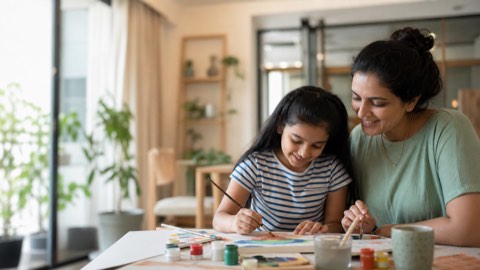
Make it a skill rather than a battle: teach her to apply it well and remove it properly, buy one or two decent products rather than a cheap kit, and let her practise at home. Girls who learn from a parent tend to wear less, not more.
Hold the line on the specific things that matter — school rules, expensive purchases, skin-lightening products, and anything that suggests her face needs correcting — and let go of the rest.
Frequently asked questions
My twelve-year-old wants to wear make-up to school.
School policy usually answers it, and it is easier to point at a rule than to be the villain. Offer an alternative that meets the underlying wish: tinted lip balm, nice hair clips, and permission for weekends.
Is kajal safe for a teenager?
Branded kajal from a reputable manufacturer, removed nightly, is generally fine. Loose or homemade kajal of unknown composition is not — lead contamination has been documented repeatedly in India.
How do I say no without damaging her confidence?
Say no to the timing rather than to her: 'not for school yet, and yes for the wedding — let me show you how.' A refusal that comes with an alternative and a lesson does not read as rejection.
My son wants to wear make-up.
Apply the same rules you would to a daughter: hygiene, removal, school policy, cost. Teasing at home about it will not stop him and will cost you the conversation.
Reviewed by
- Nakul Phatak — CEO, theAsianparent India & IndonesiaHead of theAsianparent India; father of one
- Roshni Chugani — Head of Marketing, theAsianparent India & Singapore12 years in the mother-and-baby space; mother of two
Published by: theAsianparent editorial team