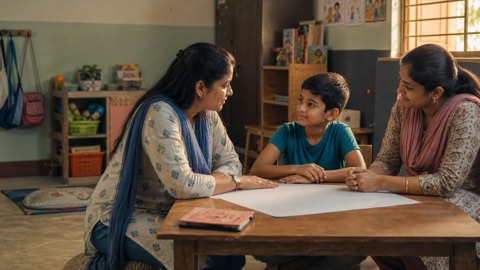
Praise, criticism and confidence: what to say so children believe in themselves

Indian households are generous with criticism and stingy with praise, and then wonder why children lack confidence. The fix is not more compliments — it is different ones.
Praise the effort, not the label
Telling a child they are brilliant sounds encouraging and quietly teaches them that ability is fixed and must be protected. Children praised for intelligence avoid harder tasks, give up faster, and hide failures — because failing would mean losing the label.
Praise the process instead: the effort, the strategy, the persistence, the improvement. 'You kept at that even when it was hard' or 'you tried three different ways' builds a child who takes on difficulty rather than avoiding it.
Be specific and honest. Blanket praise for everything becomes noise, and children detect it early. 'The colours in this drawing are lovely' beats 'wow, amazing' every time — and describing what you see ('you drew our whole street') often works better than judging at all.
What criticism does, especially in public
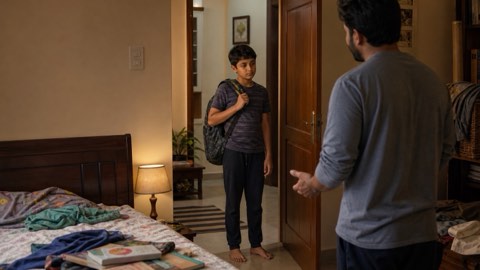
Public criticism — in front of siblings, cousins, guests, the class — costs far more than private correction. Children remember the humiliation long after the lesson, and it drives the very hiding and lying that parents complain about.
The Indian habit of self-deprecating talk about one's own child in company ('she's very lazy', 'he's not good at studies') is heard by the child as the family's official verdict, whatever the modest intention behind it.
Comparison is the most corrosive form: with siblings, cousins, neighbours' children, or the parent's own childhood. It produces resentment and anxiety, not motivation. Compare a child with their own past performance and nothing else.
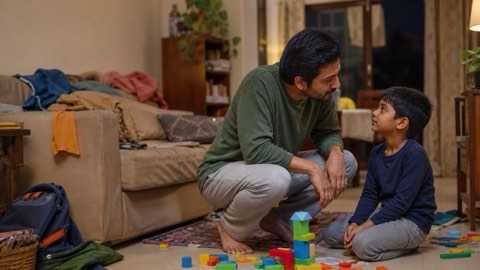
Criticise the behaviour, not the person, and repair afterwards. 'That was careless' is different from 'you are careless', and a child can act on the first.
How confidence is actually built
Competence: children believe they are capable when they have actually done difficult things. Let them do their own tasks — dressing, packing the bag, ordering at a shop, cooking with supervision, handling money — even when it is slower and messier than doing it yourself.
Allowed failure: a child who is rescued from every difficulty learns that they need rescuing. Let them lose a game, forget homework once, negotiate a friendship problem themselves, and support them through the consequences rather than removing them.
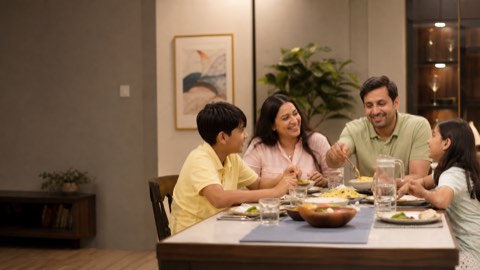
Unconditional regard: children need to know that your affection is not the reward for performance. Say it plainly — often — that you love them regardless of marks and results, and then behave that way when the results are bad, which is when they are checking.
Give real responsibility. Chores, looking after something, being trusted with a task that matters to the household — these build a sense of value that praise cannot manufacture.
Frequently asked questions
If I praise too much, will my child become arrogant?
Effort-based, specific praise does not cause arrogance; empty inflation might. The far commoner Indian problem is the reverse — praise withheld on principle, in case the child becomes complacent, which mostly teaches the child that nothing is ever enough.
My child cries and gives up whenever something is hard. What now?
Break tasks into smaller steps, sit alongside without taking over, and celebrate the attempt rather than the result. Also check what happens after failure in your house — children give up early when failing is expensive.
How do I handle relatives who criticise my child in front of everyone?
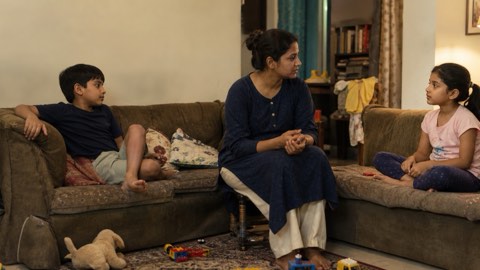
Interrupt lightly and redirect: 'he's working on it, and he made this yesterday — show them.' Then say something later, privately, to the child: that you did not agree with the comment. Children need to see that the criticism was not endorsed by you.
My child is genuinely weak at studies. Should I pretend otherwise?
No. Be honest and specific about the gap and the plan, and equally honest about what they are good at. Confidence built on false praise collapses; confidence built on 'this is hard for you and we have a plan' survives.
Reviewed by
- Nakul Phatak — CEO, theAsianparent India & IndonesiaHead of theAsianparent India; father of one
- Roshni Chugani — Head of Marketing, theAsianparent India & Singapore12 years in the mother-and-baby space; mother of two
Published by: theAsianparent editorial team