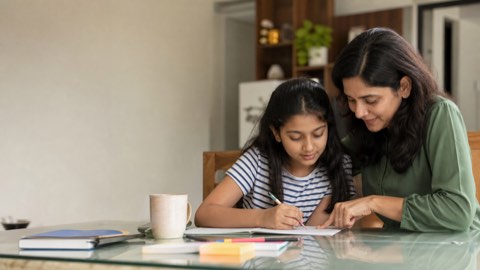
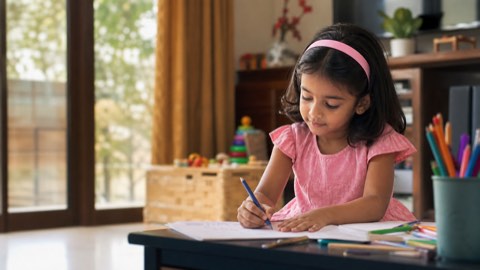
Starting Class 1: getting a child ready for real school

School readiness is not about reading and writing. It is about a child who can manage themselves for six hours away from you — here is the real checklist.
The skills that matter
Self-care, first: using the toilet independently including wiping and washing hands, opening the tiffin and water bottle, eating within the time available, wearing shoes, and managing the school bag. These decide the first weeks far more than academics.
Communication: being able to tell an adult they need the toilet, feel unwell, are being hurt, or have lost something. Practise the exact sentences at home, especially in the school's medium of instruction.
Social and emotional: separating from you without prolonged distress, sitting for short structured periods, taking turns, following two- or three-step instructions, and asking for help.
Academic readiness is the smallest part: recognising letters and numbers, holding a pencil, and — most valuable of all — enjoying books. A child who has not written a word but loves being read to is well prepared.
The month before
Shift the schedule gradually: wake-up and bedtime moved fifteen minutes earlier each few days until the school timetable is comfortable. A child arriving in Class 1 sleep-deprived struggles for a term.
Do a dry run: visit the school, walk or ride the route, see the gate, the classroom and the toilets if allowed. Familiarity removes most first-day fear.
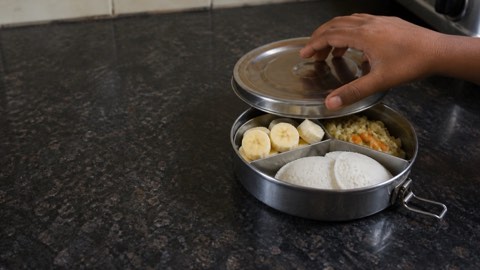
Practise the logistics at home for a week: eating from the actual tiffin box within twenty minutes, opening the bottle, wearing the uniform and shoes, packing the bag together the night before.
Label everything — bottle, box, sweater, shoes, bag. And teach the child their full name, the parents' names and one phone number, which is genuinely useful the first time they are lost.
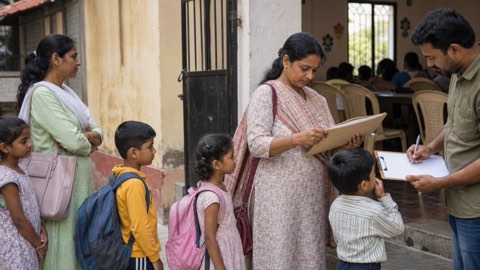
The first weeks
Expect tiredness, hunger, tears, clinginess and regression at home — six hours of concentration is a huge load for a six-year-old. Keep afternoons unstructured, feed them early, and drop the extra classes for the first month.
Do a short warm goodbye at the gate, no lingering. Be on time at pick-up, every day, for the first weeks — the child's trust that you will come is what settles them.
Ask specific questions rather than 'how was school': who did you play with, what did you eat, what was the best part, what was hard. Vague questions get vague answers at this age.
Meet the class teacher early, share anything relevant (health conditions, a recent bereavement or house move, language at home, toilet habits), and ask how they prefer to be contacted.
What not to worry about
Not being able to read yet. Reading develops between five and seven for most children; a child who is not reading in the first term of Class 1 is usually on time, not behind.
Reversed letters and numbers up to about seven or eight — common and usually resolves. Persisting difficulties with reading, letter sounds and spelling beyond that, especially with a family history, deserve an assessment for dyslexia rather than more tuition.
Being quiet, or preferring one friend to a crowd. Sociability varies, and a child with one good friend is doing fine.
Do worry, and act, if: the child is distressed for weeks rather than days, complains of stomach aches every school morning, reports being hit or shouted at, refuses to talk about school entirely, or shows a sudden behaviour change. Those merit a conversation with the school.
Frequently asked questions
Should I start tuition in Class 1?
No. A six-year-old needs play, sleep and reading aloud with a parent, not a second school in the evening. If there is a real learning difficulty, get it assessed rather than adding hours.
How much homework is reasonable?
Very little at this age, and many boards discourage it entirely for the early years. If your child has an hour of written homework in Class 1, raise it with the school — that is a policy problem, not a child problem.
My child is the youngest in the class and struggling to keep up.
Common and usually temporary, but say it to the teacher explicitly so expectations are calibrated. In extreme cases, repeating the year early is sometimes better than years of playing catch-up; discuss it openly with the school.
The school medium is English but we speak Hindi at home. Will he fall behind?
Many Indian children manage exactly this. Support the home language strongly (it is the foundation for the second one), read aloud in both, and ask the teacher to flag comprehension problems early rather than letting them accumulate.
Reviewed by
- Nakul Phatak — CEO, theAsianparent India & IndonesiaHead of theAsianparent India; father of one
- Roshni Chugani — Head of Marketing, theAsianparent India & Singapore12 years in the mother-and-baby space; mother of two
Published by: theAsianparent editorial team