Starting playschool: choosing one, settling in, and the crying weeks

Playschool is often the family's first separation, and everyone cries — sometimes including the parent. Here is how to choose well, prepare properly, and get through the settling weeks.
When to start, and whether to
Most Indian children start some form of playschool between two and three, and there is no developmental requirement to do so — a child at home with responsive adults, other children to play with sometimes, and freedom to explore is not behind anyone.
Playschool earns its place when it provides what home cannot: other children, space, messy play, structure, and a break for a stretched caregiver. If home offers those, waiting until three or three and a half is entirely reasonable.
Consider the practical picture: a working household with no daytime care needs a good option earlier; a joint family with an engaged grandparent may not. Both are respectable answers, and the child's temperament — how they handle new people and noise — should get a vote.
What actually matters when choosing
Ratios and staff, above everything: how many adults per child (for two-to-three-year-olds, small groups matter enormously), how long the teachers have been there, and whether the helpers and ayahs — who do most of the physical care — seem kind and unrushed.
Watch a session if you can. Are children busy and mostly happy? Do teachers crouch to their level? Is there messy play, water, sand, blocks, singing, outdoor time? Is there a quiet corner? Are children ever shouted at or shamed? One hour of watching tells you more than any brochure.
Safety basics: clean toilets and drinking water, a working first-aid box and an emergency plan, a written policy on who may collect the child, CCTV where promised, secure gates, staff background checks, and a school that welcomes rather than resists parent visits.
What matters less than the marketing suggests: worksheets, English-only policies, alphabet drilling at two, imported curricula and air-conditioning. Play is the curriculum at this age, and a child who is drilled early does not read better later — the evidence is quite clear on that.
Preparing the child
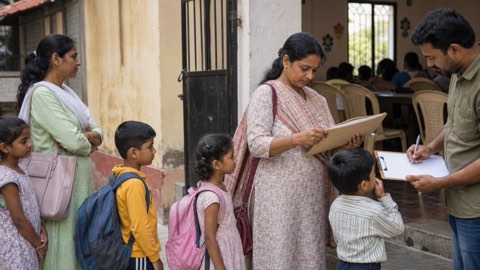
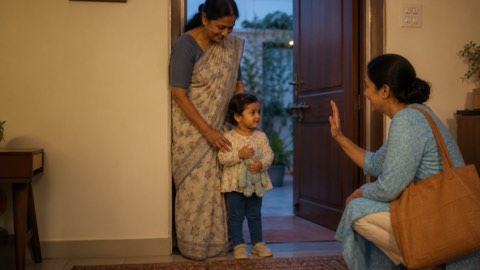
Start a few weeks ahead: talk about the school warmly and matter-of-factly, walk past or visit it, read books about school, and play at 'going to school' at home. Shift the sleep schedule gradually to match the new wake-up time.
Build the practical skills: drinking from a cup or bottle unaided, eating a snack alone, washing hands, saying the words for toilet and water, taking shoes off. Label everything with the child's name.
Toilet training helps but rarely has to be complete — ask the school. Send spare clothes daily, tell the teacher the child's home word for toilet, and mention any food, medical or comfort details in writing.
The settling weeks
Do a phased start if the school allows: an hour on the first days, building up over a fortnight. Say a short, warm, confident goodbye and leave — long lingering goodbyes make it harder, and sneaking away breaks trust and makes the next day worse.
Expect crying at the gate for one to three weeks, and expect it to stop within minutes of your leaving — ask the teacher to phone or message after fifteen minutes rather than standing outside imagining. Expect also: tiredness, clinginess at home, sleep disruption, an appetite dip, and a cold or three, since playschool is where the immune system meets a hundred new viruses.
Persistent misery beyond about a month, or a child who was settled and suddenly refuses, deserves a proper conversation with the school and a look at what has changed. Trust your instinct if a place feels wrong; changing schools at three costs nothing much.
Frequently asked questions
My child falls ill constantly since starting
should we stop? — Six to eight infections a year is normal in the first year of group care, and it is the immune system doing its homework. Stop only if the child is failing to gain weight, has repeated severe infections, or is otherwise unwell — that needs a doctor.
Playschool fees are enormous. Is an expensive one better?
Rarely in proportion. Ratios, kindness and play matter far more than fees, air-conditioning or a foreign curriculum name. A good Anganwadi or a modest neighbourhood preschool with warm teachers beats a costly worksheet factory.
The school wants him to write letters at two and a half. Is that reasonable?
No. Small hands are not ready, and formal writing this early achieves nothing except discouragement. Play, songs, stories, building and drawing build the very skills writing later requires. Push back, or choose a different school.
How do I get an honest picture of what happens all day?
Ask specific questions rather than 'how was school': who did you sit with, what did you play with, what did the teacher say at snack time. Talk to the teacher regularly, note any change in behaviour, sleep or toilet habits, and take a child's persistent reluctance seriously.
Reviewed by
- Nakul Phatak — CEO, theAsianparent India & IndonesiaHead of theAsianparent India; father of one
- Roshni Chugani — Head of Marketing, theAsianparent India & Singapore12 years in the mother-and-baby space; mother of two
Published by: theAsianparent editorial team