The school lunchbox: what to pack, what survives till lunch, and what comes home uneaten

The tiffin box is a small daily negotiation between nutrition, taste and what survives four hours in a school bag. Here is how to win it most days.
What a good box contains
Build every box on three things: a grain (roti, paratha, rice, poha, upma, idli, bread), a protein (dal, paneer, egg, chana, sprouts, curd, chicken), and something fresh (fruit, cucumber, carrot, tomato). Add a fat — ghee on the roti, a few nuts if the school allows them.
Portion it to the age, not the ambition. A four-year-old eats a fraction of what you think; an overloaded box comes home full and everyone feels bad. Small quantity, finished, beats large quantity, abandoned.
Two boxes are usual: a short-break snack (fruit, a paratha roll, idlis, a sandwich) and a lunch box. Keep the snack box simple and eat-with-one-hand — break time is short and children want to play.
Ideas that survive till lunchtime
Reliable: paratha rolls (paneer, aloo, egg, dal-stuffed) — rolled, not stacked; curd rice in a steel box, better in winter; lemon rice, tamarind rice, tomato rice; idlis with dry podi; poha or upma; vegetable pulao; besan or moong chilla rolls; sandwiches with a dry filling (paneer bhurji, egg, chutney) rather than a wet one.
Fresh side: apple or banana (skin on), guava, orange segments, cucumber and carrot sticks, boiled chana with lemon, sprouts salad, a small box of curd in cool weather.
Avoid in a warm bag: anything with mayonnaise, cut fruit that browns and turns watery, milk-based sweets in summer, food with plenty of gravy that leaks, and re-heated fried food that goes soggy and heavy. Steel boxes and a small insulated bag do more for freshness than any recipe.
When the box comes home full
Ask before you conclude. Common reasons: not enough time to eat, the box is hard to open, embarrassment about food that looks different from friends', dislike of cold or soggy textures, and playing instead of eating. Each of those has a fix, and none of them is 'the child is fussy'.
Practical fixes: pack food that is nice at room temperature, cut into pieces that can be eaten fast with fingers, use a box the child can open alone (test it at home), and include one thing you know they like. Ask the class teacher whether children are supervised and given enough time.
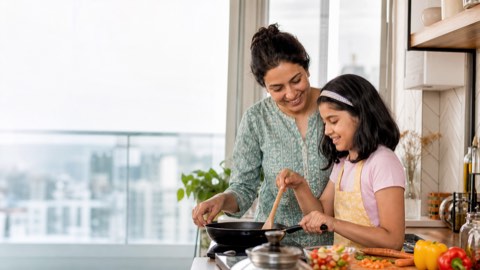
Do not punish or interrogate over an unfinished box, and resist the urge to compensate with a huge evening snack of biscuits and chips — a hungry child eats a proper early dinner. Involve them in packing: children eat what they helped choose.
Junk, birthdays and the canteen
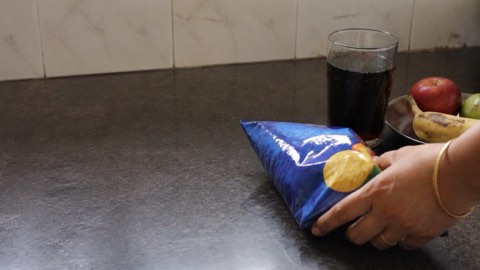
Packet chips, biscuits, cakes, juice tetra packs and instant noodles are easy to pack and poor value nutritionally — fine occasionally, poor as the routine. Aim for home food on most days and treat packaged food as a weekend or once-a-week item.
Sugary drinks are the easiest win: water in the bottle, always. Juice — even fresh — is a sugar hit without the fibre; whole fruit does the job better.
For schools with canteens or pocket money, agree rules in advance rather than policing after: what can be bought, how often, how much. And for birthday distributions, a fruit or a small home-made item is as welcome as chocolate, whatever the class expects.
Frequently asked questions
My child's school bans nuts and eggs
how do I keep protein up? — Dal-stuffed parathas, chana, rajma, sprouts, paneer, curd, besan chillas and soya all cover it comfortably. Send the nuts and eggs at home meals instead.
How do I keep food warm?
An insulated tiffin carrier, food packed hot, and the box wrapped in a cloth inside the bag. Or plan for food that is good at room temperature — most Indian tiffin classics are exactly that by design.
Is it fine to send the previous night's leftovers?
Yes if it was properly refrigerated and is reheated thoroughly in the morning, and if the weather is not extreme. Rice dishes in hot weather are the ones to be careful with; freshly cooked is safer.
The mid-day meal at a government school
should I still pack? — The mid-day meal is a cooked, calorie-and-protein-planned meal and is designed to be sufficient. Talk to the school about what is served; if your child eats it, a fruit in the bag is often all that is needed.
Sources
Every clinical figure on this page is taken from the guidelines below. Where our numbers and your doctor's differ, ask which guideline they follow.
- WHO. Healthy diet (fact sheet) (2020)Backs the page's advice that whole fruit is preferable to juice because juice delivers sugar without fibre, and that free sugars should be minimised in children's diets.
- IAP. IAP Guidelines on Infant and Young Child Feeding / Dietary Guidelines for Children (2016)Supports the page's meal-structure advice (grains + protein + vegetables/fruit at each meal) and the recommendation to prioritise home-cooked food over packaged snacks, chips, biscuits, and instant noodles for school-age children.
- ICMR. Dietary Guidelines for Indians (2024)Supports the three-component lunchbox framework (cereal/grain, protein, fresh vegetable or fruit), the use of traditional protein sources (dal, chana, paneer, curd, sprouts, egg), and the guidance to limit packaged, ultra-processed foods and sugary drinks.
Reviewed by
- Nakul Phatak — CEO, theAsianparent India & IndonesiaHead of theAsianparent India; father of one
- Roshni Chugani — Head of Marketing, theAsianparent India & Singapore12 years in the mother-and-baby space; mother of two
Published by: theAsianparent editorial team