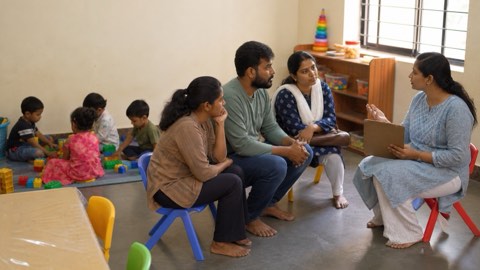
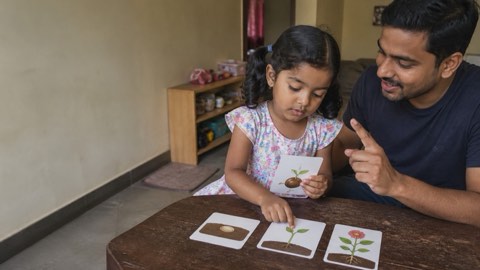
Teaching body safety at school: a guide for teachers

The evidence for teaching this in schools is strong, and the two things teachers most need are a structure and a plan for what to do when a child tells you something.
Principles that make it work
Teach it as body safety, not as stranger danger. The great majority of abuse is by someone the child knows, and stranger-focused teaching leaves children unprotected in the situations that actually occur.
Use anatomical names for body parts. Children who can name what happened are believed more readily and can report more clearly, and this is one of the clearest findings in the field.
Keep it calm and matter-of-fact. This is a safety lesson like road safety, not a frightening talk. Fear reduces retention and increases anxiety without increasing protection.
Repeat it. One assembly does nothing. Short, regular, age-appropriate reinforcement across the year is what works.
Make it clear that no adult should ever ask a child to keep a secret from their parents, and that a child is never in trouble for telling.
Include children with disabilities deliberately. Children with disabilities are at substantially higher risk and are most often left out of these lessons because the material is not adapted.
The NSPCC's Talk PANTS is the best-known school resource in this area and it is free at nspcc.org.uk — worth reading before you plan anything. Their materials, illustrations and wording are their copyright; use their resources as published rather than reproducing them in your own worksheets.
What to cover, by stage
Ages 3-5: my body belongs to me; correct names for body parts; the parts covered by underwear are private; nobody should look at or touch them except to keep you clean or healthy, and a parent should know; you can say no to a hug or a kiss from anyone, including family; secrets that make you feel bad should always be told.
Ages 6-8: the difference between a surprise, which is fun and gets told later, and a secret that must never be told, which is a warning sign; safe and unsafe feelings in the body; identifying five trusted adults they could tell; what to do if the first adult does not listen — tell another, and keep telling; and that this applies online as well.
Ages 9-11: consent in more depth, including that it can be withdrawn; pressure, bribes and threats as tactics; that abuse is never the child's fault regardless of what they did or accepted; online contact, images and requests for photographs; and where to get help independently, including Childline 1098.
Across all stages: nobody is exempt — not a relative, not a teacher, not a religious figure, not an older child.
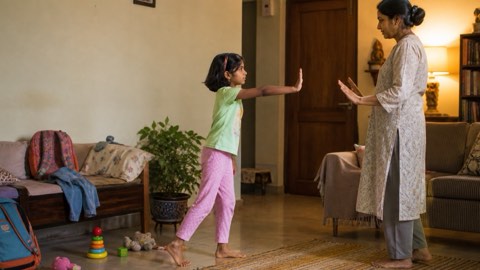
Practical delivery: use scenarios and role-play rather than lectures, allow questions in writing as well as aloud, and give children a way to talk to you privately afterwards, because a lesson on this subject frequently produces a disclosure.

Handling a disclosure
Stay calm. Your face is the first thing the child reads, and visible shock or anger frequently stops a disclosure mid-sentence.
Listen. Do not interrogate, do not lead, and do not ask questions that suggest an answer. Use open prompts: 'Can you tell me more about that?'
Believe the child and say so. 'Thank you for telling me. You have done the right thing. This is not your fault.'
Do not promise confidentiality. Say honestly that you will need to tell someone whose job it is to help keep them safe.
Write it down as soon as possible, in the child's own words, with the date, time and exactly what was said and by whom. Do not paraphrase or interpret.
Report it immediately through the school's safeguarding route, and understand that the legal obligation under POCSO sits with the individual who knows, not only with the institution. A school policy that delays or discourages reporting does not remove that obligation.
Do not investigate. Do not confront the person named. Do not contact the family before taking advice, particularly where the person named is in the household.
In India: Childline is 1098, free and round the clock. The police emergency number is 112. Under the POCSO Act 2012 it is a legal obligation for anyone who knows of a sexual offence against a child to report it to the Special Juvenile Police Unit or the local police, and failure to report is itself an offence.
When to see a doctor
Any suspected sexual abuse requires immediate reporting and medical assessment through the proper route rather than an informal examination at school. Under POCSO, medical examination has a defined procedure and the child's dignity and consent are protected within it.
Seek urgent medical attention for: any injury, bleeding, pain on passing urine, or a child who is distressed and physically unwell.
Refer for mental health support, and be aware that behaviour change — regression, withdrawal, new fears, sleep disturbance, sexualised behaviour beyond ordinary curiosity, or a sudden drop in schoolwork — may be the first sign rather than a disclosure.
Tele-MANAS on 14416 is free and round the clock. Childline 1098 advises on next steps and is available to professionals as well as children.
This article is general information for teachers, not legal or safeguarding advice, and it has not been reviewed by a safeguarding professional or a lawyer. Schools should have their policy reviewed by a qualified Indian child-protection specialist and should follow their state's requirements.
This article is general information, not medical advice, and is no substitute for personal medical advice. For any decision about your or your child's health, please consult your doctor.
Frequently asked questions
Will teaching this frighten children?
The evidence is that age-appropriate body-safety education increases knowledge and reporting without increasing anxiety. Fear comes from how it is taught, not from teaching it.
Should we use 'good touch, bad touch'?
It is the familiar phrasing in India and it has a weakness: abuse does not always feel bad, and a child told to report bad touch may not report something that felt neutral or confusing. Teach private parts and rules about them instead.
Do we need parental consent?
Follow your school's policy and inform parents in advance about what is being taught. Sending a note home also lets families continue the conversation, which is where most of the benefit comes from.
What if the person named is a colleague?
The obligation is unchanged. Report through the safeguarding route and, if that route is compromised, directly to the police or Childline. POCSO does not make an exception for institutional discomfort.
Reviewed by
- Nakul Phatak — CEO, theAsianparent India & IndonesiaHead of theAsianparent India; father of one
- Roshni Chugani — Head of Marketing, theAsianparent India & Singapore12 years in the mother-and-baby space; mother of two
Published by: theAsianparent editorial team