Good touch, bad touch: teaching body safety without frightening your child

Most child sexual abuse in India is by someone the family knows and trusts. The protection that works is not fear of strangers — it is a child who knows the rules, and an adult who has made it safe to tell.
The facts that shape the approach
Studies in India have repeatedly found high rates of child sexual abuse, and the pattern is consistent: the great majority of offenders are known to the child — relatives, neighbours, tutors, drivers, domestic staff, older children, family friends. 'Stranger danger' as the main lesson leaves children unprotected where the risk actually is.
Boys are abused too, and are less likely to tell. Children with disabilities are at higher risk. And abuse rarely begins with force; it usually begins with attention, secrecy and small boundary tests, which is why teaching about secrets matters as much as teaching about touch.
The goal is not a frightened child. It is a child with clear rules, correct words, and complete confidence that telling you will not get them into trouble.
What to teach, by age
From two to three: correct names for body parts, including private parts — vague nicknames make disclosure harder and signal that the topic is shameful. The swimsuit rule: the parts a swimming costume covers are private, and no one should look at or touch them except to keep them clean and healthy, and even then a parent or doctor with a parent present.
From four to six: the difference between safe, unsafe and confusing touch; that their body belongs to them; that they may say no to hugs, kisses and laps, including from relatives; the difference between a surprise (fun, told later) and a secret (never okay if an adult asks a child to keep it); and the three-step rule — say no, get away, tell someone.
From seven upward: privacy, online safety, photos, that no adult should ask for or send pictures of private parts, and that if someone breaks the rules it is never the child's fault — even if they took the gift, kept quiet, or liked the person.
Name the safe adults: 'if anything makes you uncomfortable, tell me, papa, nani or your class teacher — and if the first person does not listen, tell the next one.' Practise the sentence out loud, as a game, several times a year.
The household rules that reduce risk
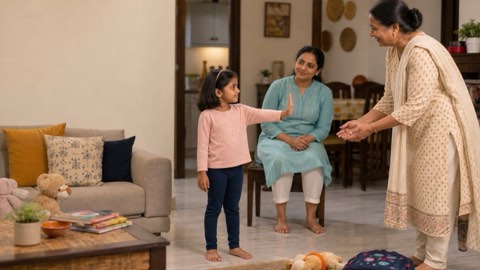
Never force affection. The uncle who demands a kiss, the relative who insists on the child sitting on his lap — 'she doesn't want to, she can wave instead' is a complete sentence, and saying it in front of the child teaches them their no has adult backing.
Supervise the settings where abuse most often occurs: private tuition at home or elsewhere, sleepovers, long car rides with one adult, older cousins' rooms at family functions, and time with domestic staff. Doors open, checks unannounced, and no adult alone behind a closed door with a child as a routine arrangement.
Vet and supervise: references for domestic staff and drivers, ID copies, and no unsupervised sole charge for new staff. Ask schools about their child protection policy, whether staff are background-checked, and how they handle complaints.
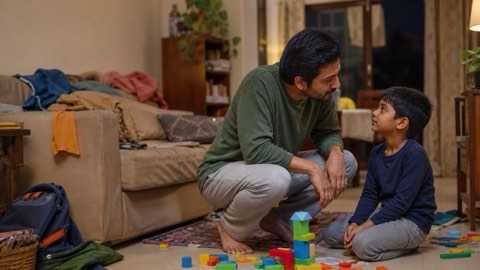
Keep the door open for talking: ask about the day specifically, listen without interrupting, and never react to bad news by getting angry at the child. Children weigh up in advance how you will respond — that calculation decides whether they tell you.
Warning signs and what to do
Signs are not proof, but take them seriously: sudden fear of a particular person or place, regression (bedwetting, clinginess, thumb-sucking), nightmares, withdrawal, sudden anger, unexplained gifts or money, sexual knowledge or behaviour beyond their age, secretiveness about a phone or an adult, refusal to go to a class or a home, and physical signs such as pain, bleeding, discharge or repeated urinary infections.
If a child tells you: believe them. Stay calm, thank them for telling you, say clearly 'this was not your fault', do not interrogate or make them repeat it multiple times, write down what they said in their words, and do not confront the alleged abuser in front of the child.
Then act. Under the POCSO Act, reporting suspected child sexual abuse is mandatory in India, and the law protects the child's identity and provides for child-friendly procedures. Childline is 1098, free and round the clock, and the police emergency is 112. Get medical care where needed and psychological support for the child — the response of the adults around them is one of the strongest predictors of recovery.
When to see a doctor
Seek medical care the same day for any genital pain, bleeding, discharge, injury, or suspicion of recent assault — and tell the doctor what you suspect so that examination and evidence are handled correctly under child-friendly protocols. Also seek help for a child showing significant distress, self-harm, or behaviour change after a disclosure: counselling helps, and the earlier it starts the better. Childline 1098 can guide you through both the medical and legal steps.
This article is general information, not medical advice, and is no substitute for personal medical advice. For any decision about your or your child's health, please consult your doctor.
Frequently asked questions
Isn't my child too young for this conversation?
Body-part names and the swimsuit rule start at two to three, in the same tone as road safety or hot stoves. Taught early and calmly, it is not frightening; taught late, it is a lecture arriving after the risk.
What if I accuse someone wrongly and destroy family relationships?
Your obligation is to protect the child and to report a suspicion for trained people to assess — not to run a trial. Family cohesion has been the reason for silence in Indian households for generations, and it is precisely what allows repeat offenders to continue.
My child was touched by another child. Is that abuse?
Curiosity-based play between similar-aged children is common; concerning signs are a big age or power gap, coercion, secrecy, or sexual behaviour beyond the child's developmental stage. Supervise, teach the rules to both, and seek professional advice if any of those factors are present.
How do I talk about this without scaring my child?
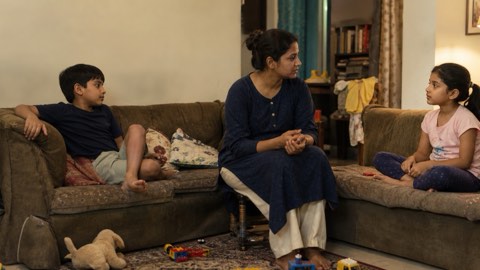
Keep it matter-of-fact and short, weave it into ordinary moments (bath time, before a family function), repeat it regularly in small doses rather than one heavy talk, and always end with the reassuring half: 'most people are safe, and if anyone breaks the rules, you tell me and I will always believe you.'
Sources
Every clinical figure on this page is taken from the guidelines below. Where our numbers and your doctor's differ, ask which guideline they follow.
- WHO. INSPIRE: Seven Strategies for Ending Violence Against Children (2016)Backs the claims that children with disabilities face elevated abuse risk, that most perpetrators are known to the child, and that early prevention education and responsive adult environments are key protective factors against child sexual abuse.
- NICE. Child abuse and neglect (NICE guideline NG76) (2017)Supports the clinical guidance to seek same-day medical evaluation for genital pain, bleeding, discharge or injury, to document a child's disclosure in their own words without repeated questioning, and to refer for psychological support as early as possible following disclosure.
- MoHFW. Guidelines on Child Protection and POCSO Act Implementation (2020)Supports the article's statements about mandatory reporting obligations under India's POCSO Act, child-friendly examination and evidence protocols, protection of the child's identity, and the roles of Childline (1098) and police emergency (112) in the response pathway.
Reviewed by
- Nakul Phatak — CEO, theAsianparent India & IndonesiaHead of theAsianparent India; father of one
- Roshni Chugani — Head of Marketing, theAsianparent India & Singapore12 years in the mother-and-baby space; mother of two
Published by: theAsianparent editorial team