Teaching consent: why children should not be forced to hug

Making a child hug an uncle they do not want to hug teaches exactly the lesson that body-safety rules are trying to prevent.
The problem with 'go on, give uncle a hug'
It teaches a child that their discomfort is less important than an adult's expectation, that adults can require access to their body, and that being polite means complying. Those are precisely the beliefs that make a child easier to groom.
It also teaches that a no can be overridden by a familiar adult — and the great majority of child sexual abuse in India is committed by someone the family knows and trusts.
None of this means the uncle is dangerous. It means the habit removes a protection that costs nothing to keep.
What to do instead
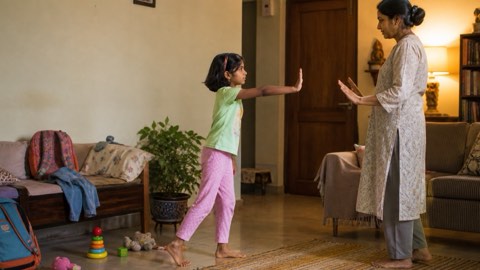
Offer alternatives and let the child choose: a wave, a high five, a namaste, a handshake, blowing a kiss, or simply saying hello. Warmth is the goal, not physical contact.
Give the child the words: 'I don't want a hug right now, but I can wave.' Rehearse it at home so it is available in the moment.
Model it: ask before you hug them yourself, sometimes, and accept a no. 'Would you like a hug?' teaches more than any explanation.
And do the same in reverse: teach them to ask before hugging another child, and to stop when someone says stop — including in play and tickling. Tickling that continues after a child says stop is the most common place this lesson is lost.
Handling the relatives
Say it lightly and take the blame yourself: 'We're teaching her that she gets to decide about hugs — she'll wave.' Most people accept a rule stated cheerfully and once.
Do not force a compromise hug to smooth the moment. That is the exact thing you are avoiding, and children read it accurately.
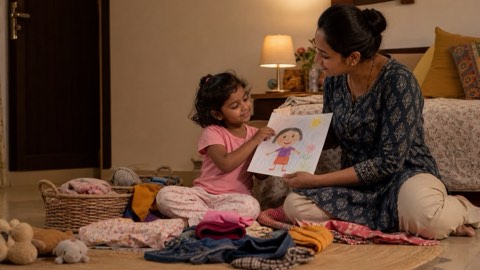
For persistent relatives, redirect rather than argue: 'Show dada what you made.' Attention transferred to an activity solves most of it.
And back the child publicly. A child who sees a parent say 'she doesn't want to, and that's fine' in front of the family learns that their no has adult support — which is the whole point.
Frequently asked questions
Is this not disrespectful to elders?
Respect can be taught through greeting, listening, helping and speaking politely — none of which require physical contact. Indian families manage namaste perfectly well as a respectful greeting.
My in-laws are offended.
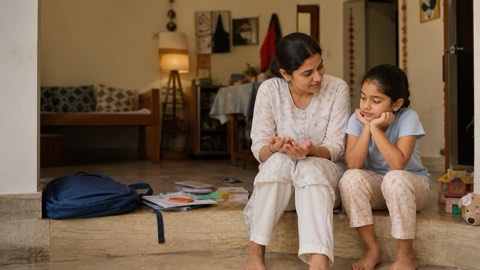
Explain once, calmly, and then let the discomfort be theirs rather than the child's. Most families adjust within a few visits.
What about a child who hugs everyone including strangers?
Same principle in reverse: teach them to ask, and teach that not everyone wants to be hugged. Very affectionate children need the boundary lesson too, and it is a safety matter for them.
At what age does this start?
From toddlerhood, in the simplest form: asking before picking them up, stopping tickling when they say stop, and letting them choose the greeting.
Reviewed by
- Nakul Phatak — CEO, theAsianparent India & IndonesiaHead of theAsianparent India; father of one
- Roshni Chugani — Head of Marketing, theAsianparent India & Singapore12 years in the mother-and-baby space; mother of two
Published by: theAsianparent editorial team