Mundan: the first head-shaving ceremony, and how to keep it safe

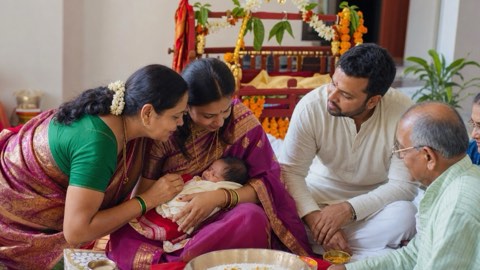
The first head-shaving is one of the most photographed moments of an Indian childhood, and one of the few where hygiene genuinely matters. Here is how to do it well.
When it is done
Practice varies enormously: some families do it in the first year, some in the third or fifth, and many do it at a temple on a specific occasion. In several communities it is done for boys and not for girls; in others, for both.
Medically, later is easier. A toddler who can be distracted and told what is happening copes better than a screaming one-year-old, and an older child's scalp is less delicate.
There is no medical reason to do it at all. It is a family tradition, and skipping it or doing a symbolic snip of a lock of hair is a legitimate choice.
The safety rules
A fresh, sterile blade, used once. This is the whole safety story: reused blades transmit hepatitis B, hepatitis C and HIV, and temple and roadside barbers are exactly where reuse happens. Take your own new blade or use a barber who opens a new one in front of you.
Check the baby's vaccination card includes hepatitis B doses. Take a clean towel and your own water where the venue's water is doubtful.
Do not use a razor on a struggling child. An electric trimmer with a guard is far safer for a wriggling toddler and is now widely accepted for mundan.
Watch for the soft spot in a baby under about eighteen months — pressure there is not safe, and a barber who is rough should be stopped.
Aftercare
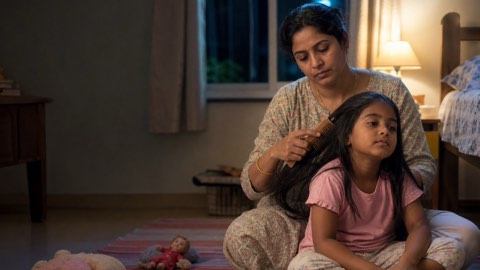
Wash the scalp gently with plain water, pat dry, and apply a light moisturiser or a little coconut oil if the skin looks dry. Traditional pastes of turmeric and sandalwood are fine on intact skin in small amounts, but not on any nick.
Any cut needs cleaning and an antiseptic, and any wound that reddens, swells or discharges over the next days needs a doctor.
Keep the newly shaved head covered outdoors — sunburn on a bare scalp happens fast in Indian sun, and cold weather goes straight through.
Expect the head to look uneven for weeks. Hair regrows at its own pace, and the regrowth pattern is genetic.
When to see a doctor
Same-day: a cut that will not stop bleeding, a wound that becomes red, hot, swollen or discharges pus, a fever after the ceremony, or a rash spreading from the scalp.
Also worth a doctor: patchy hair loss with scaly skin as the hair grows back, which usually indicates a fungal scalp infection needing oral treatment rather than shampoo.
This article is general information, not medical advice, and is no substitute for personal medical advice. For any decision about your or your child's health, please consult your doctor.
Frequently asked questions
Does shaving make hair grow thicker or darker?
No. This is the most persistent myth attached to the ceremony. Hair thickness, colour and texture are genetic; regrowth feels coarse because it is cut bluntly.
Is it safe to do it at a temple?
Yes, if the blade is new and opened in front of you, and the hands doing it are clean. That is the only condition that matters.
My child screams through it. Should we stop?
You can absolutely stop and finish at home with a trimmer. Nothing about the tradition requires a distressed child to sit through it.
Can we skip it entirely?
Yes. It is a custom, not an obligation, and plenty of families now do a symbolic trim instead.
Sources
Every clinical figure on this page is taken from the guidelines below. Where our numbers and your doctor's differ, ask which guideline they follow.
- WHO. WHO guidelines on drawing blood: best practices in phlebotomy (2010)Backs the claim that reused blades transmit hepatitis B, hepatitis C and HIV, supporting the article's core safety instruction to use only a fresh, sterile blade used once.
- NHS. Ringworm and other fungal infections (2023)Supports the claim that patchy hair loss with scaly skin after head-shaving typically indicates a fungal scalp infection that needs oral antifungal treatment, not just topical shampoo.
- IAP. IAP Immunization Timetable 2020 (2020)Supports the article's advice to verify the child's vaccination card includes hepatitis B doses prior to the mundan ceremony, consistent with IAP's recommended immunisation schedule for Indian children.
Reviewed by
- Nakul Phatak — CEO, theAsianparent India & IndonesiaHead of theAsianparent India; father of one
- Roshni Chugani — Head of Marketing, theAsianparent India & Singapore12 years in the mother-and-baby space; mother of two
Published by: theAsianparent editorial team