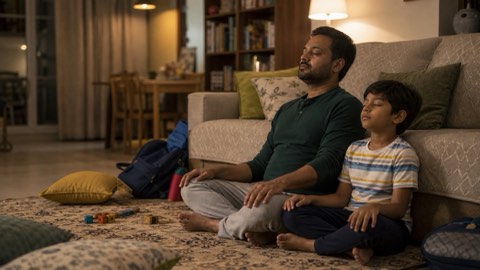
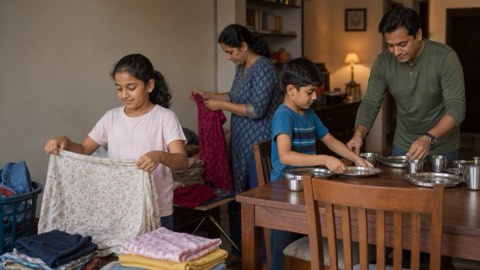
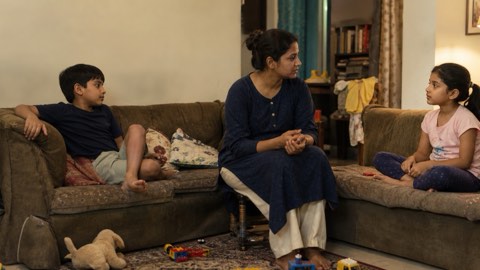
How to talk to children about frightening news

Children hear about it anyway — from the television, the group chat, the school bus. The question is whether they hear about it from you as well.
Limit the exposure first
Rolling news coverage of a disaster shows the same frightening footage repeatedly, and young children often believe it is happening again each time. Turn it off when children are in the room.
Check what is on their own devices and in their group chats — for older children, that is usually where they encountered it, often as unverified video.
This is not about hiding the world from them. It is about the difference between knowing something happened and watching it happen forty times.
What to say, by age
Under six: keep it simple, brief and reassuring, and only if they have heard something. 'Something bad happened far away. Lots of people are helping. You are safe and we are here.' Do not add detail they did not ask for.
Six to ten: answer honestly at the level of the question, correct the wildly wrong version they have heard, and be concrete about safety — what the family would do, who looks after them. Children this age worry about the practical.
Ten and above: talk properly, including about causes and about how to tell a real report from a rumour. This age is receiving misinformation directly and needs the skills more than the reassurance.
At every age: ask what they have heard before you explain, so you correct the actual version in their head rather than introducing a new one.
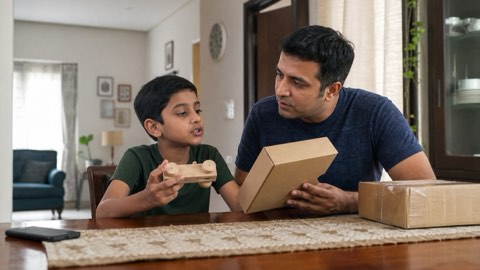

How to say it
Answer the question asked, then stop. Children ask for what they can handle, and adults routinely over-explain.
Do not promise what you cannot: 'nothing bad will ever happen to us' is a promise that breaks. 'It is very unlikely, and we will always look after you' is true and holds.
Name the helpers — doctors, rescue workers, ordinary people. This is genuinely reassuring to children and it is also accurate.
Let them do something: draw, write a card, donate a small amount, help pack something. Action is the best antidote to helplessness at any age.
Watch your own reaction. Children read a parent's face and voice far more than the words, and a frightened adult transmits more than any news bulletin.
And keep the routine going. Ordinary life — meals, school, bedtime — is what tells a child the world is still working.
When to see a doctor
Seek help if, after a couple of weeks: the child is preoccupied with the event, has recurring nightmares, refuses to sleep alone or go to school, has become clingy or regressed, complains of stomach aches or headaches, is jumpy and irritable, or repeatedly re-enacts the event in play.
Also if they were directly affected — present at an event, bereaved, or displaced. Children exposed directly need more than a conversation, and early support prevents a great deal later.
Tele-MANAS on 14416 is free and round the clock, and school counsellors and child psychologists can help. Any talk of self-harm is same-day.
This article is general information, not medical advice, and is no substitute for personal medical advice. For any decision about your or your child's health, please consult your doctor.
Frequently asked questions
Should I bring it up if they have not heard?
For young children, no. For older ones, yes if it is being discussed widely — better from you than from a WhatsApp forward.
My child keeps asking the same question.
Repetition is how children process. Answer the same way, calmly, as many times as needed; changing the answer increases the anxiety.
How do I handle communal or political violence in the news?
Age-appropriately, honestly, and with a clear statement of the family's values about how people should be treated. Children absorb the household's attitude either way, so saying it deliberately is better than leaving it to inference.
What about frightening rumours in the school group?
Teach the check: who said this, where did it come from, is it on a real news source. That habit is worth more than any single correction.
Sources
Every clinical figure on this page is taken from the guidelines below. Where our numbers and your doctor's differ, ask which guideline they follow.
- WHO. Mental health and psychosocial considerations during the COVID-19 outbreak (includes guidance on talking to children about distressing events) (2020)Backs the advice to maintain routines, limit frightening media exposure for children, and model calm adult behaviour as protective factors for children's mental health during distressing events.
- AAP. Talking to Children About Tragedies and Other News Events (2022)Supports the age-differentiated communication advice (simple reassurance under six, honest concrete answers for six to ten, fuller discussion for ten and above), the instruction to ask what the child has already heard before explaining, and avoiding over-promising safety.
- AAP. Children and Disasters – AAP Policy and Guidance (2023)Supports the recommendation to seek professional help when symptoms such as nightmares, school refusal, clinginess, regression, somatic complaints, hypervigilance, or repetitive re-enactment persist beyond a couple of weeks, and the note that children directly exposed need more than a conversation.
- NICE. Post-traumatic stress disorder (NICE guideline NG116) (2018)Supports the flag that children directly affected by a traumatic event (present, bereaved, or displaced) need early professional support, and that early intervention prevents greater difficulty later.
- NIH. Helping Children and Adolescents Cope with Disasters and Other Traumatic Events – National Institute of Mental Health (2020)Supports the specific warning signs listed (preoccupation, nightmares, sleep refusal, school refusal, regression, somatic complaints, irritability, repetitive re-enactment in play) as indicators that professional help should be sought.
Reviewed by
- Nakul Phatak — CEO, theAsianparent India & IndonesiaHead of theAsianparent India; father of one
- Roshni Chugani — Head of Marketing, theAsianparent India & Singapore12 years in the mother-and-baby space; mother of two
Published by: theAsianparent editorial team