Sibling rivalry: fighting, favouritism and how to keep the peace

Siblings fight — that part is unavoidable and even useful. What decides the long-term relationship is how the adults handle it.
Why they fight
Siblings compete for the scarcest resource in the house: parental attention. Add different ages, temperaments and stages, shared space, shared possessions and constant proximity, and conflict is arithmetic rather than character.
Fighting also teaches things nothing else does — negotiation, standing up for yourself, repairing a relationship you cannot leave. The aim is not zero conflict; it is conflict that is not cruel and does not always end the same way.
Flashpoints are predictable: a new baby, a shared room, homework hours, screen time, festivals with cousins, and any period when one child needs extra attention for illness or exams.
How to referee
Stay out of the small ones. Constant adult intervention teaches children to compete for the judge rather than to sort it out, and the child who reaches you first wins by default. Watch, wait, and step in when it turns physical or genuinely unfair.
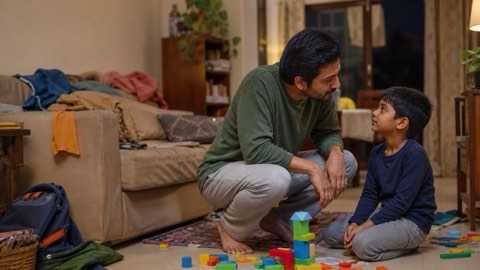
When you do step in, describe rather than judge: 'two children, one cricket bat, and both of you are angry. What can we do?' Do not investigate who started it — you will get two convincing accounts and reward whoever argues better.
Treat aggression as a rule, not a side: 'no hitting in this house, whoever started it.' Separate, calm both, and address the behaviour with each individually and later.
Give each child a way to be heard privately. Most sibling grievances are actually about fairness of attention, and they shrink when the child can say so directly to a parent who listens without dismissing it.
Comparison and favouritism
Comparison is the single most damaging habit, and the most common: 'why can't you be quiet like your sister', 'your brother never gave us this trouble'. It does not motivate; it produces resentment between the children and a lasting story about who each one is in the family.
Aim for fairness in fit rather than fairness in identical treatment. Children do not need the same bedtime, the same gift or the same rules — they need the confidence that their needs are taken as seriously. 'You each get what you need' is a sentence worth using explicitly.
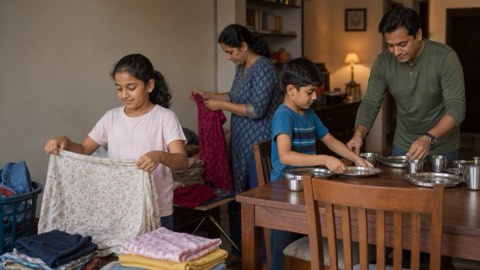
The Indian version of favouritism deserves naming: sons given more food, more freedom, more investment; daughters given more chores and less licence; and the eldest daughter parented into being a third adult. Children notice all of it, precisely, and remember. So do the grandparents' comments, which parents can and should interrupt.
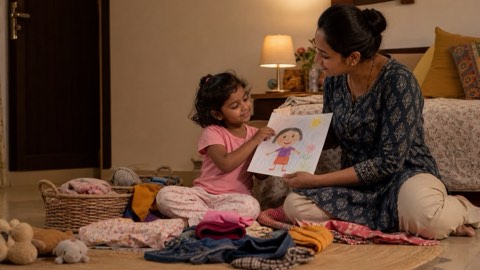
Protect one-to-one time with each child, even fifteen minutes a week, doing something they choose. It is the most efficient rivalry-reducer available, because it addresses the underlying scarcity.
Age gaps, shared rooms and the new baby
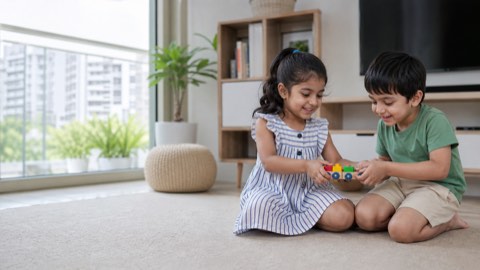
A small gap (under two years) means more physical fighting and more competition for the same toys; a large gap brings less rivalry but less companionship. Neither gap is right, and the relationship depends far more on how it is handled than on the years between.
Sharing a room is normal for most Indian families and works when there is some personal territory: a shelf, a box, a corner that is theirs alone and cannot be touched. Different bedtimes for different ages need a lamp and a rule about quiet, not a separate room.
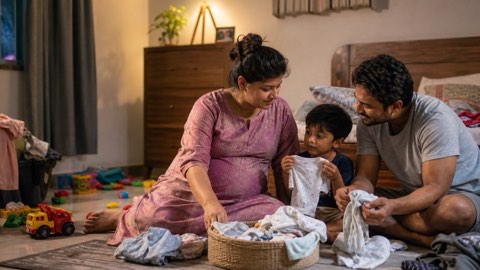
When a new baby arrives, expect the older child to regress — bedwetting, baby talk, clinginess, tantrums. Give them a job, protect a daily window of exclusive attention, let them be babied a little when they ask, and never blame the baby for what the older child cannot do now. Our preparing-for-a-second-baby guide covers the transition in detail.
Frequently asked questions
My older child hits the baby. How worried should I be?
It is common and it needs immediate supervision, not panic. Never leave them unsupervised, respond calmly and firmly, and increase one-to-one attention for the older child sharply — the hitting is usually a message about displacement rather than about the baby.
Should I force them to apologise?
Forced apologies teach performance. Better: separate, calm down, then ask what happened and what would help — a proper repair (returning the toy, helping fix what broke) means more than the word sorry.
They fight constantly but claim to love each other. Is this normal?
Entirely. High-conflict, high-affection sibling relationships are the norm, and most settle in adolescence. Worry about contempt, cruelty and fear rather than volume.
How do I stop relatives comparing my children?
Interrupt in the moment, lightly and in front of the child: 'they are very different and we like it that way.' Children need to see the comparison being refused, because otherwise they assume the adults agree with it.
Reviewed by
- Nakul Phatak — CEO, theAsianparent India & IndonesiaHead of theAsianparent India; father of one
- Roshni Chugani — Head of Marketing, theAsianparent India & Singapore12 years in the mother-and-baby space; mother of two
Published by: theAsianparent editorial team