Raising sons and daughters equally: the everyday habits that decide it

Almost no family says it treats sons and daughters differently. Almost every family does, in ways so ordinary they are invisible. Here is where it hides, and what to change.
Where the bias actually lives
Not in declarations, but in daily logistics: who is asked to clear the plates, who is allowed out after dark, whose education is prioritised when money is tight, who is served food first and who eats last, whose marriage is planned from age fifteen, and whose career is treated as optional.
In language: 'boys don't cry', 'sit properly, you're a girl', 'help your mother' said to daughters and never sons, 'he's naughty' versus 'she's stubborn' for the same behaviour.
In freedom and safety: daughters restricted rather than the environment made safer, sons unsupervised on the assumption they can manage. Both children are harmed by this — one loses independence, the other loses accountability.
Children read all of it accurately, long before they can name it. A ten-year-old knows exactly which sibling gets the bigger glass of milk.
Chores, money and responsibility
Give the same chores to all children, rotated. Sons should cook, clean, wash their own plates and learn to run a house; daughters should handle money, fix things, and be responsible for outdoor tasks. This is not symbolism — it is the practical training that decides adult competence and adult marriages.
Make the father visibly do domestic work. Children learn far more from watching who does the dishes than from anything said about equality. If the household's men do not cook, the household is teaching a lesson regardless of its stated views.
Handle money openly with both. Let daughters see and manage money, negotiate purchases, and understand family finances; financial dependence is one of the strongest predictors of a woman being unable to leave a bad situation later.
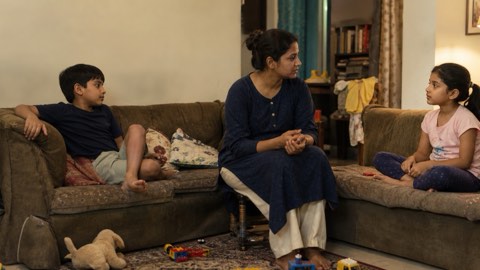
Emotions, safety and expectations
Allow boys the full emotional range. 'Boys don't cry' produces men who cannot name feelings and express distress as anger — which becomes the next generation's household problem. Let sons be gentle, comforted and afraid, and let them see male relatives express affection.
Teach both sons and daughters about consent and body safety in the same words: your body is yours, other people's bodies are theirs, and no means no. Sons need this as much as daughters, and earlier than most families think.
Watch the expectation gap in education and career. Where money is short, families still cut the daughter's coaching first, or steer her toward a course that fits marriage plans. Say the ambition out loud for both: what do you want to be, and what will it take?
And do not make daughters responsible for their own protection alone. Teach safety practically to everyone, but the message 'come home early or something will happen to you' places blame on the girl. The parallel conversation with sons — about respect, consent and bystander responsibility — is the one most Indian families skip.
Handling the extended family
Grandparents and relatives will hand out the old script — comments about complexion, marriage, food portions, or a son 'carrying the family name'. Interrupt in the moment, lightly and consistently, and be seen doing it: children need to know the adults do not all agree.
Pick the battles that matter: food, education, freedom of movement, and money are worth firmness; a comment about a colour of clothing usually is not. Consistency on the big four is what children remember.
Refuse the comparison rituals: no ranking children in front of guests, no 'she is dark but sweet', no discussion of a girl's marriage prospects in her hearing. If it cannot be said about the son, it is not said about the daughter.
Frequently asked questions
My daughter genuinely likes dolls and my son likes cricket. Am I supposed to stop them?
No. Equality is about options, not enforcement. Let each child have what they enjoy, and make sure the other options are also available and never mocked — a son who wants to cook or a daughter who wants to play cricket should meet exactly zero resistance.
Isn't restricting my daughter's movements just realistic safety in India?
Safety is real, and blanket restriction is not the only response. Teach practical safety to all children, arrange transport, know the plans, insist on check-ins — the same rules for sons and daughters. Restriction alone teaches a girl that her freedom is the price of others' behaviour.
How do I explain this to a joint family that sees nothing wrong?
Argue in practical terms rather than ideological ones: 'he should know how to cook, he will live away for his job'; 'she should handle money, she will need to'. Framed as competence rather than politics, it is far easier to win.
My son is being teased for being 'girly'. What should I do?
Back him unconditionally at home, address the teasing with the school directly, and avoid the temptation to toughen him up by joining in. Children who are supported at home withstand a great deal outside it.
Reviewed by
- Nakul Phatak — CEO, theAsianparent India & IndonesiaHead of theAsianparent India; father of one
- Roshni Chugani — Head of Marketing, theAsianparent India & Singapore12 years in the mother-and-baby space; mother of two
Published by: theAsianparent editorial team