Time-out, time-in or a calm-down corner: what works for young children

Three methods with similar names and different mechanisms. The one that works depends on whether the child needs a boundary or needs help calming down.
What each one is
Time-out: the child is removed from the situation for a short period. Its purpose is to interrupt a behaviour and remove the attention reinforcing it. Traditionally done alone, on a step or a chair.
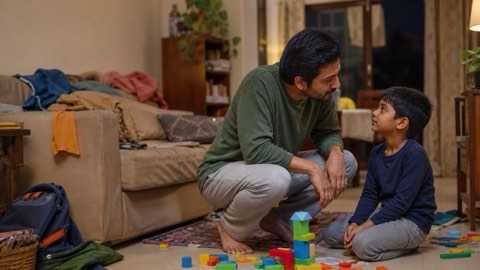
Time-in: the child is brought close to a calm adult rather than sent away. Its purpose is to help them regulate with support. This suits younger children and those who become more distressed when alone.
Calm-down corner: a designated place with soothing things — cushions, books, something to squeeze — that the child can go to voluntarily, and be invited to when needed. Its purpose is to teach self-regulation rather than to punish.
The distinction that matters: time-out addresses behaviour; the other two address the state underneath it. Most young children need the second more often than the first.
Doing it well
Time-out, if you use it: short (a rough guide is one minute per year of age), for a specific named behaviour, with the same place each time, and no lecturing before or during. Afterwards, reconnect and briefly say what to do instead. It works for a specific repeated behaviour and not as a general punishment.
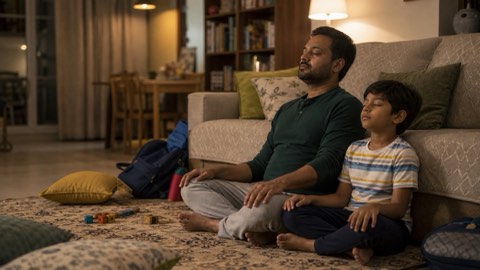
Time-in: sit with the child, say little, and let them settle against you. This is not rewarding bad behaviour — the behaviour is addressed once they are calm, which is the only point at which addressing it works.
Calm-down corner: build it together, use it yourself sometimes, and never send a child there as a punishment. The moment it becomes 'go to the corner' in an angry voice, it stops being a calm-down space and becomes a naughty step with cushions.
For all three: the follow-up conversation is where the learning happens, and it should be short — what happened, what to do next time, and a repair if one is needed.
When they fail
Time-out fails when: the child is under about three (too young to understand), when it is used for everything, when it involves shouting or dragging, or when it is so long that the child forgets why they are there and simply feels rejected.
It also fails when the behaviour is driven by an unmet need — hunger, tiredness, overstimulation, or a child who is desperate for attention and finds that misbehaving reliably produces an adult.
Calm corners fail when they are introduced during a meltdown rather than practised in calm moments.
And any method fails if the adults disagree. In a joint family, the handful of household rules and the response to breaking them need to be agreed among the adults rather than improvised in front of the child.
Frequently asked questions
Is time-out harmful?
Used briefly, calmly and for a specific behaviour, the evidence does not suggest harm. Used as isolation, shouting or rejection, it is a different thing entirely.
What suits a two-year-old?
Time-in. A two-year-old cannot connect a punishment to a behaviour reliably, and distraction plus redirection does most of the work at that age.
My child refuses to stay in time-out.
Then it is the wrong tool for this child. Switch to time-in, or to removing the object or activity rather than the child.
What about the naughty step?
Same as time-out, with a name that labels the child. Use a neutral name for the place if you use one at all.
Reviewed by
- Nakul Phatak — CEO, theAsianparent India & IndonesiaHead of theAsianparent India; father of one
- Roshni Chugani — Head of Marketing, theAsianparent India & Singapore12 years in the mother-and-baby space; mother of two
Published by: theAsianparent editorial team