12 activities that teach children about emotions

Children who have words for feelings use them instead of screaming. These twelve activities build the vocabulary and the calming skills, in calm moments.
Naming feelings (1-5)
1. Feelings chart on the fridge with faces — happy, sad, angry, scared, tired, excited — and everyone points to theirs at dinner, adults included.
2. Emotion charades: act out a feeling, others guess. Better than any lecture on facial expressions.
3. Feelings in stories: pause a familiar story and ask how the character feels and how you can tell.
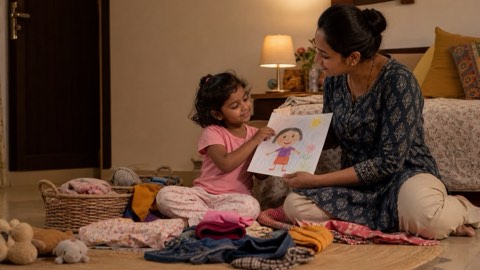
4. Colour the feeling: draw what angry looks like, what calm looks like. Younger children find drawing easier than describing.
5. Weather report for the mood: 'I am stormy today, what are you?' — a shorthand that families keep for years.
Calming skills (6-9)
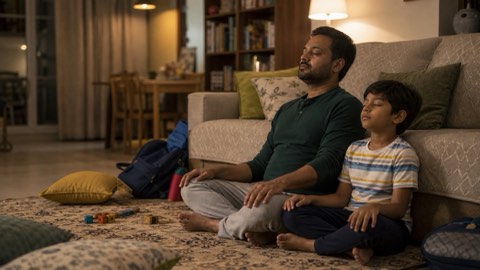
6. Blow out the candles: hold up five fingers and blow each one down slowly. A long out-breath is the fastest physical calmer there is.
7. Belly breathing with a soft toy on the tummy, watching it rise and fall.
8. Push the wall: press hard against a wall for ten seconds, three times. Heavy muscle work genuinely settles an overloaded body.
9. Five senses game: name five things you can see, four you can hear, three you can touch. Works from about five.
Practising and repairing (10-12)
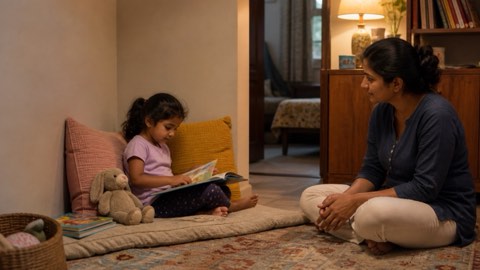
10. Build a calm-down box together: something to squeeze, a picture book, paper to scribble on, a small torch. Making it is half the value.
11. Role-play the hard moments with toys — someone takes a toy, someone is left out — and let the child solve it. Rehearsal in calm moments is what makes a skill available in a hot one.
12. Repair practice: after any incident, ask what would help the other person feel better, and do that rather than extracting the word sorry.
And the one that matters most, which is not an activity: name your own feelings out loud and show yourself calming down. Children learn regulation by watching it.
Frequently asked questions
At what age can children learn this?
Naming feelings from about two, simple breathing from three or four, and the five-senses type of technique from around five.
My child refuses to do the breathing when angry.
Expected. A child mid-meltdown cannot access a new skill. Practise daily when calm, and offer it early, before the peak.
Is a calm-down corner the same as a punishment?
No, and it stops working the moment it is used as one. It is a place they choose or are invited to, never sent to in anger.
Do boys need this as much?
More, if anything, because they are more often taught to suppress rather than name feelings — which is where adult anger problems begin.
Reviewed by
- Nakul Phatak — CEO, theAsianparent India & IndonesiaHead of theAsianparent India; father of one
- Roshni Chugani — Head of Marketing, theAsianparent India & Singapore12 years in the mother-and-baby space; mother of two
Published by: theAsianparent editorial team