Anaemia in pregnancy: India's most common complication, and how to fix it

More than half of pregnant women in India are anaemic, and the fatigue it causes is written off as normal pregnancy tiredness. It is the most fixable complication there is.
Why it matters
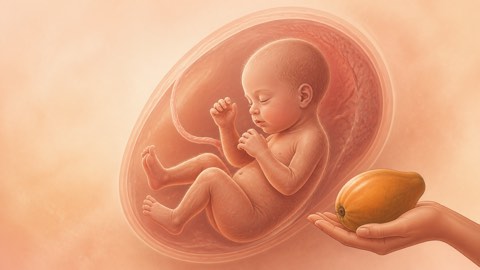
Pregnancy roughly doubles the body's iron requirement — the mother's blood volume expands and the baby builds its own stores. In a population that starts pregnancy already low, the shortfall shows quickly.
Untreated anaemia raises the risk of preterm birth, low birth weight, poor growth, and postpartum haemorrhage — and severe anaemia is a direct contributor to maternal deaths in India. It also leaves the mother depleted for the demanding postpartum months.
The symptoms are easy to dismiss: tiredness that rest does not fix, breathlessness on stairs, palpitations, dizziness, pallor of the inner eyelid, tongue and nail beds, poor concentration, and pica — craving chalk, mud or ice.
Testing and treatment
Haemoglobin is checked at booking and again in the third trimester at minimum, and more often if low. Pregnancy generally wants haemoglobin above 11 g/dL; below 7 is severe and needs urgent treatment.
Prophylactic iron and folic acid (IFA) tablets are given routinely from the second trimester under India's national programme — free at Anganwadi centres, PHCs and government hospitals, along with deworming, which matters because worm infestation is a real cause of iron loss.
For diagnosed anaemia, treatment doses are higher and continue for at least three months after haemoglobin normalises, because the stores take that long to refill. Black stools are expected and harmless.
Where oral iron is not tolerated or not working, or the anaemia is severe or discovered late, intravenous iron is given — it is quick, effective, widely available in India, and hugely underused. Ask about it rather than persisting with tablets that make you vomit.


Making iron work
Timing: take iron on an empty stomach if tolerated, or with food if not. Take it with something citrus — lemon water, amla, orange — because vitamin C multiplies absorption.
Keep it away from: tea and coffee (tannins block iron badly, and chai with meals is the single biggest dietary obstacle in Indian households), milk and dairy, calcium tablets, and antacids. Space iron and calcium by several hours.
Food sources: ragi, bajra, jowar, dals, chana, rajma, green leafy vegetables, gud, til, dates, anjeer, poha, and — for families who eat them — egg, liver, meat and fish, whose iron absorbs far better.
Cook in an iron kadhai, which genuinely adds iron to food. And treat the side effects rather than stopping: constipation responds to water, fibre and a stool softener if needed, and nausea often improves with a change of preparation or timing.
When to see a doctor
Same-day: severe breathlessness at rest, chest pain, palpitations, fainting, extreme weakness, or a haemoglobin result your doctor flags as severe. Severe anaemia near term sometimes requires transfusion before delivery, and that decision needs time.
Book an appointment for: exhaustion that rest does not fix, breathlessness on climbing stairs, pallor, pica, or an inability to take the iron tablets — all of these have solutions, and the last one is the commonest reason treatment fails.
This article is general information, not medical advice, and is no substitute for personal medical advice. For any decision about your or your child's health, please consult your doctor.
Frequently asked questions
The iron tablet makes me vomit. Can I stop?
Do not stop; change. Try taking it after food, at night, or in a different preparation — there are several. If none is tolerated, ask about intravenous iron. Quietly stopping is how anaemia progresses to the severe stage.
Can I get enough iron from diet alone?
Rarely in pregnancy, given how much the requirement rises. Diet plus supplements is the standard, and the national programme provides the supplements free precisely because diet alone does not close the gap in this population.
Are beetroot, apple and pomegranate good for haemoglobin?
They are healthy foods and are not iron powerhouses; the colour-based folklore is not nutrition. Ragi, dal, greens, gud, til, egg and meat carry the iron, and vitamin C helps absorb it.
My haemoglobin dropped even though I am taking the tablets.
Possible reasons: not absorbing (tea, milk or calcium taken alongside), not actually taking them daily, worm infestation, ongoing blood loss, or another cause of anaemia such as B12 deficiency or a haemoglobin disorder like thalassaemia. Tell your doctor — this needs investigation rather than a higher dose alone.
Sources
Every clinical figure on this page is taken from the guidelines below. Where our numbers and your doctor's differ, ask which guideline they follow.
- WHO. WHO recommendations on antenatal care for a positive pregnancy experience (2016)Backs the haemoglobin threshold of 11 g/dL in pregnancy, classification of haemoglobin below 7 g/dL as severe anaemia, routine iron and folic acid supplementation in pregnancy, and the link between anaemia and preterm birth, low birth weight, and maternal mortality.
- MoHFW. Anaemia Mukt Bharat: Intensified National Iron Plus Initiative (I-NIPI) Operational Guidelines (2018)Backs the claims that prophylactic IFA tablets are provided free at Anganwadi centres, PHCs, and government hospitals under India's national programme, and that deworming is delivered alongside IFA supplementation.
- ICMR. ICMR-NIN Nutrient Requirements for Indians – Recommended Dietary Allowances and Estimated Average Requirements (2020)Backs the claim that pregnancy substantially raises iron requirements and that dietary sources alone are rarely sufficient to meet the increased demand in this population, as well as the listing of ragi, bajra, dals, green leafy vegetables, and animal-source foods as iron-contributing foods.
- WHO. Daily iron and folic acid supplementation during pregnancy (WHO guideline) (2012)Backs routine daily iron and folic acid supplementation from early pregnancy, the principle of continuing treatment to replenish stores after haemoglobin normalises, and the dietary advice to take iron with vitamin C to enhance absorption.
- NICE. Antenatal care (NICE guideline NG201) (2021)Backs routine haemoglobin screening at booking and again in the third trimester, and the clinical management approach of investigating a haemoglobin drop despite supplementation rather than simply increasing the dose.
Reviewed by
- Nakul Phatak — CEO, theAsianparent India & IndonesiaHead of theAsianparent India; father of one
- Roshni Chugani — Head of Marketing, theAsianparent India & Singapore12 years in the mother-and-baby space; mother of two
Published by: theAsianparent editorial team