The first-trimester safety checklist: what to avoid and what is fine

The first-trimester avoid-list is much shorter than the family's version. Here is what genuinely matters, and what you can stop worrying about.
The genuine avoid-list
Alcohol and tobacco in every form, including chewed tobacco and second-hand smoke. These are the two that matter most and they are non-negotiable.
Raw or undercooked eggs, meat and fish; unpasteurised milk and its soft fresh cheeses; raw sprouts; and cut fruit, chutneys and juices from street vendors. The concern is infection rather than the food itself.
Medicines not cleared by your doctor, including over-the-counter painkillers beyond paracetamol, and herbal or ayurvedic preparations. High-dose vitamin A and its derivatives — including oral acne medicines — cause birth defects.
X-rays without telling the radiographer you are pregnant, cat litter (toxoplasmosis), and heavy chemical exposure — pest control, paint stripping, industrial solvents. Get these done before or after where you can, and ventilate well.
Very hot baths, saunas and hot yoga, particularly in the first trimester when raised core temperature matters most.
More than a cup or two of tea or coffee a day — the pregnancy limit is about 200 mg of caffeine.
What is actually fine
Exercise, including walking, swimming, prenatal yoga and continuing a routine you already do. Inactivity carries its own risks.
Sex, in an uncomplicated pregnancy, at any stage — unless your doctor has advised otherwise for bleeding, placenta or cervix reasons.
Housework, stairs, and carrying reasonable weights, with sensible technique. The Indian instinct to put a pregnant woman on bed rest for nine months is not medical advice.
Papaya when ripe (raw papaya is the one reasonably avoided), pineapple in normal food amounts, and 'heaty' foods, which are not a medical category.
Hair colouring, most cosmetics, dental treatment (tell the dentist), and travel in the first two trimesters with your doctor's agreement.
Working, including at a screen. And flying, generally, until around 36 weeks with a fitness certificate after 28.


The things to actively do
Folic acid daily, ideally started before conception and continued through the first trimester. This is the single most important thing on the page.
Register the pregnancy at the Anganwadi, PHC or hospital and get the MCP card. It unlocks free supplements, checks and the government schemes.
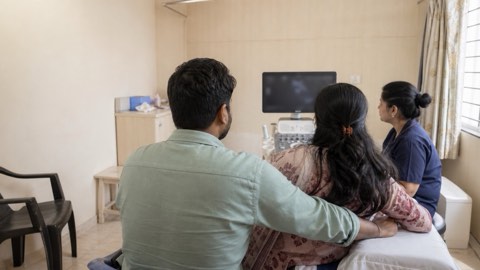
Book the first scan and the booking bloods — haemoglobin, blood group and Rh, thyroid, sugar, and infection screening.
Review every medicine you take, prescription or otherwise, with your doctor. Do not stop a prescribed medicine for thyroid, epilepsy, diabetes or mental health on your own.
And get the vaccines that are given deliberately in pregnancy — tetanus-containing (Td) as scheduled, and influenza where advised.
When to see a doctor
Go to hospital immediately at any stage for: heavy bleeding, severe or constant abdominal pain, a gush or steady trickle of fluid, severe headache with visual changes, sudden swelling of the face and hands, high fever, fainting, or reduced fetal movements after 28 weeks. Call 108 if you cannot travel quickly.
In the first trimester specifically: bleeding of any kind, one-sided abdominal pain (which needs ectopic pregnancy excluded urgently), vomiting that keeps nothing down for 24 hours, burning urination or fever, or severe abdominal pain.
This article is general information, not medical advice, and is no substitute for personal medical advice. For any decision about your or your child's health, please consult your doctor.
Frequently asked questions
My family says no travel and no stairs for three months.
Neither is supported for an uncomplicated pregnancy. Ask your own obstetrician about your case; if there are no restrictions, there are no restrictions.
I took a painkiller before I knew.
Very common and usually nothing to worry about, particularly with paracetamol. Tell your doctor what and when.
Is it safe to keep working night shifts?
Discuss it. Shift work is associated with some raised risks and many women continue safely; it depends on the job and your pregnancy.
Can I keep my fasts?
Take it to your doctor with specifics. Every tradition exempts pregnant women, and modified fasts are usually the compromise families settle on.
Sources
Every clinical figure on this page is taken from the guidelines below. Where our numbers and your doctor's differ, ask which guideline they follow.
- WHO. WHO recommendations on antenatal care for a positive pregnancy experience (2016)Backs the recommendation for daily folic acid supplementation ideally before conception and through the first trimester, routine antenatal booking investigations (haemoglobin, blood group, infection screening), and the principle that physical activity and exercise are beneficial in uncomplicated pregnancy.
- MoHFW. Pradhan Mantri Surakshit Matritva Abhiyan / Mother and Child Protection Card guidelines (2022)Backs the instructions to register at an Anganwadi, PHC or hospital, obtain the MCP card, and access free supplements, antenatal checks and government schemes; also supports the scheduled Td vaccination in pregnancy.
- NICE. Antenatal care (NG201) (2021)Supports the caffeine limit of approximately 200 mg per day, avoidance of alcohol in all forms, advice to avoid raw or undercooked meat, eggs and unpasteurised dairy due to infection risk, caution with medicines not cleared by a doctor, and the list of urgent symptoms requiring immediate hospital attendance including heavy bleeding, severe abdominal pain, fluid loss, severe headache with visual changes, and reduced fetal movements.
- RCOG. Air Travel and Pregnancy (Scientific Impact Paper No. 1) (2015)Backs the statement that flying is generally safe until around 36 weeks and that a fitness certificate is appropriate after 28 weeks, and supports the position that travel in the first two trimesters is not contraindicated in uncomplicated pregnancy.
- IAP. IAP Standard Treatment Guidelines: Immunization in Pregnancy (2022)Supports the recommendation to receive tetanus-containing (Td) vaccine as scheduled during pregnancy and influenza vaccine where advised, and backs routine antenatal screening for thyroid, sugar, haemoglobin and infections.
Reviewed by
- Nakul Phatak — CEO, theAsianparent India & IndonesiaHead of theAsianparent India; father of one
- Roshni Chugani — Head of Marketing, theAsianparent India & Singapore12 years in the mother-and-baby space; mother of two
Published by: theAsianparent editorial team