Ginseng and herbal supplements in pregnancy: what to avoid

'Natural' is not a safety category. Several herbs commonly sold in India are specifically unsuitable in pregnancy, and the regulation of what is actually in the packet is thin.
The two problems
First, the herb itself. Several have pharmacological effects that are undesirable in pregnancy — stimulating the uterus, affecting blood clotting, altering blood sugar or blood pressure, or interacting with prescribed medicines.
Second, and more serious in India: what is actually in the packet. Studies have repeatedly found heavy metals — lead, mercury, arsenic — in some traditional preparations, and undeclared pharmaceutical ingredients in others. Neither is something to take while a baby is developing.
Herbal products are far less regulated than medicines, and dose standardisation is often poor even among reputable manufacturers.
Best avoided in pregnancy
Ginseng, in all its forms — it has been associated with adverse effects in animal studies and is generally not recommended in pregnancy, particularly the first trimester.
Ashwagandha, which is widely taken in India and is not recommended in pregnancy.
Dong quai, black cohosh, blue cohosh, pennyroyal, mugwort and tansy — all traditionally used to stimulate the uterus.
High-dose liquorice, aloe vera taken internally, senna and other stimulant laxatives, and high-dose vitamin A or its derivatives.
Raw papaya preparations and papain supplements, and concentrated karela juice where diabetes medication is being taken.
Weight-loss, detox and 'immunity booster' preparations of any kind, which are the least regulated category of all.

What is reasonable
Culinary amounts of ordinary kitchen herbs and spices — haldi, jeera, ajwain, ginger in tea, methi in food — are fine. Ginger in particular has decent evidence for nausea.
The supplements your doctor prescribes: folic acid, iron, calcium, vitamin D, and B12 where needed. These are the ones that matter, and no herbal preparation replaces them.
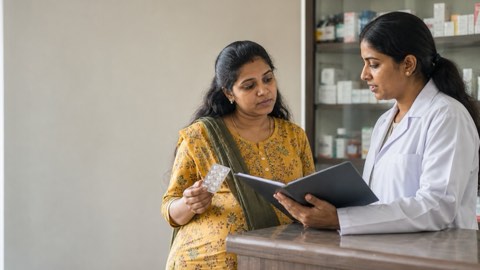
If you want to take something traditional, buy from a manufacturer with proper quality certification, and tell your obstetrician exactly what it is — ideally by showing them the packet rather than describing it.
And tell your ayurvedic or homeopathic practitioner that you are pregnant and what your obstetrician has prescribed. The dangerous scenario is two systems prescribing in ignorance of each other.
When to see a doctor
Stop and seek care for: bleeding or cramping after taking any preparation, jaundice or yellowing of the eyes (herbal products are a recognised cause of liver injury), severe abdominal pain, palpitations, an allergic reaction, or any unusual symptom after starting something new.
And before conception or as soon as you know you are pregnant, take every medicine, supplement and herbal product you use to your doctor in a bag and go through them. That single appointment prevents most of the problems on this page.
This article is general information, not medical advice, and is no substitute for personal medical advice. For any decision about your or your child's health, please consult your doctor.
Frequently asked questions
My family has taken these preparations for generations.
Long use is a reason to take a tradition seriously, and it is not the same as evidence of safety in pregnancy, particularly with modern manufacturing and unknown contaminants.
What about the herbal preparations given after delivery?
Many are nourishing foods rather than medicines and are fine. The concerns are with concentrated extracts, bhasmas and anything of unknown composition — and breastfeeding matters too, since things pass into milk.
Is green tea safe?
In moderation, yes; it contains caffeine, so it counts toward the pregnancy caffeine limit of about 200 mg a day — roughly one to two cups of tea or coffee in total. Concentrated green tea extracts are a different matter and are best avoided.
My doctor dismissed my question about ayurveda.
Ask again, specifically: 'I am taking this, here is the packet, is it safe with what you have prescribed?' That is a fair clinical question and deserves an answer.
Sources
Every clinical figure on this page is taken from the guidelines below. Where our numbers and your doctor's differ, ask which guideline they follow.
- WHO. WHO recommendations on antenatal care for a positive pregnancy experience (2016)Backs the page's emphasis on prescribed supplementation (folic acid, iron, calcium, vitamin D) as the evidence-based interventions that matter in pregnancy, and the general caution against unregulated preparations.
- NICE. Antenatal care (NG201) (2021)Supports the advice that pregnant women should inform their care provider of all medicines and supplements, and underpins the caffeine limit of approximately 200 mg per day cited in the green-tea FAQ.
- ICMR. Dietary Guidelines for Indians (2024)Supports the distinction between culinary use of common Indian spices (haldi, jeera, methi, ginger) as generally safe and the caution against concentrated herbal extracts and supplements of unknown composition during pregnancy.
- MoHFW. Pradhan Mantri Surakshit Matritva Abhiyan: Ante Natal Care Guidelines (2016)Supports the recommendation that all pregnant women receive prescribed iron, folic acid, and calcium supplementation through their antenatal provider, reinforcing the page's statement that these are the supplements that matter.
Reviewed by
- Nakul Phatak — CEO, theAsianparent India & IndonesiaHead of theAsianparent India; father of one
- Roshni Chugani — Head of Marketing, theAsianparent India & Singapore12 years in the mother-and-baby space; mother of two
Published by: theAsianparent editorial team