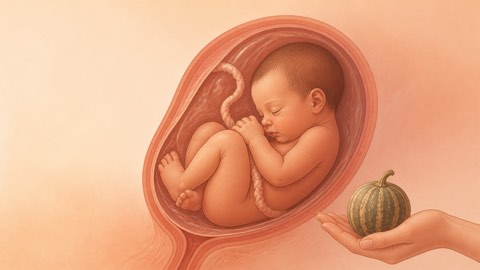
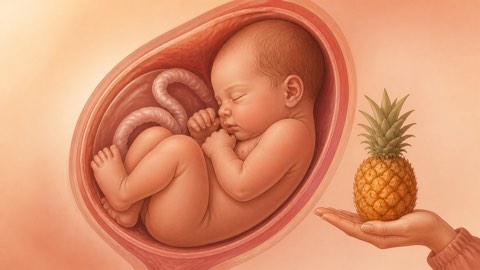
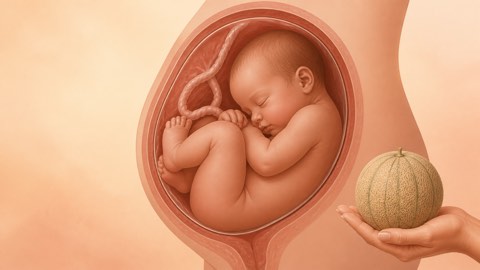
15 Indian pregnancy beliefs, and what doctors actually say

Some are sound advice with a traditional explanation. Some are harmless. A few cost money, sleep or health — and one of them is a crime.
About food (1-6)
1. Saffron makes the baby fair. No. Skin colour is genetic. Saffron is a pleasant, expensive spice and it changes nothing — and the belief itself deserves retiring, along with the preference behind it.
2. Papaya causes miscarriage. Half true: raw and semi-ripe papaya contains latex and is reasonably avoided; ripe papaya is fine in normal amounts.
3. Pineapple brings on labour. No, not in food quantities. Eat it if you enjoy it.
4. Ghee in the last month eases delivery. No. It is good food in normal amounts and it does not lubricate anything relevant.
5. 'Hot' and 'cold' foods must be balanced or the pregnancy is at risk. This is a traditional classification rather than a medical one. Eat a varied diet; the iron, calcium and protein are what matter.
6. Eating for two. No — the first trimester needs no extra calories and the later ones need roughly one extra snack, not a second thali.
About behaviour and beliefs (7-11)
7. Do not go out during an eclipse, do not use knives, lie still. No evidence of any effect on the baby. If the family keeps it, it is harmless — as long as it does not mean skipping a meal, a medicine or a hospital visit.
8. Do not tell anyone until three months. A custom, not a rule. It exists to avoid un-announcing a loss, and it also removes support during the hardest weeks — a trade worth deciding consciously.
9. Do not lift your arms above your head or the cord will wrap around the baby. No connection. Cord position is not affected by arm movements.
10. Do not attend funerals or see the dead. Cultural, harmless, and entirely a family decision.
11. Complete bed rest is safest. Untrue and often harmful: inactivity raises the risk of clots, gestational diabetes and excessive weight gain. Follow your own doctor's restrictions rather than a general rule.
About the baby (12-15)
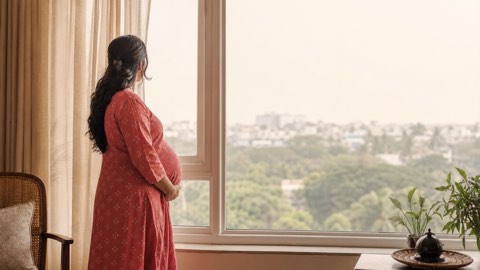
12. The bump's shape tells you the sex. No. Bump shape reflects your build, the baby's position and how many pregnancies you have had. And note that in India, determining or disclosing fetal sex is a criminal offence under the PCPNDT Act — any clinic offering it is committing a crime.
13. Heartburn means a hairy baby. There is one small study that found a weak association, and it is a curiosity rather than a fact. Heartburn is hormones and a crowded stomach.
14. Severe nausea means a girl. Weak statistical association in some studies, useless for any individual pregnancy.
15. What you look at or think about shapes the baby's appearance or temperament. No. This one causes real anxiety in Indian pregnancies and is worth saying plainly: your thoughts do not mark your baby.
When to see a doctor
The traditions that matter medically are the ones that delay care. Go the same day, whatever the family says, for: bleeding, severe abdominal pain, leaking fluid, severe headache with visual changes, sudden swelling of face and hands, high fever, or reduced fetal movements after 28 weeks.
And take every supplement, herbal preparation and home remedy to your obstetrician — including the ones a relative is confident about. That single habit prevents most of the harm on this page.
This article is general information, not medical advice, and is no substitute for personal medical advice. For any decision about your or your child's health, please consult your doctor.
Frequently asked questions
How do I refuse a tradition without offending the family?
Keep the harmless ones cheerfully; they cost nothing and buy goodwill. Refuse the ones that affect food, medicine or medical care, once and clearly, ideally with the doctor's words rather than your own.
My mother-in-law insists on a restricted diet.
Ask which foods specifically, and check them against our pregnancy diet guide. Most restrictions are harmless; the ones that remove protein, iron or fluid are not.
Is there any tradition that is actually good advice?
Several. Rest in the last months, the postpartum confinement period, the emphasis on nourishing food after delivery, and the whole household feeding a new mother are all sound.
Someone asked me to find out the baby's sex.
Refuse, and know that asking, telling and testing are all offences under the PCPNDT Act. It is one of the few areas where the law is unambiguous.
Sources
Every clinical figure on this page is taken from the guidelines below. Where our numbers and your doctor's differ, ask which guideline they follow.
- WHO. Recommendation on rest during pregnancy (2016)Backs the claim that routine bed rest is not recommended and that inactivity carries risks; the page states complete bed rest is 'untrue and often harmful' and raises risks including clots and gestational diabetes.
- NICE. Antenatal care (NG201) (2021)Supports the calorie-intake correction in point 6 — no additional calories are needed in the first trimester and only a modest increase later — and supports the warning signs list (bleeding, severe headache with visual changes, reduced fetal movements, etc.) as reasons to seek same-day care.
- ACOG. Exercise During Pregnancy (FAQ119) (2022)Supports the claim that routine physical activity, including lifting arms, is safe in uncomplicated pregnancy and contradicts the belief that bed rest is universally safest.
- NHS. Foods to avoid in pregnancy (2023)Backs the nuanced papaya claim: unripe/semi-ripe papaya is reasonably avoided in pregnancy, while ripe papaya is not listed as a food to avoid; also supports that pineapple in normal food quantities poses no risk.
- MoHFW. Pradhan Mantri Surakshit Matritva Abhiyan — Danger signs in pregnancy (2016)Directly supports the same-day danger-signs list on the page: vaginal bleeding, severe abdominal pain, leaking fluid, severe headache, visual disturbances, high fever, and reduced fetal movements after 28 weeks are all cited as urgent warning signs requiring immediate care.
- IAP. IAP Standard Treatment Guidelines — Nutrition in Pregnancy (2022)Supports the page's emphasis that adequate iron, calcium and protein — rather than folk dietary classifications — are what matter nutritionally in pregnancy, and that balanced dietary variety is the medical priority.
Reviewed by
- Nakul Phatak — CEO, theAsianparent India & IndonesiaHead of theAsianparent India; father of one
- Roshni Chugani — Head of Marketing, theAsianparent India & Singapore12 years in the mother-and-baby space; mother of two
Published by: theAsianparent editorial team