Godh bharai: planning an Indian baby shower that suits the mother

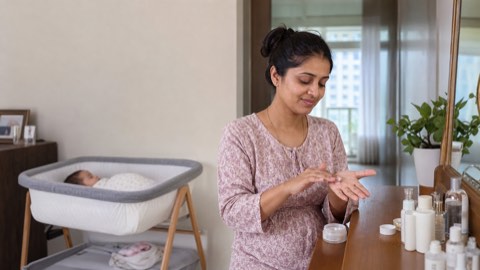
The seventh-month blessing is one of the few Indian rituals designed entirely around the mother. Here is how to plan one she will actually enjoy.
When it is held, and why the seventh month
Traditionally in the seventh or eighth month, and the timing is sound: late enough for the pregnancy to be well established, early enough that the mother is not exhausted and immobile.
The names differ across India — godh bharai in the north, seemantham in the south, valaikappu in Tamil Nadu with its bangle ceremony, dohale jevan in Maharashtra where the mother's cravings are indulged, shaad in Bengal.
Most versions share a core: the mother is dressed and honoured, her lap is filled with fruit, sweets and gifts, women of the family bless her, and she eats what she likes.
Planning it around a third-trimester body
Keep it to two hours. Standing for long periods, sitting on the floor, and being fussed over in heat are all harder at 30 weeks than anyone remembers.
Give her a proper chair, an air-cooled room, food she can eat (heartburn is at its peak), water within reach, and permission to leave. Schedule it in the morning or evening rather than the afternoon in summer.
Traditional bangles and heavy jewellery are lovely and can be uncomfortable — swollen fingers and wrists are common now, so keep rings loose or skip them.
If she has been advised rest, high blood pressure, twins, or a history of preterm labour, keep it very small or hold it at her home. The doctor's restrictions outrank the guest list.
Gifts that are actually useful
For the mother, which almost nobody buys: comfortable front-opening nightwear, a good feeding pillow, maternity pads, a water bottle she can use one-handed, a gift voucher for food delivery in the first month, or an offer of a week of cooked meals.
For the baby: clothes in sizes above newborn (everyone buys newborn), muslin cloths, a warm wrap, a cot mattress protector, or a deposit into a savings account.
What to avoid: newborn-size clothing in quantity, heavy quilts and pillows for a baby (which are unsafe in the cot), walkers, and anything with small detachable parts.
For a second baby, gifts for the older sibling are the thoughtful move.
Frequently asked questions
Can a baby shower be held in the ninth month?
It can, and it becomes harder — the mother is heaviest, most breathless and closest to labour. The seventh or eighth month is the comfortable window.
Some families do not celebrate before the birth. Is that still common?
Yes, in several communities, out of caution about celebrating before a safe delivery. It is a family choice and no explanation is owed to anyone.
Should men be invited?
Traditionally these were women's gatherings; modern versions are frequently mixed, and plenty of families now include the father-to-be. Do whichever suits the household.
What about a surprise shower?
Ask first. A surprise event for someone who is exhausted, nauseated or self-conscious about her body can land very differently from how it was meant.
Sources
Every clinical figure on this page is taken from the guidelines below. Where our numbers and your doctor's differ, ask which guideline they follow.
- WHO. WHO recommendations on antenatal care for a positive pregnancy experience (2016)Backs the article's general framing that the third trimester (around 28–32 weeks) is a well-established stage of pregnancy, and supports the practical advice that women with complications such as hypertension, multiple pregnancies, or a history of preterm labour require closer management and activity restrictions.
- NICE. Antenatal care (NG201) (2021)Supports the article's advice that women with high blood pressure, multiple pregnancies, or preterm labour risk should follow clinical restrictions, and the general note that heartburn peaks in the third trimester and comfort measures matter.
- NHS. Common health problems in pregnancy (2023)Supports the page's references to swollen fingers and wrists, heartburn being at its peak in late pregnancy, and breathlessness increasing toward the ninth month.
Reviewed by
- Nakul Phatak — CEO, theAsianparent India & IndonesiaHead of theAsianparent India; father of one
- Roshni Chugani — Head of Marketing, theAsianparent India & Singapore12 years in the mother-and-baby space; mother of two
Published by: theAsianparent editorial team