Exercise and yoga in pregnancy: what is safe, what helps, what to avoid

Exercise in an uncomplicated pregnancy is safe and genuinely beneficial — for blood sugar, blood pressure, sleep, mood and labour. The Indian instinct to rest completely does more harm than good.
Why it matters
Regular moderate exercise in pregnancy lowers the risk of gestational diabetes and pre-eclampsia, improves sleep, reduces back pain and constipation, helps mood, and is associated with shorter labour and easier recovery.
The general recommendation is about 150 minutes of moderate activity a week — roughly 30 minutes on most days — for women with uncomplicated pregnancies. Moderate means you can talk but not sing.
Women who were already active can generally continue their activity with modification. Women who were not should start gently — walking is the ideal entry point — and build gradually.
What is safe
Walking: the single best option — free, low-risk and effective. Thirty minutes daily, at a pace that raises the breathing without leaving you breathless.
Swimming and water exercise: excellent, particularly in the third trimester when the water takes the weight. Prenatal yoga: good for flexibility, breathing and back pain, with a teacher who knows pregnancy modifications.
Stationary cycling, light strength training with lighter weights and more repetitions, and pelvic-floor exercises daily throughout — these last are the ones most women skip and most benefit from.
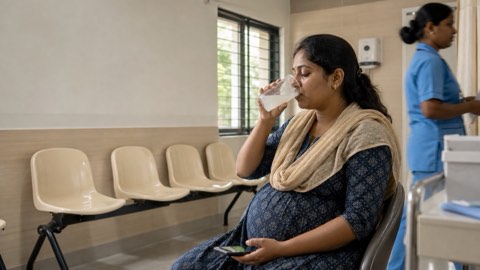
Stay hydrated, avoid overheating (which matters in Indian summers — exercise early morning or evening, indoors where possible), and do not exercise to exhaustion.

What to avoid
Anything with a fall risk: contact sports, cycling on roads, horse riding, skating, and — in the later months — anything requiring balance you no longer have.
Lying flat on the back for prolonged periods after about 16 weeks, because the uterus compresses a major vein and reduces blood flow. Modify exercises and yoga poses accordingly.
Deep abdominal work such as full sit-ups and crunches; heavy lifting with straining and breath-holding; hot yoga and any exercise in high heat; scuba diving; and high altitude activity if you are not acclimatised.
In yoga specifically: deep twists, strong backbends, inversions, and intense breathing practices such as kapalbhati and bhastrika. Say you are pregnant before any class, and be wary of a teacher who says nothing needs to change.
By trimester, and when to stop
First trimester: nausea and exhaustion often defeat exercise plans. Walking is enough. Do not add anything strenuous while feeling this way.
Second trimester: usually the best window — energy returns and the bump is still manageable. This is the time for regular walking, swimming and prenatal yoga.
Third trimester: reduce intensity, avoid balance-dependent activity, and expect breathlessness earlier. Walking, swimming, pelvic-floor work and gentle stretching remain useful right to the end.
Exercise is restricted or advised against in specific situations — placenta previa, cervical incompetence or a stitch, a history of preterm labour, bleeding, pre-eclampsia, twins with complications, and certain heart or lung conditions. Ask your own obstetrician rather than assuming general advice applies.
When to see a doctor
Stop exercising and seek care immediately for: vaginal bleeding, leaking fluid, regular painful contractions, chest pain, severe breathlessness before exertion, dizziness or fainting, severe headache, calf pain or swelling, reduced fetal movements after exercise, or abdominal pain.
Get individual clearance before starting any exercise programme if you have a high-risk pregnancy, a previous preterm birth, bleeding, high blood pressure, diabetes, twins, or any heart, lung or musculoskeletal condition.
This article is general information, not medical advice, and is no substitute for personal medical advice. For any decision about your or your child's health, please consult your doctor.
Frequently asked questions
My family says I should rest completely and not climb stairs.
In an uncomplicated pregnancy, that advice is outdated and unhelpful — inactivity increases the risk of gestational diabetes, excessive weight gain and clots. Stairs, housework and walking are fine unless your doctor has specifically restricted them.
Can I keep doing my gym routine?
Usually yes, with modification: lighter weights, no breath-holding, no lying flat after 16 weeks, no exercises with a fall risk, and stopping if anything hurts. Tell the trainer you are pregnant and check with your obstetrician first.
Which yoga poses are best for labour?
Poses that open the hips and strengthen the legs — supported squats, cat-cow, butterfly, and side-lying rest positions — plus breathing practice. Learn them from a prenatal-trained teacher rather than from videos, particularly if you are new to yoga.
Is walking really enough?
For most pregnancies, yes. Thirty minutes of brisk walking most days delivers the majority of the benefit, and consistency matters more than intensity or variety.
Sources
Every clinical figure on this page is taken from the guidelines below. Where our numbers and your doctor's differ, ask which guideline they follow.
- WHO. WHO guidelines on physical activity and sedentary behaviour (2020)Supports the recommendation of 150 minutes of moderate-intensity physical activity per week during pregnancy, and the associated benefits including reduced risk of gestational diabetes, pre-eclampsia, improved sleep, reduced back pain and improved mood.
- ACOG. Physical Activity and Exercise During Pregnancy and the Postpartum Period (Committee Opinion No. 804) (2020)Supports the 150-minutes-per-week moderate activity target, the 'talk but not sing' moderate-intensity test, continuation of pre-existing exercise routines with modification, pelvic-floor exercises, avoidance of supine position after 16 weeks, avoidance of contact sports and activities with fall risk, and the listed absolute contraindications to exercise including placenta previa, cervical incompetence, preterm labour history, pre-eclampsia and certain cardiac/pulmonary conditions.
- NICE. Antenatal care (NG201) (2021)Supports general guidance that moderate exercise is safe and beneficial in uncomplicated pregnancy, including walking and swimming, and that complete rest is not routinely recommended for uncomplicated pregnancies.
- NHS. Exercise in pregnancy (2023)Supports walking as an ideal entry-point activity, swimming as particularly beneficial in the third trimester, avoidance of lying flat on the back after around 16 weeks, avoidance of high-impact and contact sports, daily pelvic-floor exercises, and the listed warning symptoms requiring immediate medical attention.
- IAP. IAP Standard Treatment Guidelines: Antenatal Care (2022)Supports the recommendation that routine physical activity including walking and light exercise is appropriate for women with uncomplicated pregnancies, and that individual clearance should be obtained from an obstetrician before exercise in high-risk pregnancies including those with twins, bleeding, hypertension or diabetes.
Reviewed by
- Nakul Phatak — CEO, theAsianparent India & IndonesiaHead of theAsianparent India; father of one
- Roshni Chugani — Head of Marketing, theAsianparent India & Singapore12 years in the mother-and-baby space; mother of two
Published by: theAsianparent editorial team