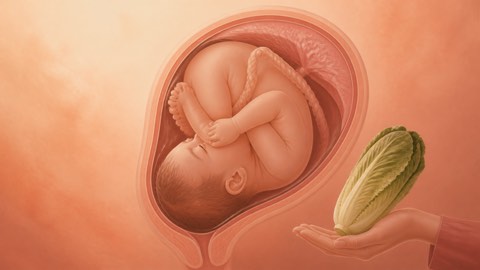
Pregnancy week 35: two kilos and a half, and counting

The baby is in pure gaining mode — cheeks arriving daily. Your calendar goes weekly from here, and the signs-of-labour list gets learned properly, once, by the whole house.
The weekly rhythm
From around now, the clinic wants you weekly — the last-lap dashboard read every seven days: BP, urine, fundal height, position, heartbeat, your count report. Short visits, high value; skipping one is the false economy of the ninth month.
The baby's whole agenda is gain — around a quarter kilo a week, most of it the fat that will run its thermostat outside. The wrinkled suit is nearly filled.
And this is the week the household learns the signs-of-labour list properly — not as anxiety but as competence: what means 'note it', what means 'call', what means 'go now'. One dinner-table briefing covers it.
Your baby this week
The baby is about forty-six centimetres and two and a half kilos. Most of the remaining gain is fat and the last brain-wiring sprint — the brain at birth will still be only a quarter of its adult size; the design finishes outside.
The kidneys are fully developed; the liver is processing waste. The quarters are so snug that movements are strong presses and rolls — the count standard never changes: your baby's pattern is the pattern.
Hearing is sharp enough to know the difference between voices in the room — the recognition repertoire (your voice, papa's bulletins, the daily sounds of home) is loaded and ready.
Read next

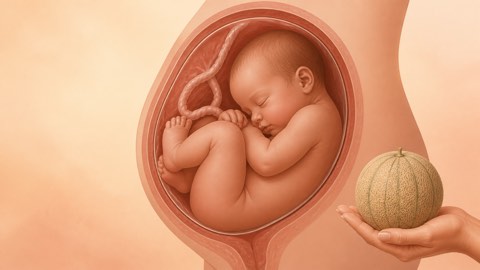
Changes in your body
If lightening has happened, breath is easier and the bladder schedule is comical. Walking may produce sudden pelvic zings — 'lightning crotch', graceless name, harmless thing: the head is resting on nerves.
Swelling, heartburn, backache, broken sleep — the full ninth-month orchestra. Every section has its management by now; the conductor's note is simply: rest in instalments, water all day, feet up in the evening.
Emotionally the mix is impatience with stage fright. Both correct. The useful channel: the last practical jobs (below) and the daily walk, which is now both exercise and, per every grandmother, gentle encouragement to the baby.
What to do this week
Hold the dinner-table briefing. NOTE IT: plug loss, stronger practice tightenings, nesting. CALL: rhythmic pains 10 minutes apart or closing, count not reached, anything you're unsure of. GO NOW: waters (gush or steady trickle), bright-red bleeding, severe headache with vision changes, pains 5 minutes apart — bag, papers, 108 if no car.
Confirm the weekly-visit dates through the due date and how the hospital wants to be contacted out of hours (labour-room direct number on the fridge sheet).
Do the SIM check on the sleeping arrangement: where the baby sleeps (same room, own flat surface, no pillows or loose quilts around the face), where night feeds happen, where the nappy station is. Ten minutes of arranging now saves 3 a.m. inventing.
Keep the count sacred through all the bustle — the busier the household gets, the more the daily ten matters. It remains the baby's own daily telegram until the day it's born.
Week 35 at a glance
The week's essentials in one place. Your doctor may adjust these for your situation.
| Item | In week 35 |
|---|---|
| Main event | Weekly visits begin; pure gaining mode |
| Baby's size | ~46 cm, ~2.5 kg — quarter kilo/week |
| Forming | Fat stores, kidneys done, brain sprint |
| Possible symptoms | Lightening effects, pelvic zings, full orchestra |
| Briefing | Note-it / Call / Go-now — whole house, once |
| Setup | Sleep surface, feed corner, nappy station |
| Sacred | The daily count, through everything |
When to see a doctor at once
The go-now list, verbatim: waters breaking (gush or steady trickle), bright-red bleeding, pains five minutes apart or continuous severe pain, severe headache with visual changes, a failed count. Bag, papers pouch, 108 if no vehicle — at any hour.
And the call-first list: rhythmic pains ten-ish minutes apart, count reached slowly or not at all, plug loss with anything unusual, fever, burning urine, or plain unease. Near term, hospitals prefer ten unnecessary calls to one late arrival — make the call.
This article is general information only and no substitute for personal medical advice. The person who can advise you knowing your health, your medicines and your previous pregnancies is your obstetrician, or the doctor at your nearest health centre.
Work out your due date
Enter the first day of your last period and your cycle length — your estimated due date, this week's count and the anomaly scan window all appear right here.
It is only an estimate — most babies aren't born on the exact date. A first-trimester scan dates a pregnancy more accurately; in the end, your doctor's date is the one that counts.
Frequently asked questions
Pains every 10 minutes that faded after an hour
was that false labour? — Likely — real labour's signature is progression: closer, longer, stronger, and indifferent to rest or water. False labour rehearses and retreats. Every retreat still earns a mention at the weekly visit; patterns matter.
The baby measures 'big'
will normal delivery be impossible? — Scan weight estimates near term carry a margin of a few hundred grams either way, and 'big' alone rarely decides the route. Pelvis, position, labour's own progress and the doctor's judgment decide together. Have the route conversation with the measurements in front of you both.
Should we shave/wax/enema before hospital
the aunties have opinions? — Hospitals here mostly no longer require routine shaving or enemas; if anything's needed they do it there. Personal grooming is personal choice. The aunties' checklist is a generation old; the hospital's checklist is the papers pouch.
What if labour starts and my doctor isn't available?
The hospital's duty team delivers babies all night, every night — your file, notes and preferences are in the system, and your doctor is informed. Choose the hospital for its always-on team; the specific pair of hands matters less than the system around them.
Sources
Every clinical figure on this page is taken from the guidelines below. Where our numbers and your doctor's differ, ask which guideline they follow.
- WHO. WHO recommendations on antenatal care for a positive pregnancy experience (2016)Backs the recommendation for increased antenatal visit frequency in late pregnancy, including monitoring of BP, urine, fundal height, fetal position, and fetal heart rate at each visit.
- MoHFW. Pradhan Mantri Surakshit Matritva Abhiyan (PMSMA) & Antenatal Care Guidelines (2017)Supports the weekly antenatal visit schedule in the final weeks and the inclusion of BP, urine, and fetal assessments at each check, consistent with the Indian public health antenatal care protocol.
- NICE. Intrapartum care for healthy women and babies (CG190) (2017)Supports the 'go now' and 'call first' labour-warning sign lists, including waters breaking, bright-red bleeding, pains five minutes apart, severe headache with visual changes, and the principle that hospitals prefer early contact over late arrival.
- NICE. Antenatal care (NG201) (2021)Supports the description of fetal movement monitoring ('the count') as the standard for detecting changes in fetal wellbeing, and the recommendation to contact a clinician if fetal movement is reduced or not reached.
- WHO. WHO recommendations: Intrapartum care for a positive childbirth experience (2018)Supports the statement that routine perineal shaving and enemas before labour are no longer recommended and are not required by hospitals following current evidence-based practice.
Reviewed by
- Nakul Phatak — CEO, theAsianparent India & IndonesiaHead of theAsianparent India; father of one
- Roshni Chugani — Head of Marketing, theAsianparent India & Singapore12 years in the mother-and-baby space; mother of two
Published by: theAsianparent editorial team