Pregnancy week 23: wrinkled skin, fully drawn face

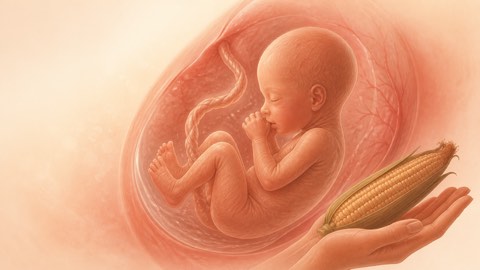
If the scan shows a wrinkled little old soul — smile. The skin is stitched to full size; the stuffing is on its way. Next week brings a big threshold; this week prepares for it.
Skin first, stuffing later
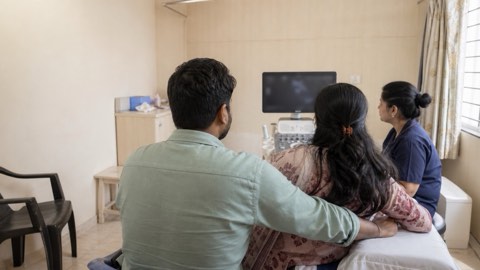
Scans at this stage show a lean, wrinkled baby — as if the tailor cut the suit two sizes large. That's precisely what happened: the skin is complete at full size; the fat beneath it is still filling in.
The coming weeks' main work is that filling. By birth the wrinkled suit fills into the roundness everyone waits for — and the stuffing ships from your plate.
Meanwhile the nostrils — sealed until now — open, and the breathing rehearsals deepen. The underwater 'breaths' are massage for the lungs; the real air is far off, but the rehearsals are in earnest.
Your baby this week
The baby is brinjal-sized (the big one) — about twenty-nine centimetres, touching five hundred grams. Half a kilo — the first time the weight talks in kilo language.
Hearing keeps sharpening — the baby now visibly responds to familiar voices. The heartbeat can be heard through a stethoscope now; the machines are becoming optional.
Surfactant — the slick that keeps air sacs from sticking shut — has started forming in the lungs. That one substance becomes the measure of readiness for the outside world in the weeks ahead.
Read next

Changes in your body
Weight is entering its fastest phase — about half a kilo a week from here is standard. The appetite will match; feed it the trio, not the fryer.
Shoe size may actually change — pregnancy feet spread (relaxin again), and for some the new size is permanent. Swollen evening ankles make it worse; the stool under the feet is the cheap fix.
Sleep is becoming a project — heavy bump, back off-limits, bladder on night duty. Build the pillow fort now (knees + bump + back); it's the architecture of the next four months' sleep.
What to do this week
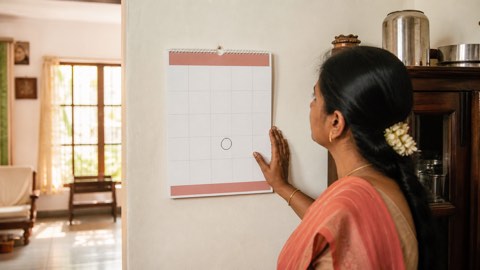
GTT next week or soon after — date fixed? For the nervous: it's a sweet drink and timed blood draws; the needle is the whole hardship.
If baby shopping begins, open the family cupboard first — cousins' outgrown newborn clothes are the correct supply chain. Buy little in 'newborn' size; babies exit it in weeks.
Recheck the water habit — cutting water to cut swelling is upside-down; less water means more retention. Sips all day, thirst never ignored.
The maternity-leave paperwork gets filed this month — most offices want eight weeks' notice. Decide the start date too: the law allows up to eight weeks pre-delivery; when to take it depends on your body and your commute.
Week 23 at a glance
The week's essentials in one place. Your doctor may adjust these for your situation.
| Item | In week 23 |
|---|---|
| Main event | Nostrils open; surfactant begins |
| Baby's size | Big brinjal — 29 cm, ~500 g |
| Looks like | Wrinkled — skin done, filling pending |
| Possible symptoms | Big appetite, spreading feet, sleep projects |
| Next week | The GTT window opens — date fixed |
| Shopping rule | Family cupboard first; cotton; sizes up |
| Paperwork | Maternity-leave application this month |
When to see a doctor at once
The standing list — bleeding, persistent pain, high fever, urinary burning, sudden watery discharge, calf swelling, the triad, rhythmic tightening: same-day.
Itching on the palms and soles — rash-free, worse at night — is not ordinary dry-skin itching; it points to a liver condition of pregnancy (cholestasis) and gets tested. Don't sit on it till the next visit.
This article is general information only and no substitute for personal medical advice. The person who can advise you knowing your health, your medicines and your previous pregnancies is your obstetrician, or the doctor at your nearest health centre.
Work out your due date
Enter the first day of your last period and your cycle length — your estimated due date, this week's count and the anomaly scan window all appear right here.
It is only an estimate — most babies aren't born on the exact date. A first-trimester scan dates a pregnancy more accurately; in the end, your doctor's date is the one that counts.
Frequently asked questions
Half a kilo
what if birth happened now? — Week 23 sits just before the 'viability' threshold, and every following week multiplies the chances. That's precisely why every preterm signal gets same-day seriousness — and why they're all on the urgent list.
My belly tightens at night then relaxes
painless. What is it? — Likely Braxton Hicks — practice tightenings that can start now. Their signature: irregular, painless, gone with a position change or water. If they turn rhythmic, strengthen, or gain pain — same-day.
My cravings have locked onto sweets
how much rope? — A little daily gud-mithai is fine; a daily halwai habit isn't — especially in the weeks before the sugar test. Divert with fruit, dates, gud-chana; after the GTT, the doctor's numbers set the budget.
The bump sits high, so it's a boy
the house says. Any basis? — None. Bump height and shape come from your build, not the baby's sex. And every route to knowing the sex — folklore to scans — is either useless or illegal. The baby is who it is, and that is good news.
Sources
Every clinical figure on this page is taken from the guidelines below. Where our numbers and your doctor's differ, ask which guideline they follow.
- WHO. WHO recommendations on antenatal care for a positive pregnancy experience (2016)Backs the page's framing of antenatal monitoring, the importance of same-day reporting of danger signs (bleeding, fever, sudden watery discharge, calf swelling), and the clinical seriousness given to preterm signals.
- NICE. Antenatal care (NG201) (2021)Supports the page's description of intrahepatic cholestasis of pregnancy (ICP) presenting as rash-free palmar/plantar itching worse at night requiring prompt investigation, and the general schedule of antenatal assessments around this gestational age.
- RCOG. Obstetric Cholestasis (Green-top Guideline No. 43) (2011)Directly supports the page's specific claim that rash-free itching on palms and soles, worse at night, points to cholestasis of pregnancy (a liver condition) and requires prompt testing rather than waiting until the next routine visit.
- ACOG. ACOG Practice Bulletin No. 190: Gestational Diabetes Mellitus (2018)Supports the page's reference to the glucose tolerance test (GTT) as an upcoming screening step involving an oral glucose drink followed by timed blood draws, typically administered around 24–28 weeks of gestation.
- MoHFW. Pradhan Mantri Surakshit Matritva Abhiyan – Antenatal Care Guidelines (2016)Supports the page's emphasis on recognising danger signs (bleeding, fever, urinary burning, sudden fluid loss, rhythmic uterine tightening) as requiring same-day medical attention within the Indian public health context.
- NIH. Fetal lung development and surfactant – MedlinePlus Medical Encyclopedia (2023)Supports the page's claim that surfactant begins forming in the fetal lungs around this gestational age and that it is the key marker of lung maturity and readiness for postnatal life.
Reviewed by
- Nakul Phatak — CEO, theAsianparent India & IndonesiaHead of theAsianparent India; father of one
- Roshni Chugani — Head of Marketing, theAsianparent India & Singapore12 years in the mother-and-baby space; mother of two
Published by: theAsianparent editorial team