Pregnancy week by week: the full forty-week map

Forty weeks, one map. How the counting works, what happens in each trimester, which scan and test falls in which week — and the short list of signs that always mean the doctor, today.
How the forty weeks are counted
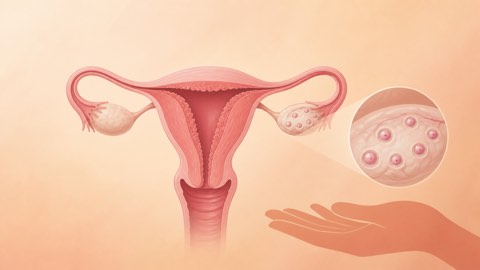
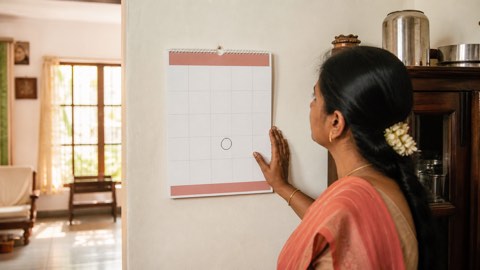
Pregnancy's oddest fact comes first: the count starts from the first day of your last period — roughly two weeks before conception. So in 'week two' there is usually no pregnancy yet, and by the time a test shows two lines you are already in week four or five. Nobody is miscounting; that's simply the system every doctor and scan uses.
The due date is that first day plus 280 days — forty weeks. Our due-date calculator does the arithmetic in a second, and the first-trimester scan then confirms or gently corrects it. Even then it stays an estimate: only about one baby in twenty arrives on the date itself; most come in the week before or after.
Each week's page in this series covers the same five things: what the baby is building, what your body is doing, what to do that week, the week at a glance, and — always — when to see a doctor at once. Jump to your week, or read ahead; the map works both ways.
The three trimesters, in one view
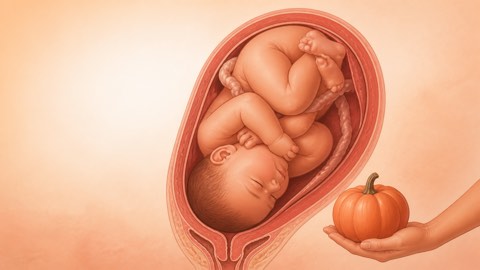
Three seasons, three characters. The first builds every organ from scratch and asks the most patience (nausea, secrecy, fatigue). The second is the famous 'golden middle' — energy back, bump visible, first kicks. The third is pure growth and preparation — heavier weeks, tighter monitoring, and at the end, a baby.
| Trimester | Weeks | The headline | Your main jobs |
|---|---|---|---|
| First | 1-13 | Every organ built; heartbeat from week 6 | Folic acid, registration + MCP card, booking bloods, first scans |
| Second | 14-27 | Golden middle — kicks, hearing, halfway | Anomaly scan, Td vaccine, iron-calcium routine, GTT booked |
| Third | 28-40 | Tripling in weight; systems finishing | Daily kick counts, weekly visits from 36, bag packed, birth plan |

The scan and test calendar
Every test in the standard antenatal calendar answers one specific question, and each has a window it works best in. This is the schedule most Indian obstetricians run; yours may add to it for your situation — never skip one without a conversation.
All of it is available through the public system too: registration at the Anganwadi or PHC gets you the MCP card that records every visit, the IFA and calcium supply, and the Pradhan Mantri Surakshit Matritva Abhiyan camp on the 9th of every month for free specialist checks.
| Weeks | Test or scan | The question it answers |
|---|---|---|
| 4-8 | Urine test, booking bloods | Pregnant? Blood group, haemoglobin, sugar, infections |
| 6-9 | Dating / viability scan | Heartbeat present? How many? Due date confirmed |
| 11-14 | NT scan + double marker | Chromosome screening; nuchal measurement |
| 18-22 | Anomaly (TIFFA) scan | Every organ, head to toe; placenta and fluid |
| 24-28 | GTT (sugar test) | Gestational diabetes — silent, common, manageable |
| 28 | Anti-D (if Rh-negative), repeat haemoglobin | Protecting future pregnancies; iron status |
| 30-34 | Growth scan ± Doppler | Weight on curve? Fluid, placenta, blood flow |
| 36+ | Weekly checks; position | Head-down? BP, urine, heartbeat, your counts |
| 40+ | NST + fluid checks | Still comfortable inside? Waiting vs induction |
What your body does, season by season
First trimester: hormones arrive before the bump does — nausea (worst weeks 8-10, usually gone by 14), exhaustion, tender breasts, and a bladder on short cycles. Eating small and often beats eating big and rarely; the folic acid tablet is the one non-negotiable.
Second trimester: the reward weeks. Energy returns, the bump announces itself, and somewhere between weeks 16 and 22 the first flutter arrives. The support cast moves in too — round-ligament twinges, backache's first visits, the iron-calcium timetable (separate hours, iron away from tea and milk).
Third trimester: the body runs at full load — breathlessness until the baby drops, heartburn until delivery, sleep in instalments, swelling by evening. None of it is graceful and all of it is standard. The daily kick count (from week 28: after a meal, left side, ten movements in two hours) becomes the most useful thing you personally monitor.
Custom and medicine, sharing one house
An Indian pregnancy runs on two calendars — the doctor's and the family's — and they cooperate better than the arguments suggest. The godh bharai sits happily in the seventh month exactly where medicine likes it: late second trimester, mother comfortable, marathon standing avoided.
The food folklore mostly needs only portion sense: ghee, badam and saffron are pleasant foods, not delivery-easers or complexion-makers; papaya-and-pineapple fears are overblown at normal food quantities, though raw papaya is reasonably skipped; 'hot' and 'cold' food systems can coexist with the iron-calcium-protein trio as long as the trio wins scheduling priority.
Two places where medicine must win outright: sex determination — asking or telling is a crime under the PCPNDT Act, full stop — and the newborn's first feed, which is colostrum within the first hour, not honey, not ghutti, not sugar water. Settle both with the elders before the delivery, when everyone has energy for a conversation.
The signs that never wait
Every week's page carries its own version of this list; here is the master copy. Any of these, at any week, means the doctor the same day — not the next visit: bleeding; severe or persistent abdominal pain; high fever; burning urination; a sudden gush or steady trickle of watery discharge; one-sided calf swelling; severe headache with flashing vision or sudden face-and-hand swelling; and — from week 28 — a failed or clearly slumped kick count.
Rhythmic belly-tightening that holds a schedule and strengthens is labour-type activity whatever the calendar says — before 37 weeks that's a same-day call, at term it's the phone call you've rehearsed. And intense night itching of palms and soles, without a rash, needs a liver test — it is the most shrugged-off reportable symptom of late pregnancy.
The emergency numbers belong on the fridge, not in a drawer: your hospital's labour room, your doctor, 108 for the ambulance, and two named escorts. For mental-health support at any point — antenatal or postpartum — Tele-MANAS at 14416 is free, confidential and in your language.
This article is general information only and no substitute for personal medical advice. The person who can advise you knowing your health, your medicines and your previous pregnancies is your obstetrician, or the doctor at your nearest health centre.
Work out your due date
Enter the first day of your last period and your cycle length — your estimated due date, this week's count and the anomaly scan window all appear right here.
It is only an estimate — most babies aren't born on the exact date. A first-trimester scan dates a pregnancy more accurately; in the end, your doctor's date is the one that counts.
Frequently asked questions
I just found out I'm pregnant
which week do I start reading? — Count from your last period's first day to today, in weeks — that's your week. Most women discover between weeks four and six. Start at your number, skim what you missed, and let the series walk with you from there.
My scan says a different week than my period-count
which is right? — The first-trimester scan, usually. Early scans measure the embryo directly and date the pregnancy within a few days; period-based counting assumes a textbook cycle nobody actually has. Once the doctor adjusts your due date after that scan, the scan's calendar is the official one.
How many doctor visits does a normal pregnancy need in total?
The typical rhythm: monthly until 28 weeks, fortnightly to 36, weekly to delivery — a dozen or so visits. The public system's minimum is four antenatal checks plus the monthly PMSMA camp option; more is better wherever access allows. Every visit is BP, urine, weight, the heartbeat — twenty minutes that catch the quiet problems.
Is there one page for what happens after the birth?
The story continues in our baby week-by-week series — the first three months, week by week: feeding, sleep, vaccines, your own recovery, and the one rule to memorise today: fever in a baby under three months means hospital the same day. When the bump becomes a baby, that series takes over from this one.
Sources
Every clinical figure on this page is taken from the guidelines below. Where our numbers and your doctor's differ, ask which guideline they follow.
- WHO. WHO recommendations on antenatal care for a positive pregnancy experience (2016)Backs the recommended schedule of antenatal visits, the use of iron and folic acid supplementation during pregnancy, and the principle that more antenatal contacts improve outcomes.
- MoHFW. Pradhan Mantri Surakshit Matritva Abhiyan (PMSMA) – Programme Guidelines (2016)Confirms that the PMSMA camp is held on the 9th of every month at public health facilities providing free specialist antenatal checks, and that registration at Anganwadi/PHC gives access to the MCP card, IFA tablets, and calcium supplementation.
- WHO. Guideline: Delayed umbilical cord clamping for improved maternal and infant health and nutrition outcomes – and related early newborn care guidance on first feeds (2014)Supports the claim that the newborn's first feed should be colostrum within the first hour of birth, and that honey, sugar water, or other prelacteal feeds must not be given.
- IAP. IAP Guidelines on Breastfeeding (2010)Supports the instruction that the first feed must be colostrum within the first hour of life and that prelacteal feeds such as honey or ghutti are harmful and should not be given.
- NICE. Antenatal care (NG201) (2021)Backs gestational-age dating from the first day of the last menstrual period (LMP) plus 280 days, the primacy of the first-trimester ultrasound scan for accurate dating, the standard schedule of antenatal tests each with an optimal gestational window, and warning signs requiring immediate medical attention including bleeding, severe abdominal pain, abnormal vaginal fluid loss, severe headache with visual disturbance, and sudden swelling.
- RCOG. Obstetric Cholestasis (Green-top Guideline No. 43) (2011)Supports the warning that intense nocturnal itching of the palms and soles without a rash in late pregnancy is a reportable symptom requiring liver function testing, as it is a sign of intrahepatic cholestasis of pregnancy.
Reviewed by
- Nakul Phatak — CEO, theAsianparent India & IndonesiaHead of theAsianparent India; father of one
- Roshni Chugani — Head of Marketing, theAsianparent India & Singapore12 years in the mother-and-baby space; mother of two
Published by: theAsianparent editorial team