Pregnancy week 1: you aren't pregnant yet — but the counting starts here

Pregnancy is counted from the day your last period started. So in week one you aren't pregnant yet — but a few things done this week shape the next nine months.
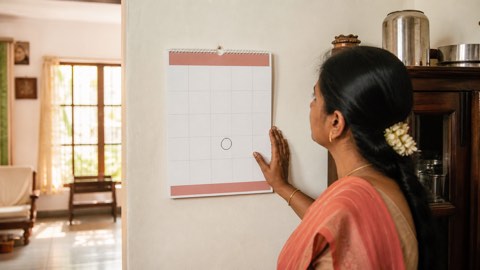
The date of your last period — where all the counting begins
The first question in the doctor's room is almost always the same: 'When was your last period?' And at exactly that moment, most women can't remember. The one number the next nine months will stand on is that one.
Because pregnancy weeks aren't counted from conception — they're counted from the first day of the last period. Which means in this first week there is no baby yet. What's happening is a period.
It sounds odd, but the reason is simple. A woman knows the date her period started; nobody knows the exact moment of conception. So doctors everywhere count from the day that is known — and that is why, on the day you conceive, the paperwork already says two weeks.
Your baby this week
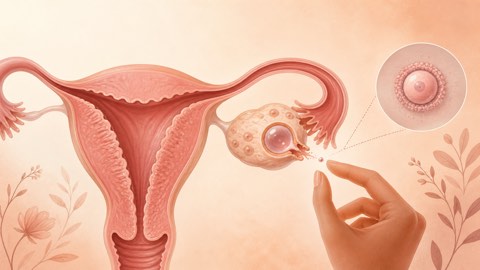
There's no embryo this week, because conception hasn't happened. What's underway is preparation — the previous cycle's uterine lining is leaving as the period.
As the period winds down, a new lining starts building. Over the next two weeks it grows thick, soft and blood-rich — the ground being prepared for an embryo to settle.
Meanwhile, follicles begin ripening in the ovary. One will mature and release in about two weeks. Half your future child's genetic material is being readied in that ovary right now.

Changes in your body
Everything you feel this week belongs to the period — cramps, a heavy back, tiredness, irritability. There is no pregnancy symptom possible in week one.
Note how many days the bleeding runs and how heavy it is. If it regularly exceeds seven days, or soaks a pad an hour, that's worth checking — anaemia is best fixed before pregnancy, not during it.
And write the date down. Phone, calendar, anywhere — but write it. Over the next nine months this date will be asked for a dozen times.
What to do this week
Start 400 micrograms of folic acid daily, today. The advice to start before conception isn't ritual — the tube that becomes the baby's brain and spinal cord closes about four weeks after conception, which for most women is before they even know.
Get the baseline tests done once: haemoglobin, blood group and Rh, thyroid, blood sugar. If you take regular medicines — especially for thyroid, diabetes, epilepsy or skin — tell the doctor you're planning a pregnancy. Some medicines need switching, and the switch is best made in advance.
Stop tobacco, gutkha, alcohol and smoking now — the men of the house too, since household smoke reaches the womb. And no self-prescribed pills from here on; even a routine headache tablet is now an ask-first item.
Folic acid and iron (IFA) tablets are free at primary health centres and anganwadis. If buying them monthly pinches, that route is open — and the tablet is the same tablet.
Week 1 at a glance
The week's essentials in one place. Your doctor may adjust these for your situation.
| Item | In week 1 |
|---|---|
| The week count | Week one — counted from the last period's first day |
| The embryo | None yet; conception is still ahead |
| In the body | The period, then the lining rebuilding |
| Ovulation | Around day 14 of a 28-day cycle; varies with cycle |
| Start now | Folic acid 400 mcg daily |
| Tests to do | Haemoglobin, blood group & Rh, thyroid, sugar |
| Stop entirely | Tobacco, gutkha, alcohol, smoking, self-medication |
| Free where | IFA tablets at the PHC and anganwadi |
When to see a doctor at once
Nothing is urgent at this stage, but some things are worth checking before trying: cycles consistently shorter than 21 days or longer than 35, three months with no period, or unbearable pain every cycle — see a gynaecologist for any of these before you start trying. PCOS and thyroid trouble are the usual culprits, and both are treatable.
If a year of regular trying (six months if you're over 35) hasn't led to pregnancy, get evaluated — and the evaluation covers both partners. A previous miscarriage or a genetic condition in the family are also things to tell the doctor now.
This article is general information only and no substitute for personal medical advice. The person who can advise you knowing your health, your medicines and your previous pregnancies is your obstetrician, or the doctor at your nearest health centre.
Work out your due date
Enter the first day of your last period and your cycle length — your estimated due date, this week's count and the anomaly scan window all appear right here.
It is only an estimate — most babies aren't born on the exact date. A first-trimester scan dates a pregnancy more accurately; in the end, your doctor's date is the one that counts.
Frequently asked questions
Can I feel pregnancy symptoms in week one?
No. Conception hasn't happened, so whatever you feel is the period or ordinary life. The earliest real symptoms arrive from weeks four-five.
How long do I take folic acid?
At least through the first trimester, and longer if your doctor advises. Starting before conception is the most important part.
Should my husband change anything?
Yes. Tobacco and alcohol lower sperm count and quality, and household smoke reaches a pregnancy. The months of trying are quitting months for both.
Can pregnancy happen right after a period?
In short cycles, yes. Sperm survive up to five days, so with a short cycle, intercourse just after the period can conceive. The 'safe days' arithmetic is not to be trusted.
Sources
Every clinical figure on this page is taken from the guidelines below. Where our numbers and your doctor's differ, ask which guideline they follow.
- WHO. WHO recommendations on antenatal care for a positive pregnancy experience (2016)Backs the recommendation to take 400 micrograms of folic acid daily before conception to prevent neural tube defects, and the advice to check haemoglobin, blood group, Rh factor, thyroid, and blood sugar as baseline preconception tests.
- ICMR. ICMR-NIN Dietary Guidelines for Indians (2024)Backs the advice to correct anaemia before pregnancy through iron supplementation, and supports cessation of tobacco and alcohol as part of preconception health optimisation.
- NICE. Fertility problems: assessment and treatment (CG156) (2013)Backs the guidance that couples who have not conceived after one year of regular unprotected intercourse (or six months if the woman is over 35) should seek medical evaluation covering both partners.
- ACOG. ACOG Practice Bulletin No. 187: Neural Tube Defects (2017)Backs the explanation that the neural tube closes approximately four weeks after conception — before most women know they are pregnant — and therefore folic acid supplementation must begin before conception.
- ACOG. Prepregnancy Counseling (Committee Opinion 762) (2019)Backs the advice to review all regular medications (thyroid, diabetes, epilepsy, skin conditions) with a doctor before conception, as some require switching in advance, and supports cessation of tobacco and alcohol before attempting pregnancy.
Reviewed by
- Nakul Phatak — CEO, theAsianparent India & IndonesiaHead of theAsianparent India; father of one
- Roshni Chugani — Head of Marketing, theAsianparent India & Singapore12 years in the mother-and-baby space; mother of two
Published by: theAsianparent editorial team