Separation anxiety: why it happens, how to leave, and when it needs help

The crying at the door is a sign of a healthy attachment, not a spoilt child. Here is what is happening, and how to make leaving easier for everyone.
Why it happens
Somewhere around eight to ten months, babies learn that things continue to exist when out of sight — and immediately discover that a departing parent is somewhere else, unreachable. Distress follows. It typically peaks between ten and eighteen months, eases, and often returns around two to three and again when school starts.
It is a marker of secure attachment. A baby who protests your leaving is a baby who knows exactly who you are and prefers you — the opposite of a problem.
It also flares at predictable moments: after illness, after a house move or travel, when a new sibling arrives, when a caregiver changes, and during any family upheaval. Expect it then rather than being surprised by it.
How to leave
Never sneak away. It buys a quiet exit and costs you a child who watches you constantly for the next month, because you might vanish at any moment. Always say goodbye.
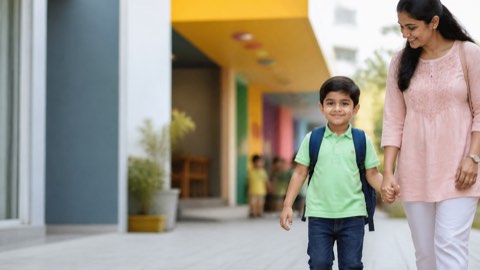
Keep it short, warm and confident: a hug, a phrase you use every time ('bye, I'll be back after your snack'), and go. Long goodbyes and repeated returns extend the distress. Hand the child to the same person each time if you can.
Use a goodbye ritual — three kisses, a special wave at the window, a hand-drawn stamp on the wrist. Rituals give a child something to do with the feeling and a predictable end point.
Tell them when you will be back in terms they understand — 'after lunch', 'when you wake from your nap' — and be back when you said. Reliability is what shortens the phase; the trust is built by returning, over and over.
Read next
Helping in advance
Practise short separations at home: leave the room and talk from the next room, then step out for five minutes, then longer. Peekaboo and hide-and-seek do the same work in play — things disappear and come back.
Let the caregiver or new environment become familiar while you are still present, before you leave the child there. A new ayah or grandparent should have several relaxed sessions with you around before any solo day.
A comfort object helps many children — a cloth, a small toy, a duppatta that smells of you. So does a photo of the family kept in the school bag.
Keep the goodbye adult calm. Children read faces before words; if your face says 'this is terrible', the child agrees. Save the worrying for the car.
When it needs help
Persistent, severe anxiety beyond about age four to five — refusing school for weeks, panic that does not settle within minutes of your leaving, refusing to sleep alone with real terror, physical symptoms like stomach aches and vomiting on school mornings, or a child who cannot be left with any familiar person — is worth discussing with a doctor.
Also worth a conversation: a child who was settled and suddenly becomes intensely clingy, which sometimes signals something that has changed — a frightening experience, a new person in the household, bullying, or something happening at school.
Help exists and works: paediatric assessment, child psychologists, and school counsellors. Tele-MANAS on 14416 also offers free confidential guidance for parents about a child's mental health.
Frequently asked questions
Am I making him clingy by picking him up so much?
No. Responsiveness in the early years builds security, and secure children separate more easily later, not less. You cannot spoil a baby by comforting them.
My child is fine at the gate but cries all evening at home. Why?
Common: children hold themselves together at school and release at home, where it is safe. It is a sign of trust rather than damage. Give a quiet decompression hour after school with food and no questions.
I work full time and the guilt is constant. Does my absence harm him?
Consistent, warm, responsive care — from you and from other caregivers — is what matters, not the number of hours. Children thrive with grandparents, crèches and ayahs. Protect a reliable daily window that belongs to the child and keep it sacred.
The whole family says I should just leave and let him cry it out.
Leaving is right; sneaking is not, and neither is a long, distressed abandonment with an unfamiliar person. A short goodbye, a familiar caregiver and a reliable return is the version that actually shortens the phase.
Reviewed by
- Nakul Phatak — CEO, theAsianparent India & IndonesiaHead of theAsianparent India; father of one
- Roshni Chugani — Head of Marketing, theAsianparent India & Singapore12 years in the mother-and-baby space; mother of two
Published by: theAsianparent editorial team