Ayurveda for babies and children: what is safe, and what is not

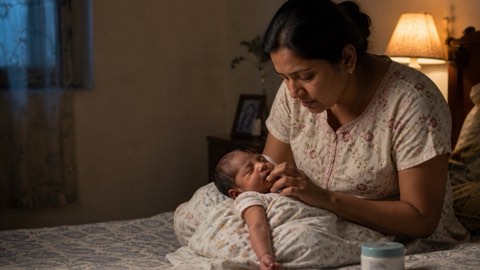
Malish, ghutti, gripe water, kajal, honey on the tongue. Most Indian babies meet ayurveda in their first month. Some of it is lovely and some of it puts babies in hospital, and the difference is not obvious from the outside.
What is generally fine
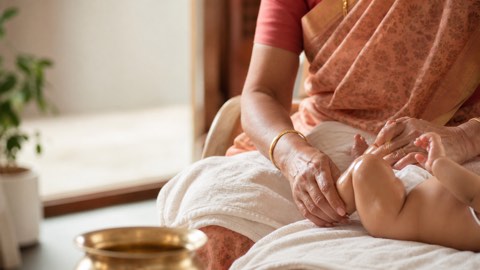
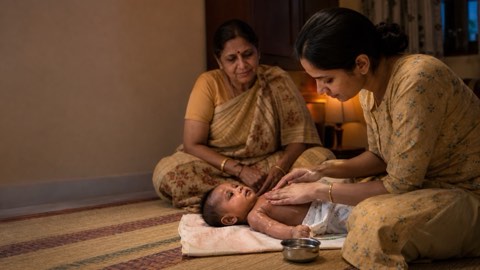
Abhyanga, the daily oil massage. This is the part of the tradition with the most going for it. Massaging a baby with a plain oil is soothing, it is a good daily contact ritual, and studies in preterm babies have found benefits for weight gain and settling. Use a plain edible oil — coconut, sesame or mustard as your family prefers — warmed to body temperature, and stop if the skin reacts.
Warm baths, oil in the hair, and the general routine of massage, bath and feed. Harmless and often genuinely calming.
Ayurvedic dietary principles for older children — warm cooked food, eating to appetite, regular mealtimes, avoiding very cold drinks with meals. Nothing here is risky and much of it is sensible.
Hing (asafoetida) applied around the navel in a paste for wind, which is a very old practice. On intact skin it is unlikely to do harm, though there is no evidence it helps and it should never go on broken skin or in the mouth of an infant.
Steam, a spoon of warm water with ajwain for an older child, and similar home measures for a cold. These are comfort measures rather than treatments, and used as such they are fine.
What is genuinely dangerous
Kajal in the eyes. Traditional and near-universal, and a documented source of lead poisoning in Indian infants — several studies have found high lead levels in commonly sold kajal, and lead affects the developing brain permanently with no safe level. It also introduces infection into a newborn's eye. There is no version of this that is safe, including home-made and 'herbal' kajal.
Ghutti and janam ghutti given to newborns. These vary enormously in composition, are often prepared by an unregulated seller, and displace breastmilk in the days when a baby's feeding is being established. Some contain ingredients that have caused serious illness. A newborn needs nothing but milk.
Honey before one year. Given in many families as the first taste after birth. It can carry Clostridium botulinum spores, which an infant's gut cannot handle, and infant botulism is life-threatening. This one is absolute: no honey at all before the first birthday.
Gripe water and colic drops. Widely sold as ayurvedic, unnecessary, and in some products containing alcohol or sugar. Colic is a phase, not a deficiency of gripe water.
Oil poured into the ears or nostrils. It does not clear a cold, it can cause infection, and in a baby it risks going into the airway.
Bhasmas and rasa shastra preparations — the metal-based ayurvedic medicines. These contain lead, mercury or arsenic by design, and this is the single largest safety issue in the field. Studies of ayurvedic products sold in India and abroad have repeatedly found a substantial proportion with detectable heavy metals, sometimes at many times a safe daily intake. They should never be given to a child.
Any unlabelled powder or paste from an unregistered practitioner, however trusted the source, and any preparation given instead of a prescribed medicine.
How to use it sensibly if your family does
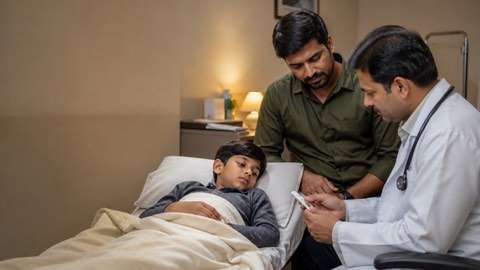
Tell your paediatrician everything the child is taking, including the things that feel too traditional to mention. Doctors in India are used to this and will not be offended; what they cannot do is account for something they do not know about. Several ayurvedic preparations interact with prescribed medicines.
Prefer registered practitioners with a BAMS qualification, and be cautious of anyone selling their own unlabelled preparations.
Buy only from licensed manufacturers with a proper label, batch number and ingredient list. Refuse anything loose, unlabelled, or described only as 'a family preparation'.
Avoid anything containing a bhasma or metal ingredient for a child, and ask directly rather than assuming — the name on the packet will not always tell you.
Never delay or replace treatment for something serious. Ayurveda alongside a doctor is a choice families are entitled to make; ayurveda instead of a doctor for a fever that will not settle, breathing difficulty, dehydration or a newborn who is not feeding is how children die of treatable illness.
And handle the pressure honestly. Almost every Indian family has an elder certain about kajal or ghutti. 'The doctor has asked us not to' is usually the shortest route through it, and it is true.
When to see a doctor
Go to hospital immediately for: a baby under three months with any fever, breathing that is fast, laboured or noisy, a child who is floppy or very difficult to wake, blue or grey lips, a seizure, refusal to feed, no wet nappy for many hours, persistent vomiting, blood in stool, or a rash that does not fade under pressure. Call 108 if you cannot travel quickly.
See a doctor the same day if a child has been given any unlabelled preparation and then becomes unwell, and take the packet or preparation with you — it changes what the doctor can do.
Also ask for a blood lead level if a child has had kajal applied regularly or has taken a metal-based preparation, particularly with unexplained anaemia, abdominal pain, irritability or a delay in development.
This article is general information, not medical advice, and is no substitute for personal medical advice. For any decision about your child's health, please consult your doctor.
Frequently asked questions
Is baby malish actually good, or just tradition?
Genuinely good, and one of the better-supported parts of the tradition. Use a plain warm oil, keep it gentle, and treat it as contact and comfort rather than treatment.
Everyone in the family insists on kajal.
It is a documented source of lead poisoning and an eye-infection risk, and lead damage to a developing brain does not reverse. This is the one to hold firm on, and your paediatrician will back you in writing if that helps.
Is ayurvedic medicine regulated in India?
It is licensed under the Ministry of Ayush, and enforcement is uneven. Heavy metals have been found repeatedly in products on sale. A licence on the box is a reason for more confidence, not complete confidence.
Can we use ayurveda alongside the paediatrician's treatment?
Many families do, and the essential condition is that the doctor knows exactly what is being given. Never substitute it for prescribed treatment, and never for an emergency.
What about ayurvedic products for a baby's skin or hair?
Plain oils are fine. Be wary of anything promising to lighten skin or thicken hair, which is where unlisted steroids and metals most often turn up.
Sources
Every clinical figure on this page is taken from the guidelines below. Where our numbers and your doctor's differ, ask which guideline they follow.
- WHO. Infant and Young Child Feeding: Model Chapter for Textbooks for Medical Students and Allied Health Professionals (2009)Backs the claim that a newborn needs nothing but milk and that prelacteal feeds such as ghutti displace breastmilk during the critical early days of feeding establishment.
- NIH. Lead Exposure and Children's Health (MedlinePlus) (2023)Backs the claims that lead affects the developing brain permanently with no safe level, and that blood lead level testing is warranted for children with regular kajal exposure or use of metal-based preparations alongside unexplained anaemia, abdominal pain, irritability or developmental delay.
- ICMR. Dietary Guidelines for Indians (2024)Backs the general Ayurvedic dietary principles described for older children — warm cooked food, regular mealtimes and eating to appetite — as consistent with sound nutritional guidance for Indian children.
Reviewed by
- Nakul Phatak — CEO, theAsianparent India & IndonesiaHead of theAsianparent India; father of one
- Roshni Chugani — Head of Marketing, theAsianparent India & Singapore12 years in the mother-and-baby space; mother of two
Published by: theAsianparent editorial team