Baby poop after starting solids: colour, smell and frequency

Everything about it changes within days of the first spoon, and almost all of the alarming-looking results are normal. Three colours are not.
What changes, and why
Within a day or two of starting solids, stools become firmer, darker, more formed and considerably more smelly. This is normal and permanent.
Undigested food is normal and often dramatic: whole peas, bits of carrot, tomato skin, spinach. A baby's gut is still maturing and food moves through quickly. It does not mean the food is being wasted or that anything is wrong.
Colour follows food closely at this age. Beetroot produces alarming red, spinach and peas produce green, carrot produces orange, and blueberries produce near-black. If a new food went in yesterday, that is almost always the explanation.
Iron supplements and iron-fortified cereal turn stool very dark green or black, which is expected and harmless.
Frequency varies enormously and normally: several times a day to once every few days. What matters is that the stool is soft and passing without pain, not how often it happens.
The three colours that need a doctor
Red streaks or fresh blood. Often a small anal fissure from a hard stool, which is common and minor — and it always needs checking, because it can also indicate infection, cows' milk protein allergy or intussusception.
Black and tarry, in a baby who is not on iron. This can indicate bleeding higher in the gut. Iron-related black stool is normal; unexplained black stool is not.
Pale, chalky, white or clay-coloured. This is the most important one and the least known. It can indicate a problem with the liver or bile ducts — including biliary atresia, where early diagnosis changes the outcome very significantly. Pale stool in a baby is a same-day medical matter, particularly with yellow skin or eyes.
Also see a doctor for stool that looks like redcurrant jelly, which alongside severe intermittent crying and drawing up of the legs can indicate intussusception and is an emergency.
Constipation, which is the common one
Constipation after starting solids is very common, particularly with rice cereal, banana and excess milk. The signs are hard pellet-like stools, straining with pain, crying, blood streaks, and a firm belly.
Straining and going red in the face while producing a soft stool is not constipation. Babies have to learn to coordinate this, and grunting effort is normal.
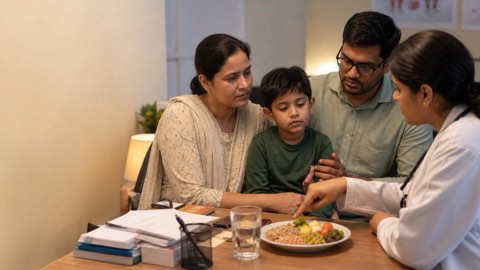
What helps: more water once solids have started, fruits such as pear, prune, papaya and plum, vegetables, whole grains such as ragi and oats, and less milk if intake is high. Gentle tummy massage and cycling the legs help some babies.
What does not help and can harm: adult laxatives, enemas, gripe water, honey — never before one year — and soap sticks or oil inserted rectally, all of which are still used in Indian households and none of which are safe.
Persistent constipation needs a doctor rather than home management, because it becomes self-reinforcing quickly: a painful stool leads to holding, holding leads to a harder stool.
When to see a doctor
Same day: pale, white or clay-coloured stool; black tarry stool in a baby not on iron; fresh blood; redcurrant-jelly stool with severe crying; or diarrhoea with signs of dehydration — sunken eyes, no tears, dry mouth, fewer wet nappies, drowsiness. Call 108 if travel is difficult.
Also promptly: constipation that is not resolving with dietary change, persistent vomiting, forceful vomiting, a swollen tender abdomen, fever with diarrhoea, or poor weight gain.
And for a rash, swelling, or vomiting shortly after a specific food, which needs an allergy assessment.
This article is general information, not medical advice, and is no substitute for personal medical advice. For any decision about your child's health, please consult your doctor.
Frequently asked questions
My baby's poop is bright green.
Usually food, iron, or fast transit. Green alone in a well baby who is feeding and growing is not a concern.
I can see whole pieces of food.
Normal at this age and not a sign of poor digestion.
How often should a baby on solids go?
Anywhere from several times a day to once every few days, provided it is soft and comfortable.
The smell has changed completely.
Expected. Stools become considerably stronger-smelling once solids start.
Sources
Every clinical figure on this page is taken from the guidelines below. Where our numbers and your doctor's differ, ask which guideline they follow.
- WHO. Complementary feeding: family foods for breastfed children (2000)Backs the page's statements that a baby's gut is still maturing when solids begin and that undigested food passing through is normal at this developmental stage.
- NICE. Constipation in children and young people: diagnosis and management (CG99) (2010)Supports the page's description of constipation signs (hard pellet stools, straining with pain, blood streaks), the note that grunting with a soft stool is not constipation, the dietary advice (fluids, fruit, fibre), and the warning that persistent constipation becomes self-reinforcing and needs medical review.
Reviewed by
- Nakul Phatak — CEO, theAsianparent India & IndonesiaHead of theAsianparent India; father of one
- Roshni Chugani — Head of Marketing, theAsianparent India & Singapore12 years in the mother-and-baby space; mother of two
Published by: theAsianparent editorial team