Constipation in children: what causes it and what actually fixes it

Most childhood constipation is not a diet problem — it starts with one painful stool and becomes a habit of holding on. Breaking that cycle is the whole treatment.
What counts as constipation
Not the frequency alone. Exclusively breastfed babies can go several days without a stool and be perfectly normal if it is soft when it comes. What matters is hard, dry, pellet-like or very large stools, straining and pain, blood on the surface, and a child who is uncomfortable.
In toddlers and older children, fewer than three stools a week, painful passage, soiling in an already-trained child, or a child who dances, crosses their legs and hides to avoid going are all signs.
Common triggers: the switch to solids, the switch to cow's milk, too much milk and too little fibre and water, toilet training pressure, starting school (where children hold on because the toilets are unpleasant), illness, travel, and hot weather.
The withholding cycle
One painful stool teaches a child that going hurts. They hold on. The stool sits longer, water is absorbed, it gets harder and bigger, and the next one hurts more. Within weeks a child can be holding for days, with soiling around a hard mass.
This is why 'just give more water and fruit' often fails in an established case: the problem is behavioural as much as dietary, and the impacted stool has to be cleared before the habit can change.
Never punish or shame soiling. A child who soils with constipation is not being lazy or defiant — they usually cannot feel it happening.
What actually works
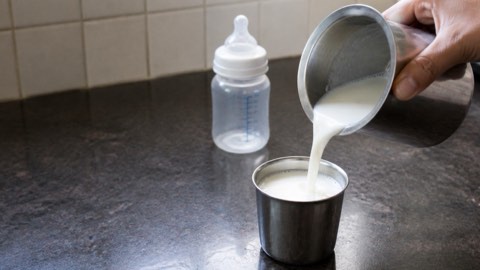
Fluids and fibre: water through the day, fruit with the skin where possible, papaya, pear, prunes and dates, vegetables, dals, whole grains — ragi, jowar, whole wheat instead of maida. Reduce milk to around 400-500 ml a day after the first birthday; excess milk is one of the commonest causes.
Routine: sitting on the toilet for five minutes after meals, especially breakfast, when the gut is most active. Feet must be supported on a stool with knees above the hips — a child whose legs dangle cannot push effectively. This one change fixes a surprising number of cases.
No pressure, no rewards for producing, no sitting for twenty minutes. Make it boring and short.
Medicine: for an established case, doctors prescribe a stool softener such as polyethylene glycol or lactulose, often for weeks or months, to keep stools soft while confidence returns. This is normal treatment, not a failure, and stopping too early is the main reason it relapses. Avoid adult laxatives, enemas at home and 'digestive' syrups given without advice.
When to see a doctor
Same-day: severe abdominal pain, a swollen hard abdomen, vomiting (particularly green vomit), no stool at all with a distended abdomen, blood in the stool beyond a streak, or constipation in a baby under one month.
Book an appointment for: constipation that does not improve within a week or two of the measures above, soiling, pain on passing stool, a fissure that keeps bleeding, poor weight gain alongside constipation, or a baby who did not pass meconium in the first 48 hours of life — that history matters and is worth mentioning.
This article is general information, not medical advice, and is no substitute for personal medical advice. For any decision about your or your child's health, please consult your doctor.
Frequently asked questions
My exclusively breastfed baby has not gone for four days.
Normal if the stool is soft when it comes and the baby is comfortable and feeding well. Hard pellets or a distressed baby is different.
Are gripe water and home remedies useful?
Gripe water has no good evidence and is not a treatment for constipation. A little prune or pear puree for a baby on solids, and water and fibre for an older child, do more.
Should I use an enema?
Not at home without medical advice. Repeated enemas are a common Indian household practice and they can cause harm and dependence. Ask the doctor.
How long does the medicine continue?
Often several months, tapered slowly. Stopping as soon as things improve is the commonest reason the cycle restarts.
Sources
Every clinical figure on this page is taken from the guidelines below. Where our numbers and your doctor's differ, ask which guideline they follow.
- NICE. Constipation in children and young people: diagnosis and management (CG99) (2010)Backs the diagnostic criteria for constipation (fewer than three stools per week, hard/pellet stools, pain, soiling, withholding behaviour), the explanation of the withholding cycle, the use of polyethylene glycol or lactulose for disimpaction and maintenance, and the guidance that treatment should continue for weeks to months and be tapered slowly.
- WHO. Infant and young child feeding: model chapter for textbooks for medical students and allied health professionals (2009)Backs the claim that exclusively breastfed babies can go several days without a stool and remain normal, provided the stool is soft and the infant is comfortable and feeding well.
- AAP. Constipation in Children (HealthyChildren.org) (2023)Backs advice on increasing fluids and dietary fibre, establishing a toilet routine after meals (especially breakfast), using a footstool to raise knees above hips, avoiding punishment or shame for soiling, and the recommendation not to stop medication too early.
- IAP. IAP Guidelines on Functional Constipation in Children (2022)Backs the India-relevant dietary recommendations (ragi, jowar, whole wheat, dals, papaya, prunes, dates), the suggestion to limit milk to approximately 400–500 ml per day after the first birthday, and the role of behavioural management alongside pharmacological treatment in established constipation.
Reviewed by
- Nakul Phatak — CEO, theAsianparent India & IndonesiaHead of theAsianparent India; father of one
- Roshni Chugani — Head of Marketing, theAsianparent India & Singapore12 years in the mother-and-baby space; mother of two
Published by: theAsianparent editorial team