Personal hygiene for school children: a checklist by age

Hygiene is a set of habits handed over gradually. Here is what a child can manage at each age, and the ones that matter most for illness.
The habits that actually prevent illness
Handwashing with soap, at the right moments: after the toilet, before eating, after coming home, after playing outside, after blowing the nose. Twenty seconds, including between the fingers and under the nails.
That single habit prevents more childhood illness in India than anything else on this page — diarrhoea, worms, colds and hand-foot-and-mouth all travel by hand.
Nail-cutting weekly, short. Long nails carry worm eggs and dirt, and nail-biting is how they get from hand to mouth.
Not sharing water bottles, tiffin spoons, combs, caps or handkerchiefs at school. Combs and caps are how head lice travel; bottles carry everything else.
The age-by-age checklist
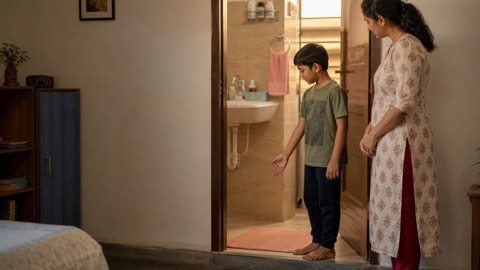
3-4 years: washes hands with help, brushes teeth with an adult finishing the job, uses the toilet with help wiping, wipes their own face, learns to cover a cough with the elbow.
5-6: washes hands unprompted at the key moments, brushes twice daily with you checking, wipes independently and washes after, changes underwear daily, uses a handkerchief.
7-8: bathes with supervision of the result rather than the process, washes their own hair with help, cuts nails with an adult, manages toilet hygiene fully, changes clothes when sweaty.
9-10: bathes independently and thoroughly, washes hair alone, uses deodorant if needed, keeps nails and hair tidy, manages a period pouch if relevant, changes underwear and socks daily without reminding.
11 and up: fully independent, including the parts they skip — feet, neck, behind the ears. A check rather than instruction is all that is needed.

The parts that get missed
Toilet hygiene: front to back for girls, always, which prevents urinary infections. For boys, teach that the foreskin is never forced back — it separates naturally over years. Wash hands afterwards, every time, including at school where the toilets are unpleasant and children rush.
Feet: washed and dried properly, especially between the toes, and socks changed daily. Damp feet in closed school shoes are how fungal infections start in Indian humidity.
Ears and nails: clean the outer ear only, never inside with cotton buds. Nails weekly.
Periods, from around nine: pads changed every four to six hours regardless of flow, hands washed before and after, and disposal wrapped and binned rather than flushed. Boys should know the basics too.
And school toilets specifically: many children hold on all day because the toilets are dirty, which causes constipation and urinary infections. Ask about the school's toilets, and ask your child directly whether they use them.
When to see a doctor
Same-day: burning urination, fever with abdominal or back pain, blood in the urine, or a child who is holding urine and in pain — urinary infections in children need prompt treatment.
Book an appointment for: recurrent urinary infections, persistent itching around the anus at night (usually threadworms), a rash or discharge, persistent bad breath despite brushing, scalp itching with visible nits, or a fungal-looking rash between the toes or in skin folds that is not settling.
This article is general information, not medical advice, and is no substitute for personal medical advice. For any decision about your or your child's health, please consult your doctor.
Frequently asked questions
My child says the school toilet is too dirty to use.
Believe them, and take it up with the school — it is a legitimate health issue and a common reason for constipation and urinary infections. Meanwhile, teach hovering, carrying tissue and hand sanitiser, and using the toilet before leaving home.
How do I get a seven-year-old to actually wash properly?
Check the result rather than the process: smell the towel, look at the neck and feet, and give a simple standard — hair wet, soap gone, feet clean.
Is hand sanitiser as good as soap?
Soap and water is better, particularly for worms and for visible dirt. Sanitiser is a reasonable backup when there is no water, and it should not replace the habit.
When should a child start using deodorant?
Once body odour appears, usually between eight and twelve. See our deodorant guide for how to raise it without embarrassment.
Sources
Every clinical figure on this page is taken from the guidelines below. Where our numbers and your doctor's differ, ask which guideline they follow.
- WHO. WHO guidelines on hand hygiene in health care and community settings (2009)Supports the claim that handwashing with soap and water is more effective than hand sanitiser against pathogens including worm eggs, and that handwashing at key moments (after toilet, before eating) prevents diarrhoea and other childhood illness.
- NHS. Periods (2023)Supports the guidance that sanitary pads should be changed regularly (the page states every four to six hours) and that hands should be washed before and after changing a pad.
Reviewed by
- Nakul Phatak — CEO, theAsianparent India & IndonesiaHead of theAsianparent India; father of one
- Roshni Chugani — Head of Marketing, theAsianparent India & Singapore12 years in the mother-and-baby space; mother of two
Published by: theAsianparent editorial team