Why you should brush your child's teeth for them — until about seven

A five-year-old brushing alone is a five-year-old wetting a brush. Hands are not ready for the job until around seven, and the decay that follows is entirely preventable.
Why children cannot do it themselves
Effective brushing needs fine motor control and the ability to reach the back teeth and the gum line — skills that arrive around six or seven, and are best judged by whether the child can write neatly or tie laces.
Until then, brush for them: twice a day, morning and last thing at night, for two minutes, with the child either sitting in front of you facing away or lying with their head in your lap so you can see what you are doing.
A good compromise for a child who insists on independence: they brush first while you praise, then you go over it properly. Frame it as 'my turn to check' rather than as a correction. Keep supervising even after seven — most children need watching until around ten.
The right amount of fluoride and the right technique
From the first tooth to age three: a smear the size of a grain of rice, using a fluoride toothpaste. Age three to six: a pea-sized amount. Older: a pea-sized amount and the ability to spit properly.
Spit, do not rinse. Rinsing with water washes away the fluoride that was about to do the work. This is the single easiest improvement most families can make.
Technique: small circles at the gum line with the brush angled slightly into it, then the biting surfaces, then the inner surfaces — which is where children miss most. Soft bristles, a small head, and a new brush every three months or after any illness.
Never share a toothbrush, and do not clean a baby's soother by putting it in your own mouth — the bacteria that cause decay are transmitted from adults to children this way.
The habits behind Indian childhood decay
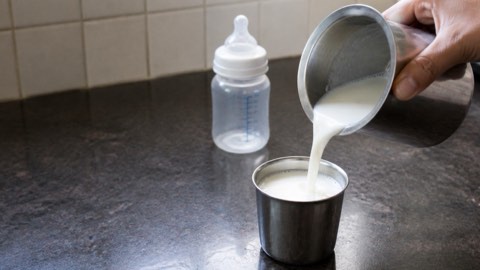
The bedtime bottle is the biggest single cause: milk pooling around the front teeth all night produces the pattern dentists call early childhood caries. Finish milk, then clean the teeth, then bed — from the first tooth onward.
Constant grazing on sweet things matters more than the total quantity: sugar four times a day does more damage than the same amount eaten at one sitting, because each exposure restarts the acid attack. Keep sweets to mealtimes.
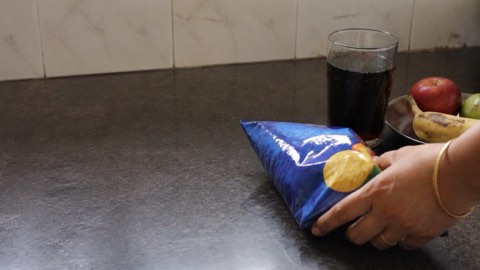
The hidden sugar list in most Indian homes: biscuits dipped in milk, packaged juices, flavoured milk, chocolate spreads, dried fruit stuck to the teeth, honey, and chai given to small children. And the traditional habit of dipping a soother or a finger in honey or sugar for a crying baby is a decay engine as well as being unsafe before a year.
Fluoride is what prevents decay. Ask your dentist about your area's water — some parts of India have naturally high fluoride, which changes the advice — and about varnish applications and sealants for the back teeth once molars come in.
When to see a doctor
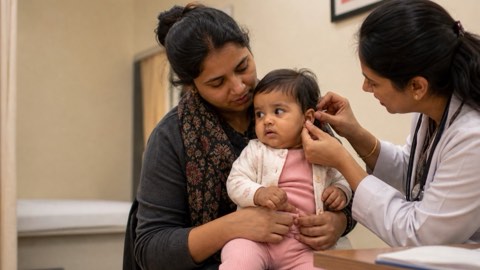
First dental visit by the first birthday or within six months of the first tooth, then as advised — usually every six months. Milk teeth matter: they hold space for the adult set, and decay in them causes pain, infection and missed school.
See a dentist promptly for: white or brown spots on the teeth, especially near the gum line; any hole or dark patch; toothache; a swollen face or gum, which is an infection and needs same-day care; a knocked-out or broken tooth after a fall (a knocked-out permanent tooth is an emergency — keep it in milk and go immediately); bleeding gums; or teeth that look crowded or badly aligned as the adult ones come in.
This article is general information, not medical advice, and is no substitute for personal medical advice. For any decision about your or your child's health, please consult your doctor.
Frequently asked questions
My child fights every brushing session. What works?
Same time, same order, every day; a song or a two-minute timer; letting them choose the brush; brushing your own teeth beside them; and no negotiating. For a child who clamps shut, lying with their head in your lap gives you a better view and less resistance than standing at a basin.
Is fluoride toothpaste safe for babies?
Yes, in the correct small amount — a rice-grain smear. The evidence for preventing decay is strong, and the risk of mild fluorosis comes from swallowing large amounts, which the correct amount avoids.
Milk teeth fall out anyway. Does decay in them matter?
Yes. Decay causes pain and infection, can damage the adult tooth forming underneath, and losing a milk tooth early crowds the ones that follow.
Is neem or a datun as good as a toothbrush?
A datun cleans, and it does not deliver fluoride, which is what actually prevents decay. Use a brush and fluoride toothpaste as the routine; a datun is a tradition, not a substitute.
Sources
Every clinical figure on this page is taken from the guidelines below. Where our numbers and your doctor's differ, ask which guideline they follow.
- NHS. Children's teeth (2023)Backs the twice-daily brushing routine, the smear/pea-sized fluoride toothpaste amounts by age, the spit-don't-rinse instruction, supervision until around age seven to ten, and the first dental visit by the first birthday.
- AAP. Brush, Book, Bed: How to Structure Your Child's Nighttime Routine (2023)Backs brushing last thing at night before bed, finishing milk before cleaning teeth, and the importance of a consistent bedtime oral-hygiene routine from the first tooth onward.
- NICE. Dental recall: Recall interval between routine dental examinations (CG19) (2004)Backs the statement that recall intervals are determined by the dentist on an individual basis ('then as advised — usually every six months').
- WHO. Oral health: sugars and dental caries (2017)Backs the claim that frequency of sugar exposure matters more than total quantity — each exposure restarts an acid attack — and supports limiting free sugars to reduce caries risk in children.
Reviewed by
- Nakul Phatak — CEO, theAsianparent India & IndonesiaHead of theAsianparent India; father of one
- Roshni Chugani — Head of Marketing, theAsianparent India & Singapore12 years in the mother-and-baby space; mother of two
Published by: theAsianparent editorial team