Breaking the feed-to-sleep association

Feeding a baby to sleep is normal, biological and not a mistake. It becomes worth changing only when it stops working for the family.
First, is it a problem?
Feeding to sleep is what babies are designed to do. Breastmilk contains sleep-inducing compounds, sucking is soothing, and a full baby is a sleepy baby. It is not a bad habit you created.
For many families it is the fastest, kindest route to sleep and there is no reason to change it. Plenty of babies feed to sleep and later drop it on their own.
It becomes worth addressing when: the baby can only ever fall asleep this way and wakes every sleep cycle needing it again, the feeding parent is at the end of their reserves, or a return to work or another caregiver makes it impractical.
Under about four months, do not try to change it. Feed on demand and sleep however you can. There is nothing to fix at that age.
How to separate the feed from sleep
Move the feed earlier in the routine. Feed, then bath or a change of clothes, then a story or song, then bed — so the feed is no longer the last thing.
Full feeds in the day rather than frequent snacks, so night feeding is less about calories.
Aim for drowsy but awake as a direction of travel rather than a rule. Put them down slightly less asleep each time over a week or two, rather than fully awake on night one.
Break the suck-to-sleep loop gently: when they slow to fluttery non-nutritive sucking, slide a clean finger in to break the seal and unlatch. Some babies protest and relatch; that is fine, try again next time.
Give something else to associate with sleep — a specific song, a phrase you always say, a comfort cloth for a baby over one year. The point is to add an anchor, not remove one.
Pick a person: sometimes the fastest route is the non-feeding parent settling for a few nights, because the baby is not expecting a feed from them.
Then be consistent for at least a week. Almost every approach works if held; almost none works if changed nightly.
Read next

What to expect
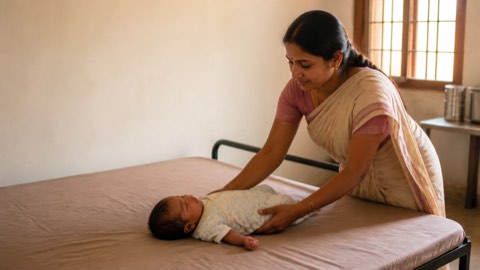
Protest. A baby losing a familiar route to sleep will object, and how much depends entirely on the child.
Two to three weeks for most families to see a real change, with a worse patch in the middle.
Regression after illness, teething, travel or a developmental leap. This is normal and does not undo the work.
You are allowed to stop. If a method is making everyone miserable, it is the wrong method for this baby at this time, and waiting three months is a legitimate choice.
And you are allowed to keep feeding to sleep indefinitely. It is a family decision, not a developmental requirement, and it does not harm a child.
When to see a doctor
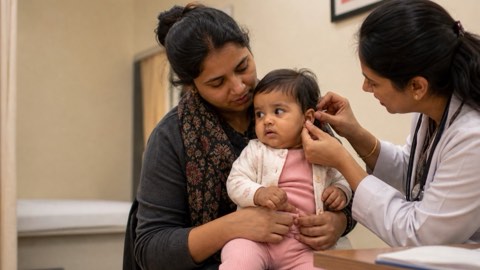
See a doctor if the baby is not gaining weight adequately, seems hungry constantly, or is feeding very frequently with poor output — those need a feeding assessment before any sleep change.
Also for: painful feeding, a baby who arches or pulls off crying, frequent forceful vomiting, or suspected reflux, all of which make settling harder and are treatable.
And for snoring, mouth-breathing or pauses in breathing during sleep.
Raise your own exhaustion and mood with a doctor rather than enduring it. Tele-MANAS on 14416 is free and round the clock.
This article is general information, not medical advice, and is no substitute for personal medical advice.
Frequently asked questions
Have I created a bad habit?
No. It is normal infant behaviour, and framing it as a parenting error is both unkind and inaccurate.
At what age can I change it?
Most families who want to change it start somewhere after four to six months. Before that, feed on demand.
Will breaking it end breastfeeding?
Not usually, though supply can dip if several feeds are dropped at once. Change one feed at a time.
Do I have to do sleep training?
No. Separating feeding from sleep and leaving a baby to cry are different things, and the first can be done gradually without the second.
Sources
Every clinical figure on this page is taken from the guidelines below. Where our numbers and your doctor's differ, ask which guideline they follow.
- WHO. Infant and young child feeding: Model chapter for textbooks for medical students and allied health professionals (2009)Backs the page's instruction to feed on demand in early infancy and the statement that frequent feeding is normal infant behaviour, not a parenting error.
- NICE. Postnatal care (NG194) (2021)Backs the page's advice to raise maternal exhaustion and low mood with a healthcare provider rather than enduring it, and supports feeding-on-demand guidance in the postnatal period.
- WHO. Breastfeeding (2023)Supports the caution that dropping several breastfeeds at once may affect milk supply, and backs feeding on demand as the recommended approach in early infancy.
Reviewed by
- Nakul Phatak — CEO, theAsianparent India & IndonesiaHead of theAsianparent India; father of one
- Roshni Chugani — Head of Marketing, theAsianparent India & Singapore12 years in the mother-and-baby space; mother of two
Published by: theAsianparent editorial team