Making a birth plan that works in an Indian hospital

A laminated ten-page birth plan will not get you far in a busy Indian labour ward. A short conversation at 34 weeks will.
Conversation, not document
The useful version is a discussion with your obstetrician at around 33-35 weeks, plus a single page in your file. Doctors respond well to 'here is what matters to me — what is realistic here?' and poorly to a script produced mid-labour.
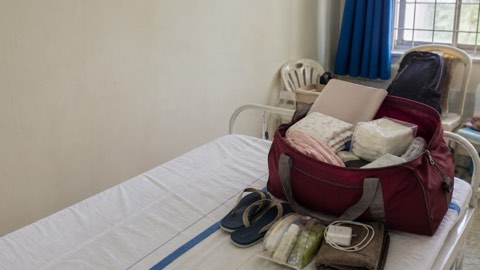
Keep it to one page and to the things that genuinely matter to you — five or six preferences, not thirty. Ask for it to be noted in your file, and take a copy in the papers pouch.
Frame preferences as preferences: 'I would like…, unless there is a medical reason otherwise'. That single phrase is what makes a plan workable in a clinical setting, and it is also true.
The preferences worth stating
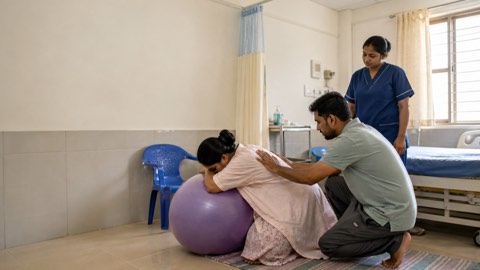
Labour: freedom to move and change position; permission to eat and drink in early labour; use of a birthing ball or shower if available; who your birth companion will be; and your position on pain relief, including whether you want to be offered it or asked to request it.
Birth: your preference on episiotomy (that it be done only if indicated rather than routinely); position for pushing; and delayed cord clamping, which is now standard practice and benefits the baby's iron stores.
The first hour: immediate skin-to-skin, the first breastfeed within the hour, and routine weighing, vitamin K and checks done after that where the baby is well. This is the single most valuable request on most Indian birth plans, because busy wards default to the other order.
If a caesarean becomes necessary: whether you want your partner present if hospital policy allows, whether you would like skin-to-skin in theatre or recovery, and that the baby stays with you rather than going to the nursery if both are well.
For the baby: no formula, water, honey or ghutti without your explicit consent — worth stating plainly, since pre-lacteal feeds are still common in Indian households and sometimes offered in hospitals.

Questions to ask the hospital
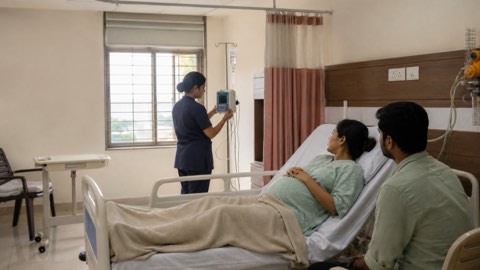
Ask these directly at 34-36 weeks: can a birth companion stay with me throughout labour and delivery; is an anaesthetist available 24x7 for epidurals; what is the policy on movement and eating in labour; is skin-to-skin in the first hour routine; is there a lactation counsellor; is there a NICU on site; and what happens if my own doctor is unavailable.
Ask about money too: the package cost for normal delivery and for caesarean, what is excluded, NICU charges, and whether your insurance is cashless there. Money questions asked at 34 weeks are wisdom; at discharge they are arguments.
The answers may lead you to change hospitals, and that is a legitimate use of the information. Choose the hospital for its always-on systems rather than a single doctor's charm.
Staying flexible
Labour rarely follows a plan. Waters break early, labour stalls, monitoring shows something, an emergency happens. A plan is a set of preferences to be applied where possible, not a contract, and holding it too tightly makes the deviation feel like a personal failure.
Brief your birth companion properly — they are the one who will speak while you are occupied. They should know your preferences, what to advocate for (especially the first hour), and when to stop advocating and let the team work.
Write the two lines that matter most on the top of the page: your consent for necessary medical intervention, and your requests for the first hour. Those are the parts most often forgotten in the rush and most easily honoured.
Frequently asked questions
Will my doctor be annoyed by a birth plan?
Not if it is short, discussed in advance, and framed as preferences. What creates friction is a long document produced by a stranger's blog, or demands made during an emergency.
Can I insist on no episiotomy?
You can state a preference for it not to be routine, and ask that it be done only when indicated — which is current best practice anyway. In the moment, the obstetrician's judgement about the perineum and the baby's condition has to prevail.
What if the hospital does not allow my husband in?
Ask well in advance, as policies vary and some hospitals allow a female relative if not the husband. If a birth companion matters to you, this may be a reason to choose a different hospital — continuous support genuinely improves outcomes.
Is a home birth an option in India?
It is not recommended, and skilled facility-based delivery is what national policy promotes for good reason: emergencies in labour develop in minutes and need equipment and blood. Where distance is the barrier, ask the ASHA worker about the birth-waiting arrangements and transport support available in your district.
Sources
Every clinical figure on this page is taken from the guidelines below. Where our numbers and your doctor's differ, ask which guideline they follow.
- WHO. WHO recommendations: Intrapartum care for a positive childbirth experience (2018)Backs the page's recommendations on freedom of movement in labour, oral intake in early labour, delayed cord clamping for iron stores, immediate skin-to-skin contact, the first breastfeed within one hour, episiotomy only when indicated (not routine), and the presence of a birth companion improving outcomes.
- MoHFW. Operational Guidelines on Maternal and Newborn Health (LaQshya / Facility-Based Newborn Care) (2017)Backs the page's statements that skilled facility-based delivery is national policy, that pre-lacteal feeds should not be given, and that the first breastfeed within one hour is a standard promoted in Indian government maternity facilities.
- WHO. Guideline: Delayed umbilical cord clamping for improved maternal and infant health and nutrition outcomes (2014)Directly supports the claim that delayed cord clamping is now standard practice and benefits the baby's iron stores.
- WHO. Global strategy for infant and young child feeding (2003)Supports the page's instruction that no formula, water, honey or pre-lacteal feeds be given without explicit parental consent, and that the first breastfeed should occur within the first hour of birth.
- IAP. IAP Guidelines on Newborn Care at Birth (2020)Backs the recommendations on immediate skin-to-skin contact, avoidance of pre-lacteal feeds including honey and ghutti, routine vitamin K administration, and keeping a well baby with the mother rather than transferring to a nursery.
Reviewed by
- Nakul Phatak — CEO, theAsianparent India & IndonesiaHead of theAsianparent India; father of one
- Roshni Chugani — Head of Marketing, theAsianparent India & Singapore12 years in the mother-and-baby space; mother of two
Published by: theAsianparent editorial team