Caesarean recovery: the first days, the first six weeks, and the scar

A caesarean is major abdominal surgery performed on someone who then has to look after a newborn. Here is what recovery actually looks like, and what makes it faster.
The first days in hospital
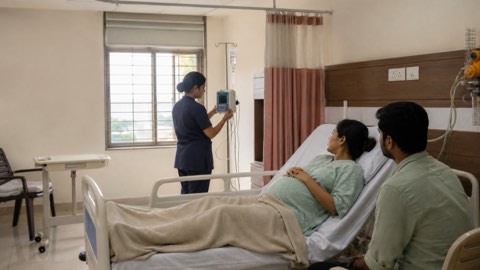
Getting up and walking within the first day is standard, uncomfortable and important — early mobility reduces the risk of blood clots and speeds bowel recovery. Ask for pain relief before you attempt it rather than after.
Take the pain medication as prescribed rather than enduring. Well-controlled pain means you move, feed and recover better, and the medicines given are compatible with breastfeeding.
Expect: a urinary catheter for the first hours, gas pain that can be worse than the wound (walking and warm drinks help), difficulty with the first bowel movement (ask for a stool softener), and a numb patch around the scar that may last months.
Feeding: ask for help with positions that keep the baby off the wound — the side-lying position and the underarm (football) hold are the ones to learn. Support the incision with a pillow when coughing, laughing or getting up.
Weeks one to six at home
The rules: nothing heavier than the baby for six weeks, no driving until you can perform an emergency stop without hesitation (usually four to six weeks and check your insurer), no stairs repeatedly in the first weeks, and no housework that involves bending, lifting or dragging.
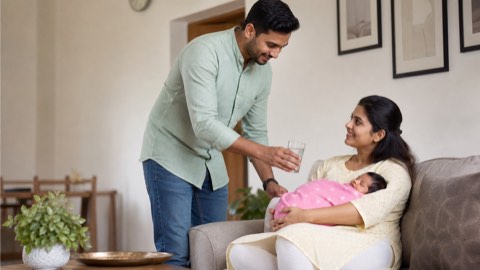
This is where Indian families often help most and sometimes least. Say clearly to the household that this is post-surgical recovery, not confinement custom — the restrictions have a medical reason and six weeks is not negotiable.
Wound care: keep it clean and dry, wash gently with plain water and pat dry, wear loose high-waisted cotton clothing, and let air get to it where possible. Most stitches or staples are removed or dissolve within one to two weeks.
Walking is the exercise: start short and build. Pelvic-floor exercises can begin once comfortable — the pregnancy loaded the pelvic floor even though the baby was not born through it.

The scar, longer term
The scar tightens and the skin around it stays numb, tingly or itchy for months — this is normal nerve recovery and usually improves over a year.
Once fully healed (ask your doctor, usually around six to eight weeks), gentle scar massage — small circles with a plain oil or cream, a few minutes daily — reduces tightness and adhesion and improves sensation. It is one of the few genuinely useful things you can do.
The overhanging shelf above the scar is common and is a mix of swelling, skin and the way the incision heals. It improves over a year with core rehabilitation; it is not a sign of anything wrong.
Any scar that becomes thick, raised, painful, or a keloid deserves a dermatology or surgical opinion — treatments exist.
When to see a doctor
Same-day or emergency: fever or chills; a wound that is red, hot, swollen, opening, or leaking pus or fluid; heavy vaginal bleeding (soaking a pad an hour) or large clots; severe or worsening abdominal pain; one-sided calf pain, swelling or redness; chest pain or breathlessness (clot risk is real in the weeks after surgery — use 108); severe headache with visual changes; inability to pass urine; or a hard, red, painful breast with fever.
Also seek help for: pain not controlled by the prescribed medicine, no bowel movement for several days with a distended abdomen, or any thought of harming yourself or the baby — Tele-MANAS on 14416 is free and round the clock.
This article is general information, not medical advice, and is no substitute for personal medical advice. For any decision about your or your child's health, please consult your doctor.
Frequently asked questions
How long until I feel normal?
Most women feel substantially better by two to three weeks, are functional by six, and fully recovered internally by around three months. Numbness and scar tightness resolve over a year.
When can I lift my older child?
Not for six weeks. This is the hardest rule for mothers of toddlers, and it needs a household plan: the toddler climbs onto your lap rather than being lifted, and someone else does the carrying.
Does a caesarean affect breastfeeding?
It can delay the first feed and make positioning harder, but supply and success are not determined by the mode of birth. Skin-to-skin as early as possible, help with positions, and frequent feeding are what matter — ask for a lactation counsellor before discharge.
Is belly binding useful after a caesarean?
A gentle abdominal support can make moving more comfortable in the first weeks and is generally fine. Tight binding is not — it pushes down on the pelvic floor and does not flatten the abdomen. Core rehabilitation is what changes the shape, and it starts after the six-week check.
Sources
Every clinical figure on this page is taken from the guidelines below. Where our numbers and your doctor's differ, ask which guideline they follow.
- NICE. Caesarean birth (NG192) (2021)Supports claims on early mobilisation to reduce VTE risk, urinary catheter use in the immediate postoperative period, pain management compatible with breastfeeding, wound care instructions, and the six-week recovery framework.
- WHO. WHO recommendations: intrapartum care for a positive childbirth experience (2018)Supports the claim that skin-to-skin contact as early as possible and breastfeeding support (including positioning help and a lactation counsellor) are what determine breastfeeding success rather than mode of birth.
- NICE. Venous thromboembolism in over 16s: reducing the risk of hospital-acquired deep vein thrombosis or pulmonary embolism (NG89) (2018)Supports the page's warning that clot risk (DVT/PE) is real in the weeks after caesarean surgery and the emergency signs of one-sided calf pain/swelling and chest pain or breathlessness.
Reviewed by
- Nakul Phatak — CEO, theAsianparent India & IndonesiaHead of theAsianparent India; father of one
- Roshni Chugani — Head of Marketing, theAsianparent India & Singapore12 years in the mother-and-baby space; mother of two
Published by: theAsianparent editorial team